
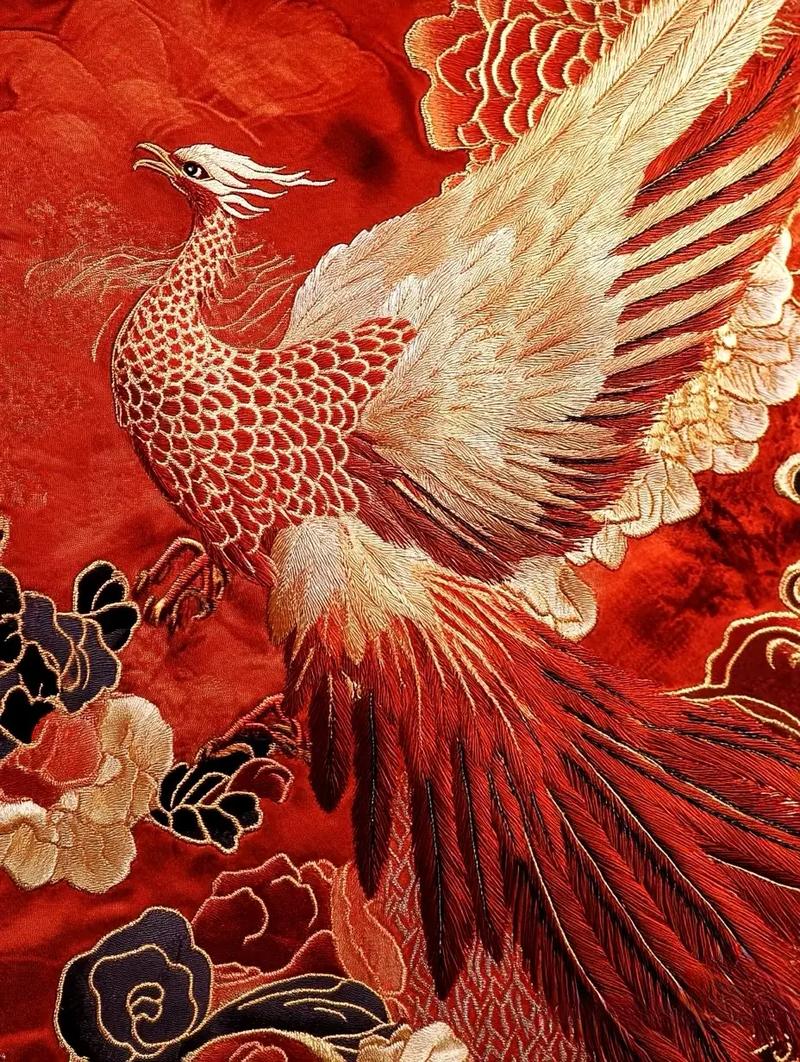
Shu Brocade – China Intangible Cultural Heritage
Shu brocade, also known as Shujiang brocade, refers to silk fabrics produced in Chengdu, Sichuan Province. It originated in the Warring States period and has a history of two thousand years. Most of them are colored on the warp and weft, with colored strips adding flowers, and then on the warp and weft. The colored strips are first added to the brocade group, and square, strip, and geometric skeletons are added with flowers. The patterns are symmetrical, continuous in all directions, bright in color, and strong in contrast. It is a colorful woven brocade with Han ethnic characteristics and local styles. Shu brocade has a long history and is renowned throughout China. It is also the predecessor of the traditional Japanese national treasure, Kyoto Nishijin Weaving.
Shu brocade originally referred to colorful brocade produced in Sichuan, and later became a general term for brocade produced in various regions with weaving methods similar to Shu. Shu brocade is often woven using dyed mature silk threads, with warp threads used to create flowers, colored stripes used to create colors or add flowers, and a combination of geometric patterns and decorative patterns used to weave it. Chengdu is the hometown of Shu brocade. After the Qin Dynasty conquered Shu in 316 BC, the “Jinguan City” was established on the south bank of Yili Bridge in Chengdu to manage brocade embroidery. During the Han Dynasty, Chengdu’s Shu brocade weaving industry was already very developed. The court had officials in charge of brocade weaving in Chengdu, so Chengdu was called “Jinguan City” or simply “Jincheng”; The Jinjiang River surrounding Chengdu is also named after the numerous weavers washing Sichuan brocade among them. Shifangjin is one of the main varieties of Shu brocade, abbreviated as “shijin”.
Shu brocade has a history of two thousand years. Shan Qian’s “Danyang Ji” says: “There has never been brocade in the past dynasties, and Chengdu is known for its beauty. Therefore, during the Three Kingdoms period, Wei was stationed in Shu, and Wu also invested in Western Shu, so it was eventually discovered.
The national treasure level Han Dynasty cultural relics “Five Stars Emerging from the East and Benefiting China” reflect the history and status of Shu brocade. In 2012, during the salvage archaeological excavation of the Laoguan Mountain Han Tomb in Chengdu, four Shu brocade jacquard weaving machine models were unearthed from the north bottom box of Tomb No. 2. It is reported that the four unearthed weaving machine models are unprecedented Shu brocade jacquard weaving machine models, which are the only complete Western Han Dynasty weaving machine models discovered in China with unearthed units. They have significant significance for studying the origin and development of silk textile technology in China and even the world, and are also the earliest jacquard weaving machine models in the world. They have important significance for the history of Chinese textiles and technology, and represent the textile handicraft industry at that time. At its highest level, it even had a significant impact on the history of world textiles.
Shu brocade is mostly based on warp colored strips, with flowers added to the strips. Its patterns are lively, the weaving is fine, the color matching is elegant, and it is a unique and colorful brocade with ethnic characteristics and local styles. The texture of Shu brocade is tough and full, with beautiful patterns and elegant color matching. For example, the patterns of Tang Dynasty Shu brocade include checkered flowers, patterned lotus flowers, turtle shell flowers, pearls, birds, beasts, etc., which are very rich. In the late Tang Dynasty, patterns such as Tianxia Yue, Chang’an Bamboo, Fang Sheng, Yi Nan, Lion Dance, and Ba Da Huan were added. During the Song and Yuan dynasties, the development of Weiqihua’s Weijin (a type of Chinese brocade) featured patterns such as Qingfeng Nianjin, Lantern Flower Brocade, Panqiu, Cuichi Lion, Yunque, as well as auspicious grass and cloud crane, Baihua Peacock, Yinan Baihua, and Ruyi Peony. In the late Ming Dynasty, Shu brocade was devastated, but production resumed in the Qing Dynasty. At this time, the patterns included plum blossoms, bamboo, peonies, grapes, pomegranates, and so on.
There are many varieties of Shu brocade, including traditional varieties such as Yushi brocade, Fangfang brocade, Pudi brocade, Sanhua brocade, Huanhua brocade, ethnic brocade, Caihuan brocade, and so on.
1. Rain silk brocade
The characteristic of the brocade is that it is composed of white and other colored warp threads, with a color network gradually changing from coarse to fine, and white gradually changing from fine to coarse, alternating and transitioning to form bright and contrasting rain streaks. The rain streaks are decorated with various pattern patterns, which are evenly distributed in thickness, blending the strong contrast of colors and highlighting the patterns between the stripes. It has an artistic effect of creating clouds and supporting the moon, giving people a light and comfortable sense of rhythm. The patterns are rich and colorful, with common ones including Tiananmen Square, Du Fu Thatched Cottage, Wangjiang Tower, Baihuatan, Furong White Phoenix, Xiangfeng Youlong, Lianchi Mandarin Ducks, Butterfly Dancing Flowers, Sunflowers, Mudan, Plum and Bamboo, Dragon and Phoenix, etc.
2. Fang Fangjin
The characteristic is the floating flowers on the satin floor, and on a single floor color, colored warp and weft lines are matched with equidistant squares of different colors. The interior of the squares is decorated with quaint and elegant patterns of circular or elliptical shapes of different colors, such as plum magpies competing for spring, phoenixes wearing peonies, Wangjiang Tower, Baihuatan, etc.
3. Laying brocade on the ground
Also known as “icing on the cake”, its characteristic is to cover the ground with geometric patterns or small patterns on the satin weave, and then embed large flowers (some with gold threads) on the patterns, such as Baoxiang flowers. Rich in colors and distinct layers, it appears particularly magnificent.
4. Scattered brocade
The characteristic is that the patterns are covered with brocade, and common patterns include Ruyi peony, Ruicao cloud crane, Hundred Birds Paying Homage to Phoenix, Five Grains Abundant Climbing, Dragon Claw Chrysanthemum, Cloud Geese, etc., which are rich in local colors and ethnic styles.
5. Huanhua Brocade
Also known as Huajin, it is developed from the ancient famous brocade “Falling Flowers and Flowing Water Brocade”. Legend has it that during the Tang Dynasty, wealthy women who resided in the Huanhua River in Chengdu designed patterns based on the changes in the river water. After weaving the brocade, most of them were washed in the upstream streams and pools of the Jinjiang River, hence the name. Its characteristic is the use of plain weave or satin patterns with a combination of curved water patterns, wave patterns, and falling flowers. The patterns are concise, simple, and elegant.
6. Colorful Brocade
The characteristic is that the woven patterns are luxurious and complement each other, with matching brightness and darkness, distinct layers, and transitions between colors. The patterns are colorful and unique.