
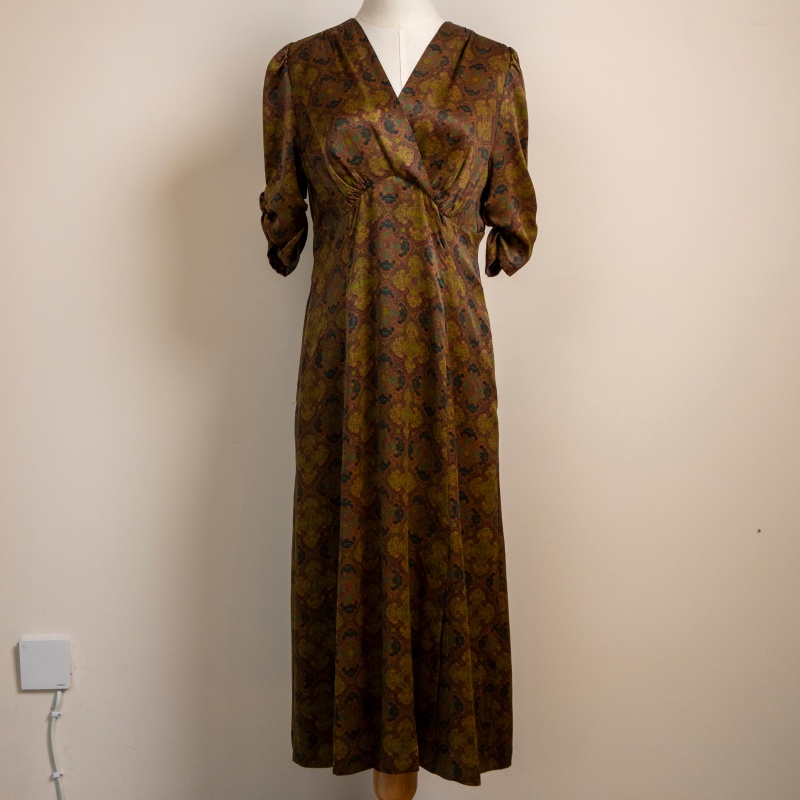
The method for avoiding scratches when using hand-embroidered cheongsam
Handmade Silk Qipao Anti-Scrape Guide: Practical Ways to Keep Your Garment Free of Snags and Scratches
Nobody plans to ruin a qipao. It just happens. A door handle catches the sleeve as you walk through. A car seat edge drags across the hem when you sit down. A zipper on your bag scrapes the side seam while you reach for your phone. These tiny moments add up fast, and before you know it, your beautiful handmade qipao has a pull here, a scratch there, and a faded patch where something rough rubbed against the silk. The problem is not that silk is weak. The problem is that most people have no idea how many things in their daily life are sharp enough to damage it. This guide is about changing that.
Understanding What Actually Scrapes Silk
Before you can avoid damage, you need to know what is doing the damaging. Most people think only sharp metal can hurt silk. That is wrong.
Rough Surfaces Are Worse Than Sharp Ones
A sharp edge cuts clean. A rough surface pulls threads one by one until the fabric starts to pill and fray. The inside of a leather bag, the texture on a car door panel, the weave of a wool coat — all of these are rougher than they look under a magnifying glass. When silk rubs against them, the friction pulls individual filaments loose. You do not see it happening in real time, but after an hour of contact, the fabric surface has changed permanently.
The worst offenders are surfaces that feel smooth to your hand but are rough to silk. Suede, felt, untreated leather, and even some synthetic fabrics fall into this category. Your fingers cannot detect the texture that silk can feel.
Static Electricity Attracts Everything
Silk generates static. That static pulls dust, lint, and tiny particles toward the fabric surface. Those particles sit on the silk and act like sandpaper every time you move. A qipao that has been sitting in a dry room will attract more debris than one worn in humid air. The debris does not just sit there — it grinds into the fibers with every step, every breath, every shift of your body.
This is why a qipao that looks fine when you put it on can look dull and worn by the end of the day. It is not the fabric failing. It is the environment attacking it.
How to Sit Without Destroying Your Qipao
Sitting is the single most dangerous activity for a silk qipao. Every surface you sit on is a potential scrape zone.
Check the Surface Before You Sit
Make this a habit. Before you lower yourself into any chair, run your hand across the seat. Feel for rough texture, loose threads, sharp edges, or anything that does not feel smooth. If you feel anything, put a layer between you and the seat. A scarf, a jacket, a thin cloth — anything smooth will do.
This applies everywhere. Restaurant chairs, office chairs, park benches, car seats, theater seats. All of them have textures that can scrape silk. The ones that look the smoothest are often the worst because the texture is too fine for your hand to detect but coarse enough to pull silk threads.
Lower Yourself Slowly and Smooth the Fabric First
Dropping into a chair creates a sudden compression that forces the fabric against the seat surface at full speed. That impact is what starts the scrape. Instead, lower yourself inch by inch. Before your body makes full contact with the seat, use both hands to smooth the fabric across your thighs and hips. This ensures the silk lies flat instead of bunching up at pressure points.
When you are seated, do not shift your weight side to side. Every shift rubs the hip area against the seat. Keep your weight centered and let the fabric rest.
Get Out of the Chair the Right Way
Standing up is just as dangerous as sitting down. When you push yourself up, the fabric drags across the seat surface. That drag is a scrape in slow motion.
Use your arms to push off the armrests, not your hips. Keep your torso upright as you stand so the fabric lifts away from the seat cleanly instead of sliding across it. If the chair has armrests, grip them firmly and lift yourself up using your arms. Your hips should barely move.
Getting In and Out of Vehicles Without Damage
Cars are qipao graveyards. The combination of rough seat fabric, sharp metal edges, and awkward body positions makes every entry and exit a high-risk moment.
The Door Frame Catch
The metal edge of a car door frame is sharp enough to cut silk if you are not careful. Every time you step out of a car, the hem or the side slit brushes against that edge. Most people do not even notice it happening.
Before you open the door, pull the qipao fabric away from the door frame with your hand. Create a gap between the fabric and the metal. Then step out with your leading foot first, keeping the qipao hem trailing behind you and away from the frame. When you get back in, do the reverse — lead with your torso, pull the fabric clear of the frame, then step in.
The Seat Belt Scrape
The seat belt buckle is a metal rectangle with a rough edge. When you fasten or unfasten it, the buckle drags across the waist area of your qipao. That drag pulls threads every single time.
Fasten the seat belt before you put on the qipao if possible. If you must fasten it while wearing the qipao, slide the buckle under the fabric at the hip rather than pulling it across the waist. The hip area has more fabric to absorb the friction. The waist area has almost none.
The Seat Surface Drag
Getting into a car seat requires you to twist and lower yourself while the fabric presses against the seat. That pressure-and-twist combination is what creates the worst scrapes.
Sit down on the edge of the seat first, both feet on the ground. Then swing both legs in together. Do not shuffle in sideways. Shuffling drags the entire hip and thigh area across the seat fabric in one long scrape. Swinging your legs in keeps the contact brief and controlled.
Bag and Accessory Rules That Save Your Qipao
Your bag is probably the number one source of daily scrapes on a qipao. Most people do not realize it because the damage happens slowly over weeks.
Bag Straps Are Constant Friction Points
A bag strap rests on your shoulder for hours. Every time you move your arm, the strap shifts slightly against the fabric. That micro-movement is a scrape that happens thousands of times a day. By the end of the week, the shoulder area of your qipao is thinner and duller than the rest.
Carry your bag in the crook of your elbow instead of on your shoulder. If you must carry it on your shoulder, use a bag with a wide, padded strap. Thin straps dig into the fabric. Padded straps distribute the pressure.
Avoid bags with metal chain straps entirely. Chain links are rough and they catch silk threads with every step. A chain strap will create visible pulls on your qipao within a single day of wear.
Watch and Bracelet Placement
A watch on your wrist scrapes the sleeve edge every time you raise your arm. A bracelet does the same thing, plus it can snag the fabric when you lower your arm.
Move your watch to the hand that does less movement. If you button your qipao with your right hand, wear the watch on your left wrist so it stays away from the pankou knots. Bracelets should go on the same wrist as the watch, or better yet, skip them entirely when wearing silk.
Zipper Pulls and Metal Hardware
The zipper pull on your bag, the buckle on your belt, the clasp on your necklace — all of these have metal edges that scrape silk on contact.
When you reach into your bag, do not let the zipper pull drag across the qipao fabric. Lift the bag toward you instead of reaching into it. This keeps the metal hardware away from the silk.
Belts worn over a qipao should sit above the hip line, never across the widest part of the fabric. The buckle should face backward or to the side, never forward where it can catch against something as you walk.
Walking and Moving Through the World Without Scrapes
Your daily environment is full of scrape hazards that you walk past without thinking.
Door Handles Are Silent Killers
Every door handle you grab with a qipao sleeve is a potential scrape. Metal handles are rough at the microscopic level, and dragging your sleeve across them pulls threads loose.
Open doors with your hand, not your sleeve. If you are carrying something and need to use your sleeve to push the door open, bunch the fabric at the elbow first so only a thick fold touches the handle, not the bare silk. Better yet, use your elbow or your hip to push the door. Your hands should be free to grab the handle directly.
Elevator Buttons and Railings
Elevator buttons are touched by thousands of hands. The surface is coated in oils and grime that are abrasive to silk. Every time you press a button, you are rubbing that grime into your fingertip fabric.
Press buttons with the back of your hand or your knuckle, not your fingertips. The fingertip area of a qipao sleeve is the thinnest and most vulnerable part. Use the back of your hand where the fabric is double-layered or reinforced.
Elevator railings are brushed metal with a directional grain. That grain catches silk threads when you rest your hand on it. Do not lean on elevator railings while wearing a qipao. Hold the railing with your whole hand, palm flat, so the fabric does not drag against the metal grain.
Escalators and Moving Walkways
The rubber edges of escalators are one of the worst scrape hazards in any public space. The rubber is textured, and it moves, which means it actively grinds against anything that touches it.
When you ride an escalator, hold the handrail with your hand, not your sleeve. Keep your qipao hem above the escalator step edge. If the hem drags against the step edge, the rubber will pull threads loose within seconds. Stand slightly to one side so your hip does not brush against the escalator wall.
The Pankou Knots Need Special Protection
The pankou knots are hand-tied, which means they have loose thread ends and raised surfaces that catch on everything.
Do Not Let Knots Rub Against Surfaces
When you lean on a table, a counter, or a railing, the pankou knots are the first thing to make contact. Those knots are thicker than the surrounding fabric, which means they take more pressure and create more friction.
Lean on your forearm, not the front of your qipao. The pankou knots should never be the contact point when you rest your body against any surface.
Button and Unbutton Slowly
Rushing through the buttons pulls thread ends loose. Each pankou knot has a small loop that needs to be guided through the corresponding buttonhole. Forcing it tears the loop and frays the knot.
Take two seconds per button. Slide the knot gently into the loop. Do not yank. Do not twist. If a knot feels stuck, do not pull harder — undo the last button and try again. A stuck knot means the loop is caught on something, and pulling will only make it worse.
Laundry and Storage Scrapes You Can Prevent
Even washing and storing a qipao can cause scrapes if you are not careful.
Washing Machine Is a Scrape Machine
The inside of a washing machine drum is rough. The agitator or the drum walls scrape against the fabric every time the machine turns. One cycle in a machine can create more damage than a month of daily wear.
Hand wash only. Fill a basin with cold water, submerge the qipao, press the water through gently. Do not agitate. Do not wring. The fabric should barely move.
Hangers Create Shoulder Scrapes
Wire hangers have rough edges that dig into the shoulder area. After a few days on a wire hanger, the shoulder fabric will have visible indentations and weakened threads.
Use a wide, padded hanger. Velvet-covered wooden hangers are best. The padding distributes the weight and the velvet surface is smooth against silk. Never use wire hangers, plastic hangers, or clip hangers on a silk qipao.
Folding Creates Crease Scrapes
When you fold silk, the crease line becomes a weak point. Every time you unfold and refold along the same line, the fibers at that crease break down. After several folds, the crease becomes a visible line that is thinner and more prone to snagging.
If you must fold for storage, fold along the existing seams, not across them. Place acid-free tissue paper between the folds. Unfold as soon as you reach your destination and hang immediately.
Quick Checks Throughout the Day
Building a habit of checking your qipao a few times a day catches small scrapes before they become big ones.
The Mirror Check
Every time you pass a mirror, do a quick visual scan. Look at the shoulders, the hips, the hem, and the side slit. If you see a loose thread, a pulled filament, or a dull spot, address it immediately. A loose thread caught early can be pushed back into the weave with a needle. A loose thread ignored for hours will become a run.
The Fingernail Test
Run your fingernail gently along the surface of the fabric in different directions. If you feel any roughness, any catch, any tiny snag, that is a scrape that has already started. Smooth it out immediately by pressing the area flat with your finger from the inside of the garment.
Do this check every two to three hours when you are wearing the qipao. It takes ten seconds and it can save you from a repair that would take ten times longer.
The End-of-Day Inspection
When you take the qipao off at the end of the day, lay it flat and run your hands over every inch. Feel for any area that feels different — thinner, rougher, or slightly raised. Those are scrape zones that need attention before you hang the garment up.
If you find a scrape, do not hang the qipao until you have addressed it. A compromised area will catch on the hanger and make the damage worse overnight.