
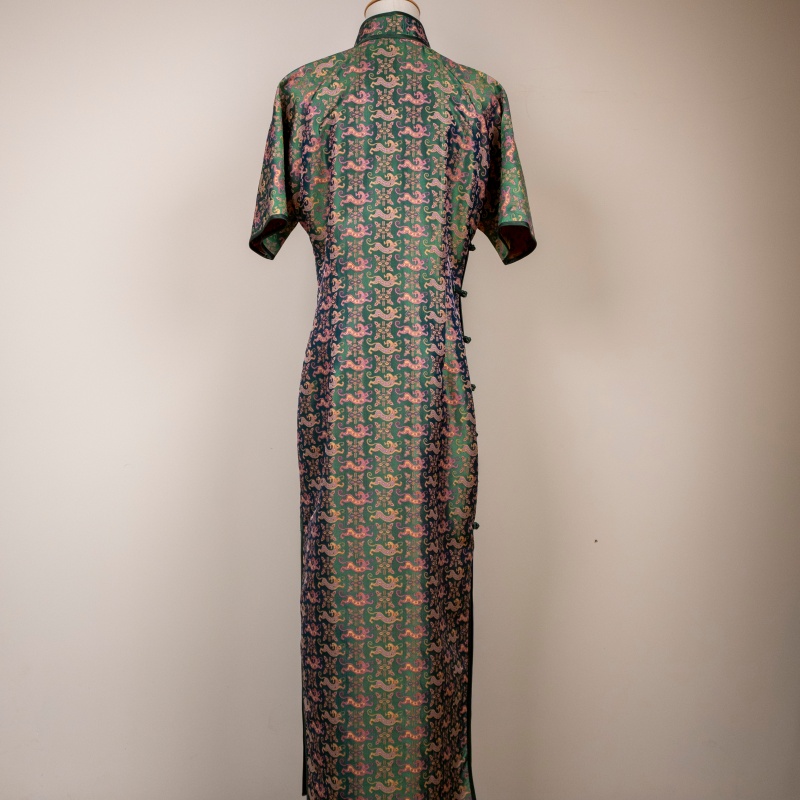
Tips for Handmade Cheongsam to Prevent Pets from Scratching
How to Protect Your Hand-Embroidered Cheongsam From Pet Claws
You love your cat. Your cat loves your cheongsam. This is a problem nobody talks about enough. A single swipe from a claw can pull threads, snag silk, and leave a tear that no amount of sewing can fully hide. Hand-embroidered cheongsams are especially vulnerable because the raised embroidery gives claws something to grab onto. Silk itself is strong for a natural fiber, but it’s not claw-proof. And once that embroidery thread snags, the damage spreads fast.
Why Pets See Your Cheongsam as a Toy
It’s not malicious. Your cat isn’t trying to destroy your favorite garment. Cats are drawn to movement, texture, and dangling threads. A cheongsam has all three. The silk moves when you walk, which triggers a cat’s hunting instinct. The embroidery thread sticks out slightly from the fabric surface, which looks exactly like a string toy. And the pankou knots? Those are basically catnip for claws.
Dogs are different but equally dangerous. A dog brushing against your cheongsam while you’re wearing it can snag the fabric with a single claw. Even a playful lean-against-your-leg can pull a thread loose. The damage from pets is almost always a surprise — you don’t feel it happen, but when you look down, there’s a snag running across the entire front panel.
What Actually Happens When a Claw Hits Silk
The Snag Spreads Faster Than You Think
Here’s what most people don’t realize. A claw doesn’t just cut one thread. It catches a thread, pulls it loose, and that loose thread catches the next one. Within seconds, a single claw swipe can unravel an entire embroidered flower. Silk is smooth, so the claw slides across the surface until it finds a raised edge — an embroidery stitch, a pankou knot, a seam — and then it digs in.
The worst part is that you often don’t notice until hours later. By then, the snag has worked its way into the surrounding fabric. Pulling it out creates a hole. Cutting it leaves a blunt end that frays over time.
Claw Oil Is Worse Than the Claw Itself
Pet claws carry natural oils and bacteria. When a claw drags across silk, it leaves a faint oily trail that attracts dirt and discolors the fabric over time. You won’t see it immediately, but after a few weeks the area looks dull and slightly yellow compared to the rest of the cheongsam. This is especially visible on white or light-colored silk.
How to Wear Your Cheongsam Around Pets Without Losing Your Mind
Create a Physical Barrier Between You and the Pet
The simplest fix is also the most effective. If you know you’re going to be around your cat or dog while wearing the cheongsam, drape a throw blanket or a light scarf over your lap before the pet comes near. This gives the pet something else to focus on. Cats love blankets. Dogs love anything they can chew on. Redirect their attention away from your cheongsam and onto something disposable.
If you’re sitting on a sofa, place a cushion between your cheongsam and the spot where your cat usually sits. The cushion absorbs the claw contact instead of your silk.
Keep Your Cheongsam Away From the Floor
Pets don’t jump up to scratch your cheongsam while you’re standing. They scratch it when it’s on the floor, draped over a chair, or hanging low enough for a cat to reach. Never leave your cheongsam on the ground, on a low chair, or anywhere a pet can brush against it without you noticing.
Hang it on a high hook or place it in a closed closet. If you need to lay it on a bed, fold it neatly and place it in the center of the bed where no pet can reach the edges. Cats will paw at anything hanging off the edge of a bed. That hanging hem is an invitation.
Train Your Pet to Stay Off the Cheongsam
This takes patience but it works. Every time your cat jumps on the furniture where your cheongsam is draped, make a sharp sound and move them away. Don’t yell — just a firm “no” and a gentle redirect. Cats learn fast when the consequence is immediate and consistent. After a week or two, they stop going near the spot entirely.
Dogs are harder but the same principle applies. If your dog brushes against your cheongsam, step away immediately. Don’t pet them and don’t laugh it off. The moment they learn that touching the cheongsam means the fun stops, they back off.
Damage Control When a Claw Already Hit
Don’t Pull the Snagged Thread
This is the instinct. You see a thread sticking out and you yank it. Don’t. Pulling a snagged thread on silk unravels the surrounding weave and turns a small snag into a large tear. Instead, take a sharp pair of scissors and cut the snag as close to the fabric surface as possible. A clean cut is better than a pulled thread. The blunt end will fray slightly, but it won’t spread.
If the snag is in an embroidered area, use a needle to gently push the loose thread back into the stitch pattern. Work from the outside of the embroidery inward so you don’t pull more threads loose.
Freeze the Area With Ice If There’s a Tear
If a claw actually tore the fabric instead of just snagging it, don’t touch it. Place a small ice pack wrapped in a cloth over the tear for about five minutes. The cold contracts the silk fibers and slows any further fraying. Then carefully fold the cheongsam and take it to a tailor who works with silk. Do not try to sew it yourself unless you have experience with silk repair — the wrong needle or the wrong thread will make it worse.
Long-Term Storage Rules When You Own Pets
Closed Containers Only
Never store your cheongsam in an open garment bag if you have a cat. Cats will paw at anything that moves, and a garment bag swaying slightly in a closet is irresistible. Use a zipped garment bag or a closed storage box. The zipper keeps claws out and dust out at the same time.
For long-term storage, place the cheongsam in a cotton bag inside a plastic bin with a tight lid. The cotton bag breathes, the plastic bin keeps claws out. Double protection.
Cedar Is Your Friend, Mothballs Are Not
Mothballs repel moths but they smell terrible and the chemicals can discolor silk over time. Cedar blocks or cedar chips repel both moths and pets. Cats hate the smell of cedar. Placing cedar chips near your stored cheongsam keeps moths away and discourages cats from investigating the storage area. It’s a two-for-one solution that doesn’t damage the fabric.
Replace the cedar every three to four months. Old cedar loses its scent and stops working.
Inspect Every Time You Take It Out
Pet hair, claw marks, oily smudges — these things hide in folds and seams. Every time you pull your cheongsam out of storage, run your fingers over every inch of the fabric. Check the embroidery, the pankou knots, the slit edges, and the hem. If you find a snag, fix it immediately. If you find pet hair, remove it with a lint roller before it works its way into the weave.
A thirty-second inspection saves you from a ruined cheongsam. Every single time.