
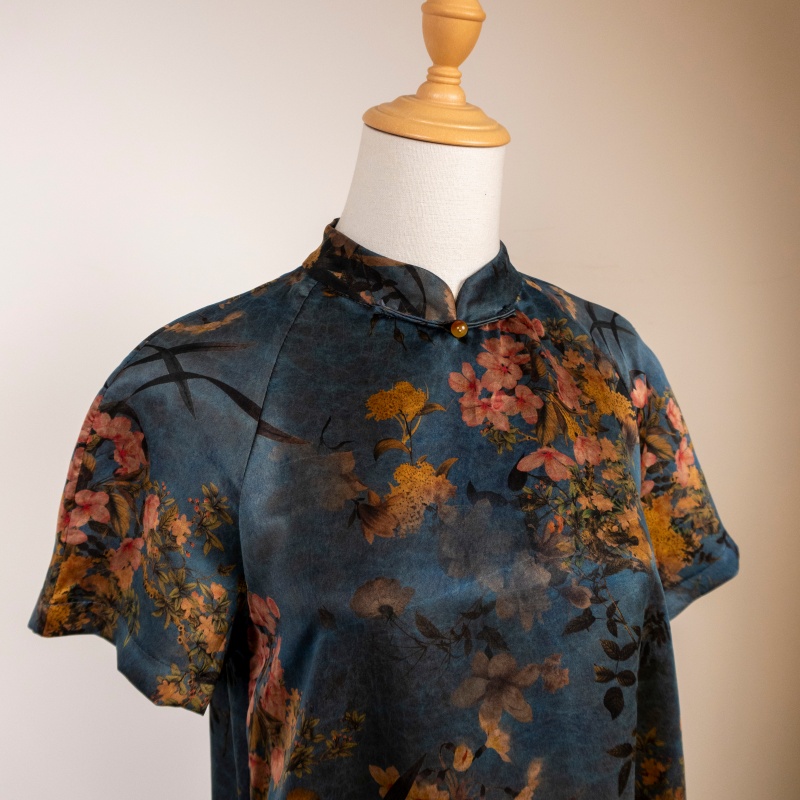
Cleaning of local stains on hand-embroidered cheongsam
How to Clean Stains on Hand-Embroidered Silk Cheongsam Without Damaging the Embroidery
A single drop of red wine on the front panel. A smudge of foundation along the collar. A grease spot from dinner near the waist. Stains happen fast on silk, and they settle even faster. The difference between a stain that comes out completely and one that stays forever is usually about ten minutes. If you know what you’re doing, most stains on a hand-embroidered cheongsam are removable. If you don’t, you’ll make it worse — fast.
Why Stains on Silk Behave Differently From Stains on Cotton
Silk is a protein fiber. That means it absorbs liquids into the fiber itself, not just on the surface. On cotton, a stain sits on top and you can wipe it off. On silk, the stain sinks in and bonds with the protein structure. The longer it sits, the deeper it goes. After about an hour, most stains on silk become permanent without professional intervention.
Embroidery thread makes this worse. Cotton thread absorbs differently than silk thread. Silk thread absorbs differently than metallic thread. A stain that hits an embroidered area spreads along the thread and into the spaces between stitches. That’s why a small spot on the embroidery can turn into a large discolored patch if you don’t treat it right away.
The good news is that fresh stains on silk respond to the right treatment almost every time. The bad news is that the wrong treatment sets them instantly.
What You Need Before You Touch Any Stain
Gather Your Tools First
Don’t start treating a stain and then run around looking for supplies. By the time you find what you need, the stain has set. Keep a small stain kit in your closet near your cheongsams. It should contain: plain lukewarm water in a spray bottle, clear liquid castile soap, white vinegar, a few clean white cloths, a soft brush with natural bristles, and a small bowl for mixing solutions.
Everything in this kit is safe for silk and embroidery. Nothing in it will damage the fabric. If you don’t have a kit, at least have the water and vinegar ready before you start.
Test Any Solution on a Hidden Area First
Before you put anything on a visible stain, test it on the inside of the hem or inside the collar where nobody can see. Wait five minutes, blot it dry, and check for any color change or fabric reaction. Some solutions that work on white silk can cause discoloration on dyed silk. The inside hem is your safety net.
Fresh Stain Treatment — The First Thirty Minutes
Water-Based Stains: Wine, Juice, Tea, Perfume
These are the easiest to remove because they haven’t bonded with the silk yet. Dampen a clean white cloth with plain lukewarm water — no soap, no vinegar, nothing. Press the cloth flat against the stain. Lift straight up. Repeat until no more color transfers to the cloth.
Do not rub. Rubbing pushes the stain deeper into the silk fibers and spreads it outward. Pressing lifts it out. There’s a difference, and it matters.
If plain water doesn’t fully remove the stain after five or six presses, add a single drop of clear castile soap to the water and press again. One drop. Not a squirt. Too much soap leaves residue that attracts dirt later.
Oil-Based Stains: Food Grease, Lipstick, Foundation, Butter
Oil and water don’t mix, and plain water won’t touch an oil stain. You need something that cuts through fat. Dish soap does this — it’s designed to break down oil on dishes, and it works the same way on silk.
Mix one drop of clear dish soap with a cup of lukewarm water. Dampen a white cloth with the solution and press the stain gently. Blot, don’t rub. The dish soap emulsifies the oil and lifts it out of the silk fiber. Work from the outside edge of the stain inward so you don’t spread it.
For lipstick specifically, the wax component makes it stubborn. Let the dish soap solution sit on the stain for two minutes before pressing. The soap needs time to break down the wax. Then press and blot.
Protein-Based Stains: Sweat, Blood, Food with Egg or Dairy
These show up as yellowish or brownish patches, usually along the collar, underarms, and waist where your body touches the fabric most. Sweat is the most common. It’s acidic, which means it responds to alkaline solutions — but silk doesn’t like alkaline solutions. So you need a mild approach.
Mix one part white vinegar with four parts cold water. The acetic acid breaks down the protein without harming the silk. Dampen a cloth with the solution and press the stain gently. Work slowly. Let the vinegar sit on the stain for about a minute before pressing. Then rinse immediately with plain water to remove the vinegar residue.
Never use vinegar directly on embroidery. The acid weakens cotton thread and can cause it to fray over time. On plain silk areas only.
Stubborn Stains That Need More Time
Ink Stains Require Patience and Alcohol
Ink is one of the hardest stains to remove from silk because it’s designed to be permanent. But fresh ink — less than an hour old — can still come out. Dampen a white cloth with rubbing alcohol. Not the colored kind, not the scented kind. Plain isopropyl alcohol.
Press the cloth against the ink stain gently. You’ll see the ink transfer to the cloth. Keep pressing with a clean section of the cloth until no more ink comes off. Then rinse the area with plain lukewarm water to remove the alcohol. The alcohol dissolves the ink without damaging the silk fiber.
If the ink stain is old — more than twenty-four hours — it’s probably permanent. Don’t keep scrubbing. You’ll damage the fabric without removing the stain. Take it to a professional who works with silk.
Old Sweat Stains That Have Yellowed
Yellowed sweat stains along the collar are the most common complaint. The sweat has already bonded with the silk fiber, so plain water won’t work. You need a stronger approach.
Make a paste with baking soda and a small amount of water. Apply it to the yellowed area and let it sit for fifteen minutes. The baking soda is mildly alkaline and it breaks down the dried sweat protein. After fifteen minutes, dampen a cloth with the vinegar-water solution from earlier and press the area. The vinegar neutralizes the baking soda and lifts the broken-down residue. Rinse with plain water and let it dry.
This works on silk but avoid the embroidery. Baking soda can stiffen embroidery thread and make it brittle.
Embroidery-Specific Stain Rules
Never Press Directly on Stitched Areas
This is the rule that saves more cheongsams than any other. When a stain hits embroidery, your instinct is to scrub it. Don’t. The raised stitches catch on any abrasive surface, and pressing directly on them pulls threads loose.
Instead, work around the stain. Dampen a cloth and press the area surrounding the stain, letting the water flow into the embroidered section from the edges. If the stain is on a raised stitch, use the soft brush to tap the stain gently — not sweep, tap. The bristles dislodge the stain without pulling threads.
Beaded Embroidery Needs Extra Care
Beads create tiny gaps where stain can hide. A stain that looks gone might still be sitting between the beads. After treating a beaded area, hold the cheongsam up to the light and look at every bead from a low angle. If you see any residue between the beads, dampen a cloth and press each gap individually. It’s tedious but it’s the only way to get a beaded area truly clean.
Metallic Thread Stains Differently
Metallic thread doesn’t absorb stain the way cotton or silk thread does. A stain on metallic thread usually sits on the surface, which sounds good — but it also means the stain is more visible because metallic thread reflects light. A small spot on metallic thread looks bigger than the same spot on silk.
Treat metallic thread stains with the dish soap method. The soap cuts through the oil and the metallic surface doesn’t absorb it deeply. But don’t use vinegar on metallic thread — the acid can tarnish the metal coating over time.
What Not to Do Under Any Circumstances
Don’t Use Bleach on Anything Except White Silk
Bleach removes stain by destroying the fiber that holds the color. On colored silk, bleach removes the dye along with the stain, leaving a pale patch that’s more noticeable than the original stain. On white silk, bleach works but it weakens the fiber. Use it only as a last resort on white cheongsams, and dilute it heavily — one part bleach to ten parts water.
Don’t Use a Hair Dryer to Speed Up Drying
After treating a stain, you need to let the area dry naturally. A hair dryer concentrates heat on one spot, which can set any remaining stain and scorch the silk fiber. The heat also makes silk brittle in that localized area. Air dry only.
Don’t Rub a Stain With Your Finger
Your fingertip has natural oils that transfer to the fabric. When you rub a stain with your finger, you’re adding oil to the problem and pushing the stain deeper at the same time. Use a cloth always. If you don’t have a cloth, use the inside of your wrist — the skin there is smoother and produces less oil.
After You Treat the Stain
Let It Dry Completely Before Wearing
A treated area that’s still damp will attract new dirt and the stain can re-set as the water evaporates. Let the cheongsam dry fully in a shaded, ventilated area. Check the treated spot after drying. If the stain is still visible, don’t treat it again immediately. Let the fabric rest for a day, then try a different method. Repeated treatment on the same spot weakens the silk.
Inspect the Embroidery Around the Treated Area
Stain treatment can loosen nearby threads even if you were careful. After the cheongsam dries, run your fingers gently over the embroidery surrounding the treated spot. If you feel any loose threads, don’t pull them. Trim them with small scissors at the base of the stitch. Pulling a loose thread on embroidery unravels the surrounding pattern.
Store the Cheongsam Only After the Stain Is Fully Gone
Storing a cheongsam with a partially treated stain is a mistake. The remaining residue will bond with the silk over time and become permanent. Make sure the stain is completely gone before you fold or hang the garment. If you’re not sure, air it out for a day and check again. It’s better to wait than to lock in a stain that could have come out.