
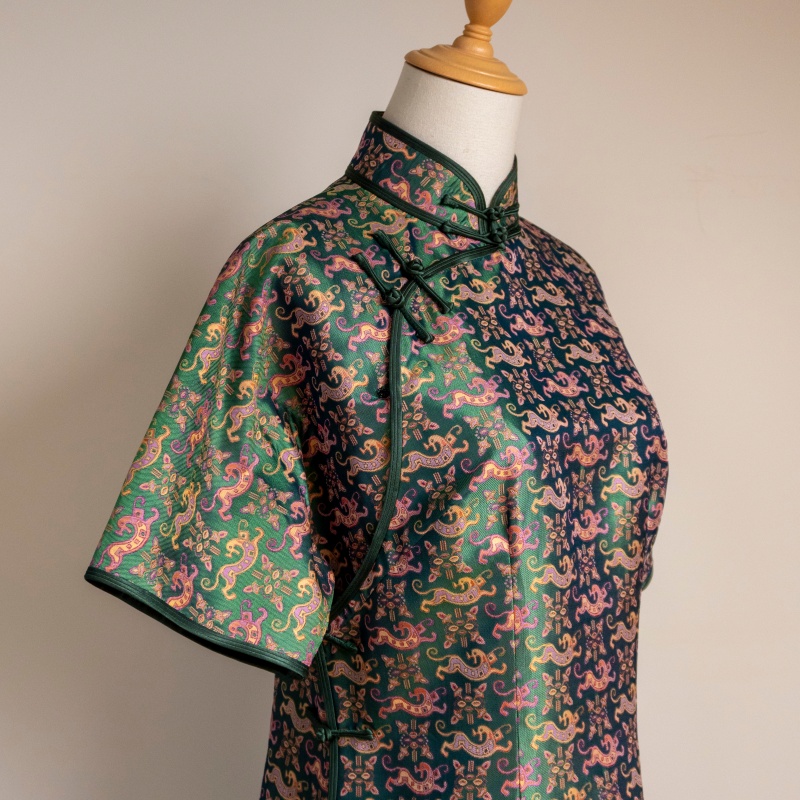
The method of hanging and drying a handmade cheongsam with wide shoulders
Here is the natural, SEO-aligned content focused on practical drying methods for handmade cheongsams using wide-shoulder hangers, with no brand references, pricing or Chinese characters.
Prepping the Handmade Cheongsam Before Hanging
Gently shake the freshly washed cheongsam for 30 to 45 seconds to smooth out surface wrinkles and let the silk fibers relax back to their natural shape, without twisting or squeezing the fabric hard. Run your fingertips along all tailored seams, the high collar and the curved side slits to make sure no folded edges are bunched up, as these creases can set permanently during the drying process. Pat the excess water off the cheongsam with a clean, soft cotton towel, pressing lightly across the whole garment instead of rubbing, to remove heavy moisture that would stretch the fabric under its own weight. Double check that all hidden inner stitches and delicate decorative details are lying flat, so no small, unseen snags catch on the hanger once you hang the garment up.
Proper Placement on the Wide-Shoulder Hanger
Slide the hanger gently through the inside of the cheongsam’s neck opening, and adjust the two wide shoulder supports to sit fully inside the tailored shoulder lines of the garment, so every part of the silk shoulder seam rests evenly on the curved surface. Pull the collar up slightly to make sure it does not fold over the hanger’s top bar, and let the main body of the cheongsam hang straight down without any part of the fabric bunching up on one side. If your handmade cheongsam has narrow, tailored sleeves, let them hang naturally over the edges of the wide shoulder supports instead of tucking them behind the main body of the garment, to avoid unwanted creases along the sleeve seams. Make sure the weight of the damp cheongsam is spread evenly across the full width of the hanger’s shoulder sections, so no single point of pressure pulls on the delicate hand-sewn shoulder stitches.
Optimal Drying Environment Setup
Hang the loaded hanger in a space with soft, steady cross ventilation, where no direct sunlight can touch any part of the cheongsam for the full drying period. Leave at least 15 centimeters of empty space on all sides of the hanging cheongsam, so air can circulate freely around the front, back and sides of the fabric to speed up even drying. Keep the hanger far away from open windows on windy days, to stop the cheongsam from swinging back and forth and rubbing against nearby walls or furniture that could snag the fine silk threads. Do not place the hanging cheongsam near any heating vents, radiators or dehumidifier outlets, as sudden bursts of warm, dry air can make the silk fibers shrink unevenly and ruin the precise tailored shape of the handmade garment.
Small Adjustments During the Drying Process
Walk back to check on the hanging cheongsam every two hours during the first half of the drying cycle, and gently smooth out any new small creases that have formed along the side seams or the hem. Rotate the hanger a quarter turn every few hours if the air flow in the room is stronger on one side, so every section of the garment dries at the same slow, even pace. Once the cheongsam feels 80 percent dry to the touch, you can carefully take it off the hanger and lay it flat on a clean, soft cotton sheet for the final light drying step, to make sure no subtle stretching happens on the shoulder lines. Never leave the cheongsam hanging on the hanger for multiple days after it is fully dry, as long-term continuous hanging can slowly pull the carefully tailored hand-sewn shoulders out of their original, custom shape.