
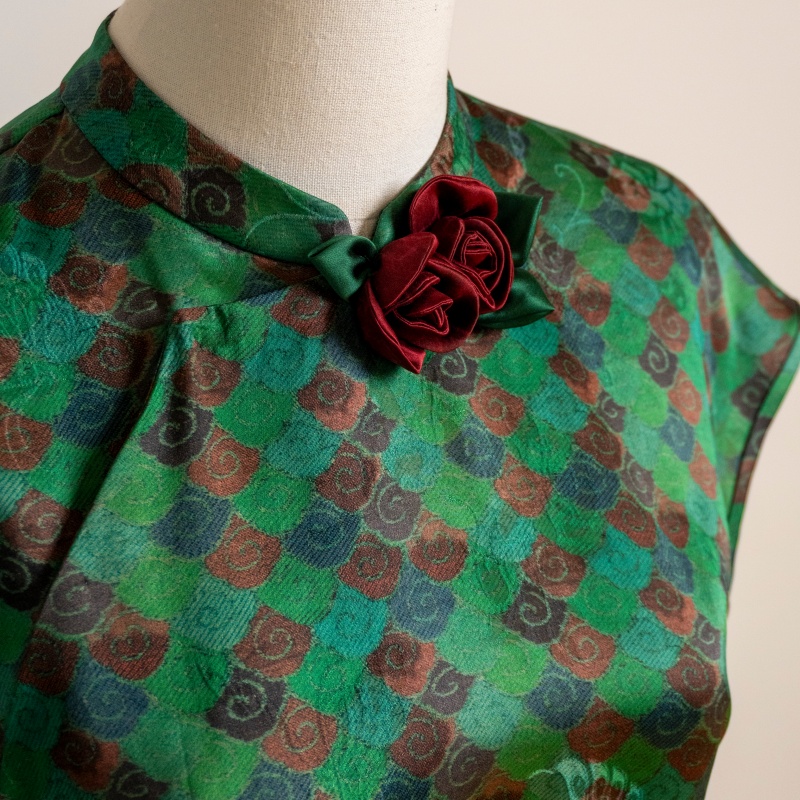
Methods for Avoiding Shining After Ironing Silk Qipao
Shiny, unwanted marks on a silk cheongsam can ruin the soft, matte luster that makes the fabric feel luxurious and timeless. These glossy spots usually pop up when heat presses directly into the fine silk fibers, flattening them into a smooth, reflective surface that breaks the fabric’s natural subtle sheen. For handcrafted silk cheongsams with delicate stitching and hand-dyed details, these marks are even harder to fix, so small, careful habits during every step of fabric care can stop shine from forming before it ever appears.
Adjusting Your Ironing Motion and Pressure
Never press the full weight of the iron down hard onto the silk surface, even when you are working out deep creases. Heavy, steady pressure crushes the tiny, delicate silk fibers flat, which is the most common cause of that unwanted shiny patch. Instead of sliding the iron back and forth quickly across the fabric, use a light dabbing motion, lifting the iron fully off the material after every 2 to 3 second contact. This keeps constant, concentrated pressure from sitting on any single spot long enough to flatten the fiber structure. For areas around the cheongsam’s fitted waist, side seams and narrow hem, avoid leaning into the iron to push out wrinkles. These stitched sections already sit slightly thicker than the rest of the fabric, and extra pressure here will almost always leave a faint shiny line along the seam edge.
Using a Protective Barrier Between Iron and Silk
Lay a clean, lightweight 100% cotton cloth flat across every section of the silk cheongsam before the iron touches the fabric. This thin buffer spreads heat evenly across the surface, so no single hot spot on the iron’s plate can burn or flatten the silk directly. You can also use a single layer of unprinted, plain paper as an extra barrier for the most delicate sections, like hand-painted patterns or thin silk chiffon overlays, to make sure no direct contact happens at all. Make sure the protective cloth is completely dry before you set the iron on it, because damp fabric can trap too much concentrated heat against the silk and create unexpected shiny marks. Never use synthetic fabric as a barrier layer, since it can melt slightly under heat and leave a faint, sticky residue that also creates a dull, shiny finish on the silk surface.
Pre-Treating Existing Faint Shine Marks
If you already notice subtle glossy spots on your silk cheongsam, do not try to iron over them again with higher heat, because this will only make the shine more permanent. Mix equal parts of clean, cool water and white vinegar in a small spray bottle, and mist the shiny area very lightly until it is just barely damp. Lay a clean cotton cloth over the spot, then press it with an iron set to the lowest silk setting, using only the lightest possible dabbing motion. As soon as the damp area under the cloth starts to feel slightly warm, lift the iron and pull the cloth away, then use your fingertips to gently fluff the silk fibers back up while the fabric cools down. Hang the cheongsam in a well-ventilated space away from direct sunlight for an hour, and the faint shine will fade as the silk fibers reset to their natural, soft, non-reflective texture. For older, more stubborn shiny patches that formed from years of wear and pressure, hold the iron several inches above the spot to let soft steam relax the fibers, then brush the area very gently with a soft, natural bristle brush to lift the flattened silk strands back into their original shape.