
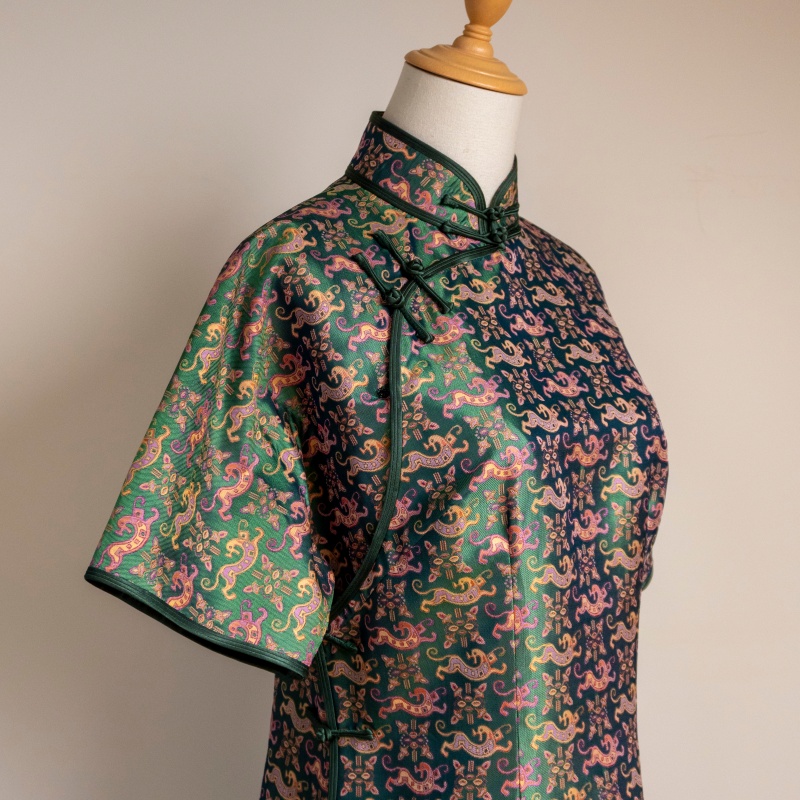
Skills for Judging the Quality of Handmade Silk Qipao Craftsmanship
How to Judge the Quality of Handcrafted Techniques in Silk Cheongsams
When selecting a silk cheongsam, the craftsmanship behind its hand-embroidery or other handcrafted elements can significantly impact its elegance, durability, and overall value. Unlike machine-made designs, handcrafted techniques carry a unique charm and attention to detail that reflects the artisan’s skill. However, distinguishing between high-quality and subpar craftsmanship requires a keen eye and understanding of specific indicators. Below are practical tips to help you evaluate the quality of handcrafted techniques in silk cheongsams.
Observing the Precision of Stitching and Embroidery
One of the most telling signs of excellent craftsmanship is the precision of stitching and embroidery. In a well-made silk cheongsam, every stitch should be uniform, small, and nearly invisible from the front. The lines should flow smoothly without any puckering, pulling, or unevenness. This level of detail requires not only skill but also patience and a steady hand, as even minor mistakes can disrupt the overall aesthetic.
Analyzing Thread Consistency and Tension
The consistency of the thread used in hand-embroidery is another critical factor. High-quality threads should match the fabric’s color perfectly or complement it harmoniously. They should also maintain their integrity over time, resisting fading or fraying. Additionally, proper tension is essential for ensuring that the embroidery lies flat against the fabric without bunching up or creating loose loops.
When examining a cheongsam, gently run your fingers over the embroidered areas. If you feel any irregularities, such as bumps or gaps, it may indicate poor craftsmanship. Conversely, a smooth, even surface suggests that the artisan took great care in their work.
Evaluating the Complexity and Originality of Designs
The complexity and originality of the handcrafted designs can also reveal a lot about the quality of the cheongsam. Intricate patterns, such as those featuring floral motifs, birds, or traditional Chinese symbols, require a high degree of skill to execute properly. Look for designs that demonstrate creativity and attention to cultural significance, as these are often hallmarks of experienced artisans.
Checking for Symmetry and Balance
Symmetry and balance are essential elements in traditional Chinese art and design. A well-crafted silk cheongsam should feature patterns that are evenly distributed and symmetrical, especially around key areas like the collar, sleeves, and hem. Any noticeable asymmetry or imbalance may suggest that the artisan rushed through the process or lacked the necessary expertise.
To assess symmetry, fold the cheongsam along its centerline and compare the two halves. If the patterns align perfectly, it’s a good sign that the craftsmanship is of high quality. You can also examine the placement of individual elements, such as buttons or decorative tassels, to ensure they are evenly spaced and aligned.
Assessing the Durability and Finish of Handcrafted Elements
The durability and finish of handcrafted elements are equally important when evaluating the quality of a silk cheongsam. High-quality craftsmanship should withstand regular wear and tear without showing signs of damage or deterioration. This includes the strength of stitches, the security of attached elements, and the overall resilience of the fabric.
Testing the Strength of Stitches
To test the strength of stitches, gently tug on small sections of the embroidery or seams. If the threads hold firmly without breaking or coming loose, it indicates that the artisan used strong, durable materials and secured them properly. Be cautious not to pull too hard, as this could damage the fabric, but a slight tug should be sufficient to gauge the stitch quality.
Examining the Security of Attached Elements
In addition to stitches, any attached elements like beads, sequins, or appliqués should be securely fastened to the fabric. Check for any loose or missing pieces, as these can not only detract from the cheongsam’s appearance but also pose a risk of falling off during wear. High-quality craftsmanship ensures that every element is firmly attached and blends seamlessly with the overall design.
Choosing a Supplier Committed to Quality Craftsmanship
While the above tips are useful for evaluating handcrafted techniques, working with a supplier that prioritizes quality is equally important. Look for companies that source their materials responsibly, employ skilled artisans, and adhere to strict quality control standards throughout the production process.
For instance, businesses like Xrrt Silk, which specialize in comprehensive supply chain management from raw silk to finished fabrics, ensure that every product meets international standards. Their focus on designing, customizing, and producing high-quality silk fabrics reflects a commitment to excellence in craftsmanship. By choosing a supplier with a reputation for quality, you can have greater confidence in the authenticity and durability of your silk cheongsam.
By combining these practical evaluation methods with a discerning approach to supplier selection, you can confidently choose a silk cheongsam that showcases exceptional handcrafted techniques. Whether you’re a collector or simply appreciate the beauty of traditional Chinese artistry, understanding these key indicators will help you make a purchase that is both visually stunning and built to last.