
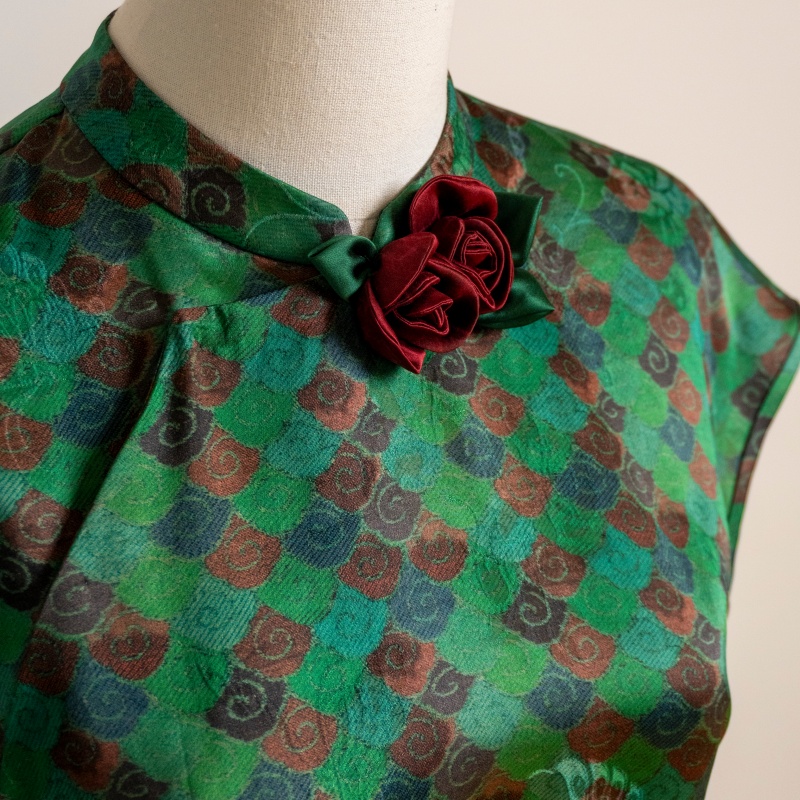
Improvement Points for Modern Size Design of Cheongsam (Chinese Traditional Dress)
Modern Modified Qipao Size Design: What Every Maker and Wearer Needs to Know
The qipao has changed. What started as a form-fitting tube of silk has evolved into something that barely resembles its ancestor. Modern modified qipao blend traditional elements with contemporary cuts, looser fits, and entirely new proportions. But here is the thing most people overlook: you cannot simply take a traditional qipao pattern and loosen it up. The proportions break. The silhouette collapses. The whole garment starts to look like a costume instead of a dress. Designing sizes for a modified qipao requires a completely different mindset, and getting it wrong is easier than you think.
The Fundamental Shift: Why Modified Qipao Need Different Sizing Logic
Traditional qipao are built on the body. Every measurement maps directly to a curve. The waist tapers, the hips flare, the bust projects. Modern modified qipao deliberately step away from that. They add ease, they change the silhouette, they introduce elements that have no place in a classic pattern. And that means the sizing rules change too.
Ease Is Not Just “Bigger”
When people say they want a “looser” qipao, most makers just add a few centimeters everywhere and call it done. That is lazy, and it shows. Ease in a modified qipao needs to be strategic. You add ease where movement demands it and keep it tight where the silhouette depends on it.
The hip area might get 3 to 4 cm of extra ease. The waist might get only 1 to 2 cm. The bust might stay almost exactly the same as your measurement. This uneven distribution is what keeps a modified qipao looking like a qipao instead of a sack. Uniform ease across the entire garment kills the shape. Targeted ease enhances it.
The Silhouette Has Changed, So the Ratio Has Changed
A traditional qipao follows an extreme hourglass — tight waist, wide hips, narrow shoulders. A modified qipao might follow a softer A-line, a straight column, or even a slight shift toward a broader shoulder. Each of these silhouettes demands a different set of proportions, and those proportions start with the measurements.
If you are designing a modified qipao with a relaxed A-line skirt, the hip-to-waist ratio might be 8 to 10 cm instead of the traditional 15 to 20 cm. That difference sounds small on paper, but it completely changes how the fabric falls and how the garment moves.
Upper Body Design: Where Modern Cuts Break the Rules
The upper body of a modified qipao is where the most experimentation happens. And it is also where the most sizing mistakes occur.
Shoulder Width Gets Bolder
Traditional qipao have narrow, precise shoulders. Modified versions often widen them — sometimes significantly. This changes everything downstream. A wider shoulder means the armhole needs to be deeper. A deeper armhole means the bust dart placement shifts. A shifted dart means the entire bodice pattern needs to be redrawn.
When you widen the shoulder by more than 2 cm beyond the traditional measurement, you are no longer modifying a qipao pattern. You are building a new pattern from scratch. Most makers do not realize this until they have already cut the fabric and it hangs wrong.
The modern shoulder on a modified qipao usually sits 1 to 3 cm wider than your natural shoulder measurement. This creates a stronger, more contemporary line that balances the often-looser skirt portion. But if you go beyond 3 cm, the garment starts to look like a blazer with a mandarin collar, not a qipao.
Neckline Depth Varies Wildly
Traditional qipao have a high mandarin collar that sits at the base of the neck. Modified qipao might have a V-neck, a scoop neck, or even an off-the-shoulder cut. Each of these changes the measurement system entirely.
A V-neck qipao needs a bust measurement taken at the lower bust line, not the full bust. The dart placement moves down, and the waist measurement becomes less critical because the garment no longer cinches at the natural waist. Instead, it cinches at the lower ribcage, which is a different number entirely.
An off-the-shoulder modified qipao needs the upper arm circumference measured because that is where the garment actually sits. The shoulder measurement becomes irrelevant. The bust measurement still matters, but it is taken differently — across the back, not the front.
Sleeve Design Changes the Arm Measurement
Modern modified qipao come with sleeves that traditional versions never had — puff sleeves, bell sleeves, cap sleeves, even dropped shoulders. Each sleeve type demands a different arm measurement.
A cap sleeve needs the upper arm circumference at the point where the sleeve ends, usually mid-bicep. A bell sleeve needs the full arm circumference at the widest point because the sleeve flares out from there. A dropped shoulder sleeve needs the armhole depth measured from the new shoulder point, which is lower than the natural shoulder.
Never use the same arm measurement for every sleeve type. It is the fastest way to end up with a sleeve that either cuts off circulation or hangs like a parachute.
Lower Body Design: The Skirt Portion Is Where Modified Qipao Live or Die
The skirt is what separates a modified qipao from every other dress. It carries the cultural identity, and it is where most sizing experiments happen.
The A-Line Skirt Needs a Different Hip Measurement
A traditional qipao skirt hugs the hip and flares slightly below. A modified A-line skirt flares from the waist downward. This means the hip measurement matters less than the waist-to-hem flare ratio.
For an A-line modified qipao, measure your waist and then decide how much flare you want at the hem. A moderate flare adds about 8 to 12 cm of width at the hem compared to the waist. A dramatic flare adds 15 cm or more. The hip measurement is used only to check that the skirt does not pull across the widest part of your body. It does not control the silhouette anymore.
This is a massive departure from traditional logic, where the hip measurement is king. In a modified A-line qipao, the waist measurement is king.
The Straight Column Skirt Needs Length Precision
Some modified qipao skip the flare entirely and go straight from waist to hem. This looks clean and modern, but it demands absolute precision in length.
A straight column skirt that is too long looks like a nightgown. A straight column skirt that is too short looks unfinished. The hem needs to land at a point that creates a clean vertical line, and that point varies by height.
For frames under 160 cm, the hem should land at or just above the knee. For frames between 160 and 170 cm, the hem can go to mid-calf. For frames over 170 cm, a floor-length hem works because the straight line has enough distance to develop its elegance.
The column skirt also needs minimal ease at the hip — no more than 1 to 2 cm. Any more and the straight line bulges, and the whole silhouette loses its purpose.
The Pleated Skirt Adds Volume Without Adding Width
One of the most popular modern modifications is adding pleats to the skirt portion. This creates volume and movement without widening the hip measurement. It is a clever trick, but it changes how you take measurements.
When a qipao skirt is pleated, the hip measurement stays the same as your body, but the fabric width at the hip increases by the pleat depth times the number of pleats. Each pleat that is 2 cm deep and folded on both sides adds 4 cm of fabric at that point.
This means the skirt pattern needs to be wider than your hip measurement by the total pleat volume. But the garment still fits your hip exactly because the pleats compress when you stand still and expand when you move. It is a measurement paradox, and it only works if the pleat math is done correctly before cutting.
The Waist: Where Modern and Traditional Collide
The waist is the battleground between old and new. Traditional qipao cinch hard at the natural waist. Modified qipao often move that cinch point up, down, or eliminate it entirely.
Low-Waist Modified Qipao
Some modern designs drop the waist to the hip bone. This creates a relaxed, youthful look, but it changes which measurement controls the fit. The hip measurement becomes the primary fit point, and the waist measurement becomes secondary.
When designing a low-waist modified qipao, add 2 to 3 cm of ease to the hip measurement and reduce the waist dart to almost nothing. The garment should skim the hips without gripping them. The visual waistline is created by the seam placement, not by actual cinching.
High-Waist Modified Qipao
The opposite approach — cinching above the natural waist, near the ribcage — creates a retro-modern look that elongates the legs. This requires a ribcage measurement instead of a waist measurement.
The ribcage is usually 2 to 4 cm smaller than the natural waist, which means the garment is tighter at the top than a traditional qipao would be. But because the skirt flares from that high point, the overall effect is balanced. The key is to make sure the bust-to-ribcage difference is accounted for in the dart placement. Ignore this and the bodice will pucker.
No-Waist Modified Qipao
The most radical modern version has no waist seam at all. It is a straight tube from bust to hem, held together by darts or princess seams that shape the body without a visible cinch.
This requires the bust, waist, and hip measurements to be very close together — ideally within 4 cm of each other. If the differences are larger, the garment will either gap at the waist or pull at the hips, and there is no seam to adjust. The entire pattern must be drafted to accommodate the widest measurement while shaping at the bust and hip through darts alone.
Fabric Choices and How They Affect Modified Qipao Sizing
The fabric you choose changes how the measurements behave. This is especially true for modified qipao, where the fit is already looser than traditional.
Structured Fabrics Hold Shape Better
If you are using a fabric with body — heavy silk, brocade, or even a structured cotton blend — the measurements can be closer to the actual body. The fabric does the shaping. You need less ease because the material holds the silhouette on its own.
Soft Fabrics Need More Strategic Ease
If you are using a soft, drapey silk or a lightweight blend, you need more ease in specific areas. The fabric will not hold a shape, so the pattern needs to build it in. Add 2 to 3 cm of ease at the hip and 1 to 2 cm at the waist to let the fabric fall naturally without clinging.
Stretch Fabrics Change the Measurement Game Entirely
Some modern modified qipao use fabrics with a small amount of stretch. This means you can take the measurements tighter than your body because the fabric will expand when you wear it. The rule of thumb is to reduce every measurement by 1 to 2 cm compared to your actual body. But be careful — too much stretch and the garment loses its qipao identity entirely. It becomes a bodycon dress with a mandarin collar.
Common Sizing Disasters in Modified Qipao
The “One Size Fits All” Trap
Many modern qipao are sold as one-size or limited-range sizes. This works for simple, straight-cut designs. It fails catastrophically for anything with darts, pleats, or structured shoulders. A one-size modified qipao that fits the bust will not fit the waist. A one-size that fits the waist will not fit the hips. There is no shortcut here. Either offer real size ranges or stick to truly unstructured designs.
Ignoring the Back Measurement
Front measurements get all the attention. Back measurements get forgotten. But on a modified qipao, the back is often where the fit fails. The back length, the back waist, the back hip — these numbers are different from the front, and they need to be measured separately.
A qipao that fits perfectly from the front but gaps at the back looks cheap. Always measure the back independently and draft the back pattern separately from the front.
Forgetting to Account for Undergarments
Modern modified qipao are often worn with different undergarments than traditional ones. A strapless bra, a bandeau, or even no bra at all changes the bust measurement. Shapewear changes the waist and hip measurements. If you are designing for a modern wearer, you need to know what they plan to wear underneath. A qipao drafted for a padded bra will not fit a wearer who goes braless.