
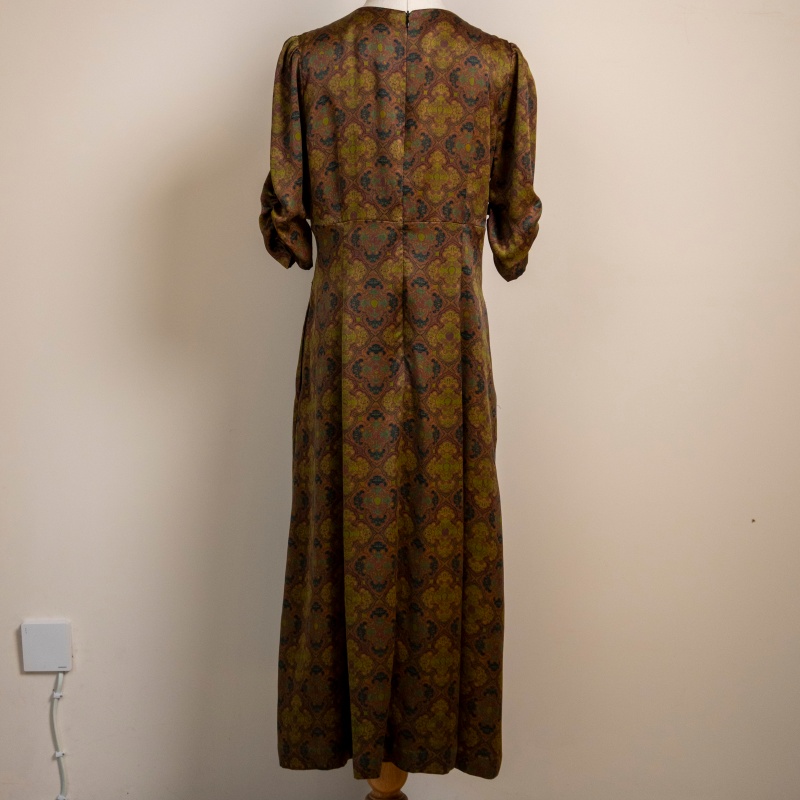
Proper Wearing Tips for Handcrafted Silk Cheongsam (Chinese Traditional Dress)
Handmade Silk Qipao Daily Wear: What You Need to Know Before You Step Out the Door
Wearing a handmade silk qipao every day is not the same as wearing a cotton dress to the grocery store. Silk behaves differently. It stains faster, wrinkles easier, and demands more attention than almost any other fabric. But that does not mean you need to lock it in a closet and only pull it out for special occasions. You absolutely can wear a silk qipao daily — you just need to know the rules first. Most people damage their qipao within the first week because they treat it like a regular garment. It is not. Here is how to wear one every day without destroying it.
The First Thing: Understanding What You Are Actually Wearing
Silk is a protein fiber. That means it reacts to sweat, perfume, body oil, and even the sun in ways that synthetic fabrics never will. A handmade silk qipao is even more delicate because the construction relies on hand-stitched details — pankou knots, hidden seams, hand-finished hems — that machine-made clothing simply does not have. Every one of those details is a potential weak point if you do not treat the garment with respect.
Why Daily Wear Is Harder Than Occasional Wear
Occasional wear means you put it on, wear it for a few hours, hang it up, and let it rest. Daily wear means it is under stress from the moment you put it on until the moment you take it off. The friction at the inner thigh, the pressure at the waist when you sit down, the stretch at the bust when you reach for something on a high shelf — all of this adds up.
A qipao you wear once a month can last ten years. A qipao you wear every day without proper care can fall apart in six months. The difference is not the quality of the silk. It is how you treat it between wears.
Getting Dressed: The Morning Routine That Protects Your Qipao
Most damage happens before you even leave the house. The way you put on a silk qipao matters more than you think.
Put It On Before Your Skincare and Perfume
This sounds obvious but most people do the opposite. They do their makeup, spray their perfume, apply their moisturizer, and then try to squeeze into the qipao. Every one of those products leaves a residue on your skin, and silk absorbs it instantly. Perfume contains alcohol, which breaks down silk fibers over time. Moisturizer contains oils that leave permanent yellow stains on light-colored silk. Sunscreen leaves a white, chalky film that no amount of washing removes.
Put the qipao on first. Let your skincare and perfume dry completely before the fabric touches your skin. Wait at least ten to fifteen minutes after applying anything before you zip up or button the qipao. This single habit will extend the life of your garment by years.
Zip or Button It Slowly
The placket on a handmade qipao is hand-stitched. The pankou knots are individually tied. Yanking the zipper or forcing the buttons closed puts stress on threads that were never meant to handle rough treatment. Close the zipper from the bottom up, not the top down. Button each pankou one at a time, starting from the collar and working down. Rushing this process is the number one cause of broken pankou and torn placket seams in daily-worn qipao.
Do Not Force It Over Your Head If It Is Sleeveless
Sleeveless qipao have a narrow neckline. Stretching that neckline over your head every morning slowly warps the collar stand. The stand is reinforced with interfacing, but interfacing has limits. After a few months of aggressive pulling, the collar will start to gap at the front and lose its shape.
Use a dressing stick or ask someone to help you into it. If you must put it on by yourself, step into it like a skirt first, then pull it up. Never stretch the neckline over your head.
Sitting Down: The Most Dangerous Moment for a Qipao
You would not believe how many silk qipao get destroyed at a desk. Sitting down is the single most stressful action for any fitted garment, and a qipao is the most fitted garment you will ever own.
The Thigh Crease Problem
When you sit, the fabric at the inner thigh folds and creases. On a synthetic fabric, this bounces back. On silk, those creases become permanent wrinkles within weeks. The solution is simple but most people ignore it: sit down slowly, and smooth the fabric across your thighs before you bend your knees.
If you are sitting for more than thirty minutes, cross your legs at the ankle, not the knee. Crossing at the knee puts direct pressure on the hip seam and the side slit, and both of those areas are hand-stitched. The thread will not hold up to repeated compression.
Standing Up from a Chair
When you stand up, the qipao shifts. The waist rides up, the hem swings, and the placket pulls. If you stand up quickly, you risk popping a pankou or stretching the waist seam. Stand up slowly, use your hands to push off the armrests, and let the fabric settle before you take a step. It takes two extra seconds. Those two seconds save your qipao.
Eating and Drinking: Where Stains Come From
Silk stains. That is just a fact. And some stains are permanent. Knowing what to avoid can save you from a lot of heartbreak.
Coffee and Tea Are Your Worst Enemies
A single drop of coffee on light silk leaves a brown mark that will never fully come out. Tea is slightly better but still leaves a yellowish tint on white or cream silk. When you drink anything dark while wearing a silk qipao, hold the cup away from your body. Do not rest your arm on the table near your lap. Do not lean forward over your cup. The distance between your hand and your torso should be at least fifteen centimeters at all times.
Oil-Based Foods Leave Ghost Stains
Soup, hot pot, anything with chili oil — these are silk killers. Oil does not just stain the surface. It penetrates the fiber and changes the color permanently. Even if you treat the stain immediately, you will still see a faint shadow of it after washing.
If you know you are eating something oily, wear a napkin tucked into the front of your qipao like a bib. It looks awkward but it works. Alternatively, drape a scarf across your lap when you eat. The scarf protects the fabric, and it actually looks quite elegant with a qipao.
Red Wine Is the Silent Destroyer
White wine is bad enough. Red wine is catastrophic. A single splash of red wine on silk creates a stain that professional cleaners sometimes cannot remove. If you are drinking wine at a dinner while wearing your qipao, keep the glass in your hand at all times. Never set it down near the edge of the table. Never pass a glass of red wine to someone while you are wearing a light-colored qipao. One accidental bump and the glass tips, and your qipao is ruined.
Walking and Moving: How Motion Affects the Fabric
A qipao is not a dress you wear to run errands in. It is not a dress you wear to chase a bus. It is a dress that demands a certain pace of movement, and fighting that pace damages the garment.
The Side Slit Is Not a Suggestion
The side slit exists for a reason. It lets you walk. If you try to take long strides without opening the slit naturally, the fabric at the hip will pull and eventually tear. Walk with shorter, more controlled steps. Let the slit do its job. If the slit is not opening enough when you walk, it is too narrow — have it adjusted rather than forcing your way through a tight slit.
Avoid Bending at the Waist
Bending forward at the waist puts enormous stress on the back seam and the waist darts of a qipao. Instead of bending at the waist, bend at the knees. Squat down slightly to pick something up. This keeps the waist area flat and undistorted.
The same applies to reaching up. Do not stretch your arms high above your head while wearing a sleeveless qipao. The armhole will stretch and never return to its original shape. Reach up with one hand, not both. Keep your movements within the natural range of the garment.
Getting In and Out of a Car
This is where most daily-worn qipao meet their end. Getting into a car requires you to twist your torso, bend at the waist, and pull the fabric across your hips — all at the same time. The side seam takes the brunt of this stress.
Before you get in, unbutton or unzip the qipao from the bottom up to the hip. Sit down first, then pull the qipao down over your legs. Do not try to shuffle into the car with the qipao fully fastened. The fabric will tear at the hip seam, and hand-stitched seams do not mend easily.
After You Take It Off: The Evening Care Routine
What you do after you remove the qipao matters just as much as how you wore it.
Hang It Immediately
Never throw a silk qipao on a chair or drape it over a bedpost. Silk wrinkles instantly, and those wrinkles set within minutes. Hang it on a wide, padded hanger — a wooden hanger with a velvet covering is ideal. The hanger should be wide enough to support the shoulders without creating bumps. Wire hangers will leave permanent shoulder dents in the fabric.
Hang it in a cool, dry place away from direct sunlight. Sunlight fades silk over time, and the fading is uneven — the areas that get more sun will lighten faster than the areas that stay in shadow. After a few months, your qipao will look patchy.
Do Not Wash It After Every Wear
This might surprise you. Silk does not need to be washed after every single wear. In fact, washing silk too often breaks down the fibers and fades the color. If you wore the qipao for a few hours and did not sweat heavily, did not spill anything, and did not get caught in the rain, you can wear it again without washing.
When you do wash it, hand wash in cold water with a silk-specific detergent. Do not wring. Do not twist. Do not hang it to drip — lay it flat on a towel and roll the towel to absorb excess water. Then hang it to dry. Machine washing a handmade silk qipao is a death sentence. The agitation will destroy the pankou, loosen the hand-stitched seams, and shrink the fabric.
Brush It Gently Before Hanging
Use a soft brush — a baby hairbrush works perfectly — and run it gently over the surface of the fabric in the direction of the grain. This removes dust, lint, and any tiny particles that could attract moisture and cause spots over time. It also helps the silk lie flat and reduces wrinkling. This takes thirty seconds and makes a real difference.
Storage: How to Keep It When You Are Not Wearing It
If you are not wearing the qipao for a few days or more, storage matters.
Never Store It in a Plastic Bag
Plastic traps moisture. Moisture causes mildew. Mildew eats silk. Store your qipao in a breathable garment bag — cotton or muslin, not plastic. If you do not have a garment bag, wrap it in a clean cotton cloth and leave it in a dry closet.
Use Cedar, Not Mothballs
Mothballs are toxic and they leave a smell that never fully goes away. Cedar blocks repel moths naturally and they smell clean. Place one or two cedar blocks in the garment bag or closet. Replace them every six months.
Do Not Store It Folded for Long Periods
Folding silk creates crease lines that become permanent over time. If you must fold it for storage — say, you are traveling — fold it along the existing seams, not across them. Place a sheet of acid-free tissue paper between the folds to prevent the fabric from sticking to itself. Unfold it as soon as you arrive at your destination and hang it immediately.
The Small Things That Add Up Over Time
Daily wear is about the small habits, not the big ones. Nobody ruins a qipao with a single dramatic mistake. They ruin it with a hundred tiny ones.
Watch Your Jewelry
Rings, bracelets, watches — all of these can snag silk. A single snag can pull a thread that unravels the entire panel if you do not catch it immediately. Before you put on any jewelry, put on your qipao. After you take off the qipao, put on your jewelry. This order seems backwards but it protects the fabric.
Be Careful with Bags
A handbag strap rubbing against the same spot on your shoulder every day will wear through the silk within months. Rotate which shoulder you carry your bag on. Or use a crossbody bag so the strap does not press into one spot. If you carry a tote bag, the handle can dig into the hip area when you hold it at your side. Hold it in the crook of your elbow instead.
Nails Matter More Than You Think
Long fingernails can snag silk without you even noticing. If you wear your qipao daily, keep your nails trimmed and filed smooth. A rough edge on a thumbnail can catch a thread when you button the pankou and pull the entire knot loose.
When Things Go Wrong: Quick Fixes That Actually Work
Even with perfect care, accidents happen. Here is how to handle the most common daily-wear disasters.
A Small Stain Appears During the Day
Blot it immediately. Do not rub. Use a clean, damp cloth and press gently on the stain to lift it. If it is an oil stain, sprinkle a small amount of cornstarch or talcum powder on it to absorb the oil, then brush it off after an hour. Do not use water on an oil stain — water sets oil into silk fibers permanently.
A Pankou Comes Loose
Do not pull it. Cut the loose thread as close to the knot as you can with small scissors. Then re-tie the knot using the same thread. If the thread color does not match exactly, it will still look fine because pankou are meant to be handmade and slightly imperfect. A perfectly uniform pankou actually looks machine-made and cheap.
The Collar Starts to Gap
This usually means the collar stand has lost its stiffness. You can temporarily fix this by placing a thin strip of interfacing inside the stand — slide it in through the bottom edge of the collar. This is not a permanent fix, but it buys you time until you can get the collar professionally re-stiffened.