
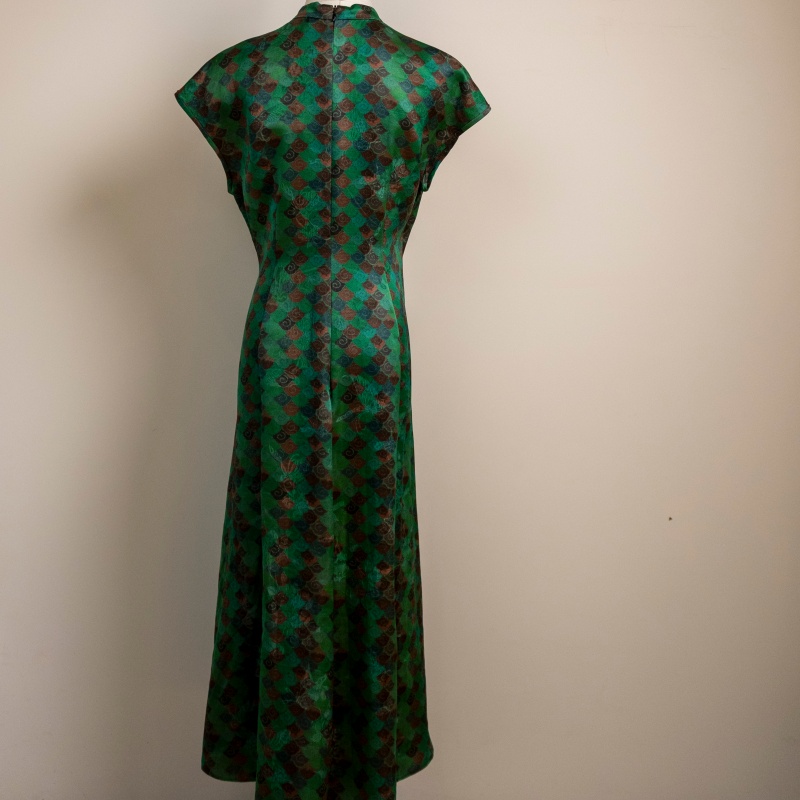
Silk cheongsam care and maintenance tips for preventing fraying and wear and tear during wearing
Real Silk Qipao Anti-Snag and Anti-Wear Tips: How to Protect Your Garment Every Single Day
Silk is beautiful until the moment it snags. One rough edge, one sharp corner, one careless movement — and a thin thread pulls loose, unravels, and ruins a panel that took hours to stitch. Real silk qipao are especially vulnerable because the fabric is thin, the construction is hand-stitched, and the details like pankou knots and side slits create dozens of weak points where snags love to start. The good news is that most snags and wear are completely preventable. You just need to change how you move, how you sit, and how you think about your clothes.
Why Real Silk Snags So Easily and What Actually Causes It
Before you can protect your qipao, you need to understand what is attacking it.
The Fiber Itself Is the Problem
Real silk is a continuous filament fiber. That means it is one long, unbroken thread woven into fabric. On one hand, this gives silk its incredible smoothness and shine. On the other hand, it means there is no redundancy in the weave. When a synthetic fabric snags, the broken fiber is surrounded by others that hold the structure together. When silk snags, that one broken filament pulls and the surrounding threads follow it like a zipper opening. A snag that starts as a tiny loop can become a run of several centimeters within seconds if you do not catch it immediately.
Thinner silk snags faster. A qipao made from 12 momme silk will snag at the slightest provocation. A qipao made from 19 momme or heavier is more forgiving, but it is not immune. Weight helps, but it does not solve the problem. Your behavior does.
The Construction Creates Snag Traps
A handmade qipao is full of places where threads are exposed and waiting to be caught. The pankou knots have loose ends. The side slit has raw edges where the fabric layers separate. The collar stand has a seam where the interfacing meets the silk. Every one of these points is a snag magnet. You cannot eliminate these features — they are what make a qipao a qipao — but you can learn to move in ways that avoid them.
How You Move Determines Whether Your Qipao Survives the Day
Most snags do not happen when you are standing still. They happen when you are in motion. The way you walk, sit, reach, and turn is either protecting your qipao or destroying it.
Walking Without Snagging the Side Slit
The side slit is the most dangerous part of any qipao. Every time you take a step, the two edges of the slit brush against each other. If the edges are not finished perfectly — and hand-finished edges are never perfectly smooth — one edge will catch a thread from the other. After a few hundred steps, you have a snag.
The fix is in your stride. Take shorter steps than you normally would. This keeps the slit from opening too wide, which reduces the distance the edges travel against each other. When you walk, let your leading leg go forward first and let the slit open naturally with the motion. Do not force the slit apart with your hand. Do not kick your leg out to the side. Controlled, short steps are the single best thing you can do for a silk qipao.
Also, check the slit edges before you go out. Run your fingernail gently along both edges. If you feel any roughness or loose threads, trim them with small scissors before you leave the house. A loose thread at the slit edge will snag within your first ten steps.
Sitting Down Without Creating Friction Points
Sitting is where most wear happens on a qipao. The fabric compresses at the hip, stretches at the thigh, and rubs against whatever surface you are sitting on.
Never sit down on a rough surface while wearing a silk qipao. Denim jeans, textured upholstery, unfinished wood — all of these will snag the silk within seconds. Before you sit, run your hand over the surface. If it feels rough, put a cloth, a jacket, or anything smooth between you and the seat.
When you sit, lower yourself slowly. Dropping into a chair creates a sudden compression that can snap threads at the hip seam. Lower yourself inch by inch, and smooth the fabric across your thighs as you go. This distributes the pressure evenly instead of concentrating it on one point.
Crossing your legs is the enemy of silk. When you cross your legs, the inner thigh fabric rubs against itself under pressure. That friction creates micro-snags that you cannot see but that weaken the fabric over time. If you must cross your legs, do it at the ankle, not the knee or thigh. And do not stay crossed for more than a few minutes.
Reaching and Bending Without Stressing the Seams
Every time you reach up, the armhole stretches. Every time you bend forward, the waist darts compress. Repeated stress at these points does not snag the fabric immediately, but it weakens the threads over weeks. Weakened threads snag at the slightest provocation.
Reach up with one hand, not both. When you need to grab something from a high shelf, use a step stool instead of stretching. This protects the armhole and the side seam simultaneously.
Bend at the knees, not the waist. When you pick something up from the floor, squat down slightly rather than bending forward at the waist. This keeps the waist darts from compressing and the back seam from stretching. The same applies to tying your shoes — kneel down or sit on a low surface instead of bending over.
What You Wear Underneath Matters More Than You Think
The layer between your skin and the qipao is either protecting the silk or destroying it.
Shapewear Is a Double-Edged Sword
Many people wear slimming shapewear under a qipao to smooth out the silhouette. This works visually, but most shapewear is made from nylon or spandex blends that are abrasive against silk. The friction between shapewear and silk creates micro-snags every time you move. After a full day of wearing, the silk surface will have dozens of tiny pulls that are invisible at first but become visible after several wears.
If you wear shapewear under your qipao, choose the smoothest, thinnest option you can find. Avoid shapewear with lace panels, seams, or textured fabric. The smoother the shapewear, the less friction it creates. A seamless, smooth shapewear is far better for silk than a heavily structured one.
Bras and Straps Create Constant Friction
Bra straps slide against the same spot on your shoulder every time you move your arms. That repeated friction wears through silk fibers over time. The area under the strap becomes thin, and eventually it snags or tears.
Wear a strapless bra or a bra with silicone grip strips under your qipao. The silicone holds the bra in place without the strap sliding. If you must wear a strapped bra, choose one with satin-covered straps instead of elastic ones. Satin glides against silk. Elastic grips and pulls.
Jewelry and Watches Are Silent Killers
A ring on your finger can snag the pankou knots when you button them. A watch on your wrist can snag the sleeve edge if your qipao has sleeves. A bracelet can snag the fabric every time you raise your arm.
Put on your qipao before you put on any jewelry. Take off your jewelry before you take off your qipao. This simple order prevents the most common snag scenarios. If you wear rings daily, consider moving them to the hand that does most of the buttoning so the other hand stays snag-free.
Surface and Environment Hazards You Are Not Thinking About
It is not just your body that snags silk. The world around you is full of invisible threats.
Car Seats Are the Number One Daily Hazard
Getting into and out of a car is the moment when most silk qipao get damaged. The car seat fabric — usually a rough woven textile — grabs the silk the moment you sit down. The seat belt buckle can snag the fabric at the waist. The door frame can catch the hem or the slit.
Before you sit in a car, smooth the qipao flat against your legs. Do not let any fabric bunch up under you. When you get out, stand up first, then pull the qipao down. Do not slide across the seat — sliding creates friction across the entire hip area.
If your car has leather seats, you are in better shape. Leather is smooth and does not snag silk the way woven fabric does. But leather can still create friction at the thigh, so do not stay seated for long periods without adjusting.
Office Chairs and Public Seating
Office chairs with mesh backs, fabric-covered public benches, restaurant chairs with textured upholstery — all of these are snag hazards. Before you sit, look at the surface. If you see any rough texture, any loose threads, any sharp edges, find a different seat or put something smooth between you and the surface.
At restaurants, drape a napkin or your scarf across your lap before you sit. This creates a barrier between the silk and the chair. It looks natural with a qipao anyway, so nobody will think twice.
Bag Straps and Belts
A handbag with a chain strap is a snag nightmare. Chain links catch silk threads every time you swing the bag. A leather bag with a thin strap is better, but the strap edge can still snag the shoulder area.
Carry your bag in the crook of your elbow, not on your shoulder. If you must carry it on your shoulder, use a bag with a wide, smooth strap. Never use a bag with metal hardware that presses into the fabric — the metal edge will snag the silk within minutes.
Belts worn over a qipao are even worse. The buckle and the belt holes are sharp and rough. If you wear a belt with your qipao, make sure the belt sits above the hip line, not across the widest part of the fabric. And choose a belt with a smooth, rounded buckle — avoid anything with prongs or sharp corners.
Handling Pankou Knots Without Pulling Threads
The pankou knots are the most beautiful part of a qipao and the most fragile. Each knot is hand-tied, and each one has loose thread ends that are just waiting to be caught.
Buttoning Technique That Prevents Snags
Never grab a pankou knot and yank it through the loop. That motion pulls the thread ends and can loosen the entire knot. Instead, pinch the knot between your thumb and forefinger, slide it gently into the loop, and release. The motion should take two seconds, not one.
Start buttoning from the collar and work down. End with the bottom knot. This order keeps the fabric smooth as you go and prevents the lower knots from catching on already-fastened upper knots.
When a Knot Starts to Loosen
If you notice a pankou knot is getting loose — the thread is fraying, the knot is shifting — do not ignore it. A loose knot will snag on something within the day, and when it does, it will take a panel of fabric with it.
Re-tie the knot immediately using the same thread. If you do not have the original thread, use something as close as possible in color and weight. A knot that is re-tied properly will last just as long as the original. A knot that is ignored will become a hole.
Washing and Drying Without Creating New Snags
Even the laundry process can damage silk if you do it wrong.
Hand Wash Only, Always
Machine washing is the fastest way to destroy a silk qipao. The agitator snags threads. The spin cycle stretches seams. The detergent breaks down fibers. There is no exception to this rule.
Fill a basin with cold water and add a small amount of silk-specific detergent. Submerge the qipao and let it soak for no more than five minutes. Do not agitate it. Do not rub it. Press the water through the fabric with your hands, gently, the way you would squeeze a sponge. Rinse in clean cold water the same way.
Drying Without Hangers
Wet silk is at its most vulnerable. The fibers are swollen and soft, and they snag ten times more easily than dry silk. Never hang a wet qipao on a hanger — the weight of the water will stretch the shoulders and the hanger edge will snag the armholes.
Lay the qipao flat on a clean, dry towel. Roll the towel up with the qipao inside to absorb excess water. Then lay it flat again on a fresh towel and let it air dry. Do not wring. Do not twist. Do not put it in a dryer. Ever.
Ironing Without Burning the Silk
If your qipao needs pressing, use a silk setting on the iron — the lowest heat possible. Place a thin cotton cloth between the iron and the fabric. Never press directly on silk. The iron will burn the fibers and create weak spots that snag immediately.
Press the pankou knots with the iron wrapped in cloth, using the tip of the iron only. The knots are thick and need more heat, but the rest of the garment does not.
Emergency Snag Repair: What to Do Mid-Day
You will snag your qipao eventually. Everyone does. The question is whether you catch it in time.
Catch It Within the First Minute
When you feel a snag — that tiny tug on the fabric — stop moving immediately. Do not keep walking. Do not keep sitting. Every second of movement after a snag starts makes it worse.
Find the snag point. You will see a small loop of thread sticking out. Do not pull it. Pulling it will unravel the run. Instead, take a fine needle and gently push the looped thread back through to the inside of the fabric. Work from the inside out, not the outside in. Push the thread end back through the weave until the snag disappears.
If you do not have a needle, use a safety pin from the inside. Slide it through the fabric at the snag point and use it to push the loose thread back into the weave. This is not a permanent fix, but it stops the run from spreading until you can do a proper repair at home.
Do Not Cut the Loose Thread
The instinct when you see a loose thread is to cut it. Do not do this. Cutting the thread creates a new end that will snag something else within minutes. The only time you should cut a thread is when you are doing a controlled repair with a needle and thread in hand. Otherwise, leave it alone and deal with it later.
When the Damage Is Too Big to Fix Yourself
If the snag has already created a run of several centimeters, or if the fabric has torn, do not try to fix it yourself. Take it to a tailor who works with silk. Hand-stitched repairs on silk are invisible if done correctly. A machine repair will leave a visible scar and a weak point that will snag again.
Tell the tailor exactly what happened and where. A good silk tailor can repair a run so well that you will never know it was there. A bad repair will be worse than the original damage.