
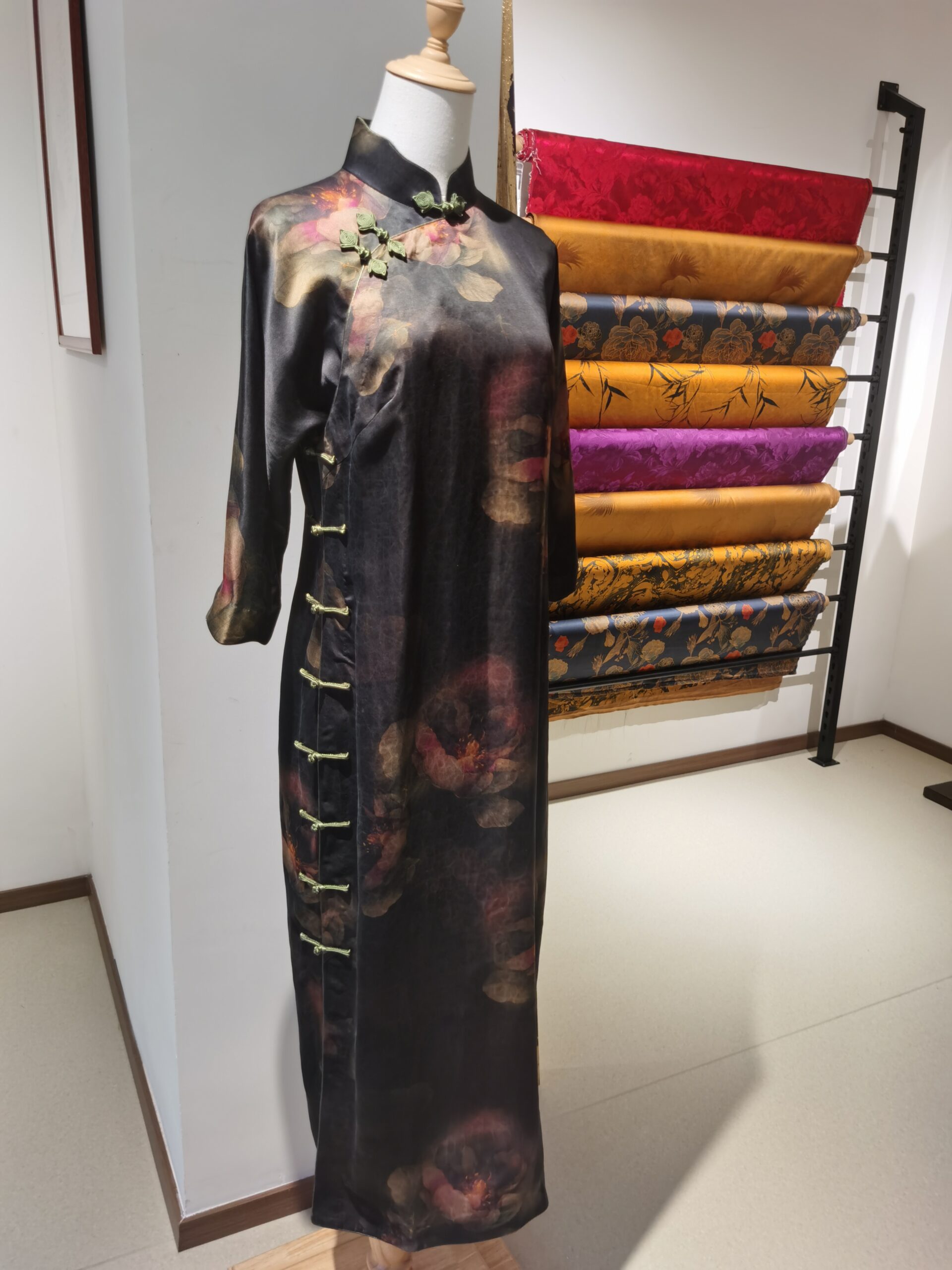
The correct steps and methods for wearing and taking off a handmade cheongsam
How to Put On and Take Off a Handmade Cheongsam — Step by Step Without Wrecking It
There’s something almost ritualistic about wearing a handmade cheongsam. The fabric is different from anything off a rack — stiffer at first, then it melts to your body over time. The buttons are tiny works of art. The fit is precise down to the millimeter. Which is exactly why getting dressed in one feels intimidating the first few times.
Most people just yank it on like a t-shirt. Don’t do that. A handmade cheongsam can last decades if you treat it right from the very first wear. Here’s how to actually put it on and take it off without stretching the silk, snapping the fasteners, or pulling the seams.
Putting On a Handmade Cheongsam — The Right Order Matters
Get Your Skin and Hair Ready Before You Touch the Dress
This sounds obvious but people skip it every single time. A handmade cheongsam has no stretch in most cases, especially if it’s pure silk with minimal elastane blend. That means lotion, powder, perfume — all of it needs to go on your skin before the dress goes on your body.
Hair should be pulled up and secured. Long hair getting caught in those pankou knot buttons is a nightmare scenario. Bobby pins, a low bun, whatever works — just keep hair off the back of your neck and shoulders. The collar needs to sit clean against your skin, not tangled in loose strands.
Jewelry goes on after the dress is fully fastened. Earrings especially. Trying to thread earrings through a high mandarin collar is a quick way to snag the fabric.
Step In From the Bottom, Never Over the Head
Hold the cheongsam by the shoulders and let the skirt portion hang down. Step into it with one foot first, then the other, the same way you’d step into a narrow skirt. The hem should land around your ankles at this point.
Pull the dress up slowly from the bottom hem toward your waist. Smooth the fabric as it climbs over your hips and thighs. Do not rush this part. Handmade cheongsams often have side slits that need to align properly with your legs — pulling too fast will twist the slit opening to the wrong side.
Once the dress is at your waist, step your arms through the sleeves one at a time. If the sleeves are tight (and many handmade ones are), wiggle your fingers into the cuff first to create some room, then slide your arm through the rest of the way.
Fasten the Pankou Buttons From Top to Bottom
This is where patience really counts. Start at the mandarin collar and work your way down. Each pankou button — those hand-tied frog fasteners — has a loop on one side and a knot on the other. Thread the knot through the loop gently.
Never yank. If a button feels stuck, don’t force it. Check that the fabric on both sides is aligned evenly. Sometimes a tiny fold of silk gets caught under the button and that’s all it takes to create resistance. Smooth the fabric, try again.
The side fasteners along the right hip are usually the trickiest. Stand in front of a mirror, bend slightly to one side, and fasten each one slowly. It takes practice. Most people fumble the first few times and that’s completely normal.
Zipper cheongsams are easier but still require the same slow approach. Pull the zipper up gently — fast zippers create fabric puckering that’s hard to fix later.
Taking Off a Handmade Cheongsam — This Is Where Most Damage Happens
Unfasten Everything in Reverse Order
Bottom to top. Always. Undo the side fasteners first, then work up to the collar. If you try to pull the dress off over your head with buttons still fastened, you will stretch the collar and probably pop a pankou knot off its thread.
For zipper styles, unzip fully before pulling anything over your head. A half-zipped cheongsam being pulled upward is the fastest way to shred the zipper teeth.
Step Out From the Top, Not the Bottom
Here’s the part nobody thinks about. Do not pull the cheongsam down over your hips like you’re removing a pullover. The hip area of a handmade cheongsam is often the most structured part — it may have boning, interfacing, or heavy stitching to hold the shape.
Instead, unbutton or unzip everything, then lift the dress up and over your head starting from the collar. Let it come off like a cape. Your head goes through first, then your arms follow. The dress should come off in one smooth motion without any pulling at the hips.
If the dress feels tight around your head during removal, stop. You likely missed a button somewhere. Check the back of the collar — some handmade cheongsams have a hidden button or hook at the very top that people forget about.
Mistakes That Slowly Destroy Your Cheongsam Over Time
Yanking It Over Your Head Without Unfastening
This is the number one killer of handmade cheongsams. The mandarin collar gets stretched out permanently. The pankou buttons get torn from their base. The shoulder seams start to separate. It takes about five or six rough removals before you start noticing the damage, and by then it’s already done.
Even if you’re in a rush, take ten seconds to undo the buttons. Your dress will thank you.
Forcing Buttons When They Don’t Want to Cooperate
A pankou button that won’t close usually means something is misaligned, not that you need more force. Stop. Look in the mirror. Check that both sides of the front panel are even. Make sure the slit is sitting correctly. Adjust, then try again.
Forcing a pankou knot will rip the silk thread it’s sewn with, and repairing hand-tied buttons is expensive and time-consuming. Most tailors can fix them, but why go through that trouble when a little patience solves the problem instantly.
Storing It While Still Worn (Yes, People Do This)
Never hang a cheongsam up while it’s still on your body. Sounds ridiculous but it happens — someone gets home tired, hangs the dress on a hook still wearing it, and goes to sleep. The weight of your body pulls the shoulders downward overnight. The collar warps. The silk stretches unevenly.
Take it off properly every single time. Hang it on a wide padded hanger immediately after removal. The first thirty minutes after taking off are when silk is most vulnerable to crease-setting, so don’t just toss it on a chair.
A Few Extra Things Worth Knowing
The first time you wear a brand new handmade cheongsam, expect it to feel stiff. Pure silk without any wear-in will hold its shape rigidly. After two or three wears, the fabric starts to soften and move with your body instead of against it. Don’t panic when it feels restrictive at first — that’s normal.
If the dress has a lining, make sure the lining isn’t twisted when you put it on. A twisted lining creates uncomfortable bunching and can cause the outer silk to pull unevenly. Smooth both layers as you pull the dress up.
And one more thing — if your cheongsam has a back zipper, always reach behind and zip it up yourself. Asking someone else to zip it usually means they pull too hard, and back zippers on handmade cheongsams are delicate. Treat them like they’re made of glass, because essentially they are.