
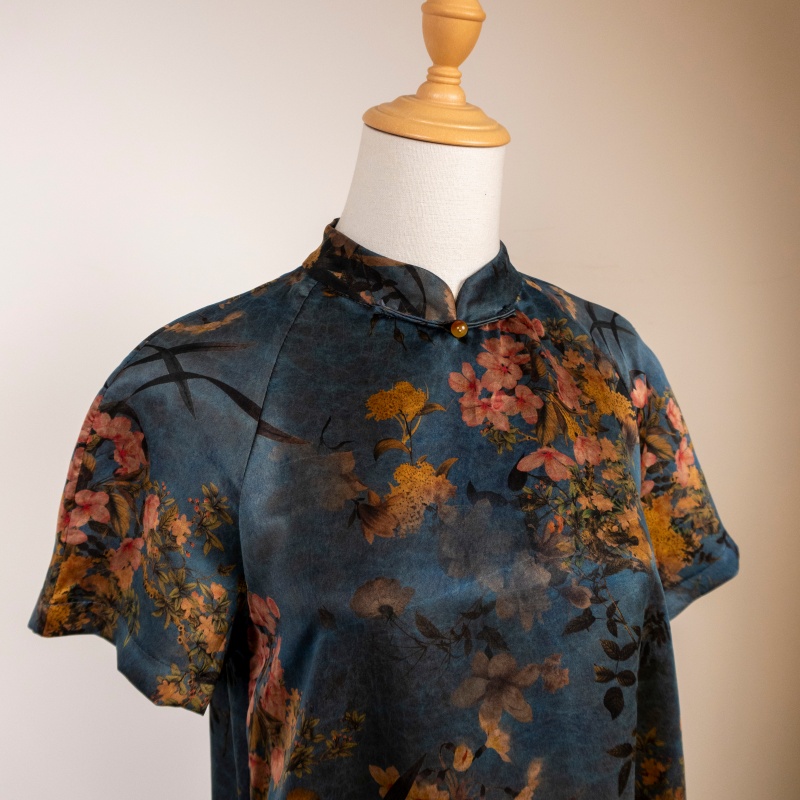
Silk cheongsam protection against sweat erosion wearing instructions
How to Protect Your Silk Cheongsam From Sweat Damage — What Nobody Tells You
Wearing a silk cheongsam in warm weather is a beautiful thing. The fabric breathes, it moves, it catches light in ways that make you feel like a painting. But sweat? Sweat is the silent enemy of silk. It doesn’t just stain — it eats into the fibers, yellows the fabric, and weakens the structure over time. One bad summer and your heirloom-quality cheongsam can look five years older.
The problem is most people don’t even realize sweat is doing damage until it’s too late. By the time you see a yellow underarm mark, the protein in your sweat has already bonded with the silk fibroin. That bond is nearly impossible to break at home.
So here’s how to actually protect your silk cheongsam from sweat while you wear it.
Why Sweat Destroys Silk Cheongsams Faster Than You Think
It’s Not Just About the Stain
Everyone worries about visible sweat marks. But the real damage happens at a molecular level. Human sweat contains salt, urea, lactic acid, and proteins. When these sit on silk for even thirty minutes, they start breaking down the fibroin protein that makes silk so strong and lustrous.
The underarm area is the worst offender because that’s where friction meets moisture. Your arm rubs against the cheongsam every time you move, and that friction pushes sweat deeper into the fibers. Over time, the silk in those spots becomes brittle, loses its shine, and turns a dull yellowish color.
The neckline and collar area are also high-risk zones. Sweat from your neck drips down into the mandarin collar, and because that area is so tightly stitched, the moisture gets trapped. Trapped moisture plus heat equals fiber degradation.
Dark-Colored Silk Shows Damage Sooner
Black, navy, deep red, and forest green cheongsams hide sweat stains better than light colors — but they show fiber damage faster. The sheen starts to fade unevenly. The fabric looks flat in the high-sweat zones while the rest of the dress still gleams. That contrast is a dead giveaway that something went wrong.
Light-colored silk shows stains immediately but the fiber damage is less visually obvious. Either way, the harm is the same.
What to Do Before You Even Put the Cheongsam On
Apply an Antiperspirant — But Not the Usual Kind
Regular deodorant is fine for most fabrics. For silk cheongsams, you want something stronger. A clinical-strength antiperspirant applied the night before and again in the morning can cut sweat production by up to sixty percent in the underarm area.
But here’s the catch — most antiperspirants contain aluminum, and aluminum salts can react with silk and leave white or yellowish marks. So apply it to clean, dry skin and let it fully dry before you put the cheongsam on. Give it at least five to ten minutes. If you dress while it’s still wet, you’re basically painting your cheongsam with antiperspirant residue.
Avoid spray-on antiperspirants near the dress entirely. The mist lands on the fabric before you even notice, and those tiny droplets are almost impossible to remove from silk.
Wear a Thin Cotton or Silk Barrier Layer Underneath
A camisole or slip worn under the cheongsam acts as a sacrificial layer. It absorbs the sweat before it ever reaches the cheongsam fabric. Choose something in natural fiber — cotton, silk, or bamboo — because synthetics trap heat and actually make you sweat more.
The barrier layer should be thin enough that it doesn’t add bulk under the cheongsam. A well-fitted silk slip works best because it moves with the cheongsam instead of bunching up. Cotton works too, but make sure it’s smooth — any wrinkles in the underlayer will show through a silk cheongsam like a topographic map.
Change the barrier layer mid-day if possible. A damp undergarment against silk for hours is just as damaging as sweat on bare silk.
Wearing Habits That Save Your Cheongsam From Sweat Damage
Move Less, Breathe More
This sounds counterintuitive but it works. The more you move, the more you sweat, and the more friction you create against the silk. At events where you’re wearing a cheongsam, try to minimize unnecessary arm movements. Keep your arms close to your body when standing. Sit with your elbows resting on the table or armrests rather than letting them dangle and rub against the side seams.
Every time your underarm presses against the cheongsam fabric, you’re pushing moisture into the weave. Less movement means less sweat means less damage.
Choose Breathable Environments When Possible
If you have a choice between an outdoor garden party and an air-conditioned ballroom, pick the ballroom. Silk handles heat better than most fabrics, but it still suffers in high humidity. When the air is thick and wet, silk absorbs moisture from the atmosphere on top of your own sweat. That double moisture load accelerates fiber breakdown dramatically.
Indoor events with good airflow are ideal. If you must be outdoors, stay in shaded areas and avoid direct sunlight. Sun plus sweat plus silk is a triple threat that fades color and weakens fabric at an alarming rate.
Blot, Never Rub, When You Feel Sweat Building
Carry a small packet of blotting papers or a clean silk handkerchief. The moment you feel dampness under your arms or along your neckline, press the blotting paper gently against the fabric. Do not rub. Rubbing pushes the sweat deeper into the fibers and spreads the stain outward.
A clean handkerchief works in a pinch. Press it flat against the damp area and hold it there for a few seconds. Change to a dry section of the cloth and repeat. The goal is to lift the moisture off the surface before it soaks in.
After You Wear It — Immediate Care That Prevents Long-Term Damage
Change Out of It Within One Hour
This is the rule most people ignore. Sweat left on silk for more than an hour starts to set. After two hours, the damage is largely permanent. As soon as you get home, get the cheongsam off your body.
Do not toss it on a chair or drape it over a hook and walk away. Hang it immediately on a padded hanger in a well-ventilated area. The faster you get it off your body and into the air, the less time the sweat has to react with the fibers.
Rinse the High-Sweat Zones With Cold Water Only
Fill a sink with cold water — never warm, never hot. Dip a clean white cloth into the water, wring it out completely, and gently press it against the underarm areas, the collar, and the neckline. This dilutes the sweat salts before they bond with the silk.
Do not scrub. Do not use soap. Do not wring the cloth over the cheongsam. Just press and lift. The goal is to remove as much sweat residue as possible without adding friction or chemicals.
After rinsing, hang the cheongsam to air dry. Never put a sweat-exposed silk cheongsam in the dryer or near a heat source. Heat sets protein stains permanently.
Do Not Wear the Same Cheongsam Two Days in a Row
Silk needs at least twenty-four hours to fully release absorbed moisture and return to its natural state. Wearing it back-to-back means the second day’s sweat hits fibers that never fully recovered from the first day. Over a summer, this cumulative effect can age your cheongsam by years in just a few weeks.
Rotate between at least two or three cheongsams if you’re wearing them regularly in warm weather. Let each one rest and breathe between wears.
The Forgotten Spots Where Sweat Hides
The Inner Thigh Area Near the Slit
Most people focus on underarms and forget about the slit. When you sit with your legs crossed or even just pressed together, the inner thigh sweat migrates upward into the cheongsam through the side opening. The slit edges are especially vulnerable because they’re cut fabric with no hem protection.
If you’re in a warm environment and wearing a cheongsam with high slits, be extra mindful of this zone. A thin barrier layer that extends down to mid-thigh can help. Also, avoid sitting with legs tightly crossed for extended periods — it traps heat and moisture right at the slit opening.
The Back of the Neck and Upper Spine
Your neck sweats even when your underarms don’t. That sweat runs down the back of your neck and into the cheongsam collar from behind. Because you can’t feel it happening, most people don’t realize how much moisture is pooling at the collar until they take the dress off and see the dark ring.
A light dusting of translucent powder on the back of your neck before dressing can absorb some of that moisture. Reapply if needed. And when you get home, always check the inside of the collar for sweat buildup. Rinse it gently with cold water using a soft cloth.