
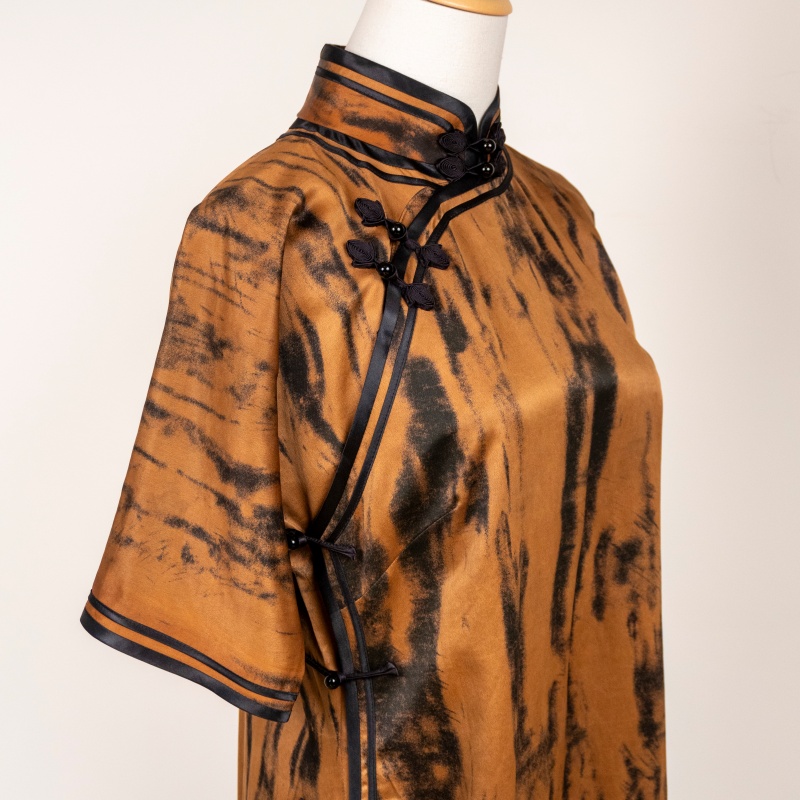
Handicraft cheongsam storage – before wearing and after wearing
What to Do With Your Hand-Embroidered Cheongsam After You Wear It — Before You Store It
Most people take off their cheongsam, toss it on a hanger, and shove it in the closet. Then six months later they pull it out and wonder why the embroidery is yellowed, the silk has water spots, and the whole thing smells like last year’s perfume. The damage doesn’t happen during wear. It happens in the thirty minutes after you take it off. That window is where you either save the garment or slowly kill it.
Why Post-Wear Care Matters More Than You Think
Silk is a protein fiber. That means sweat, body oil, perfume, and even the air in your room all interact with it chemically. The moment you remove a hand-embroidered cheongsam, your body heat is still trapped in the fabric. That residual heat accelerates every chemical reaction sitting on the surface. Sweat left on silk for even an hour can cause permanent yellowing — especially under the arms and along the neckline where the pankou knots sit.
Embroidery thread is even more vulnerable. Cotton and silk threads absorb oils differently, which means the embroidered patterns can discolor at a different rate than the base fabric. A month of neglecting post-wear care and you’ll see ghost outlines where the flowers used to be.
Step One — Let It Breathe Before You Touch It
Don’t Fold It the Second It Comes Off
This is the mistake almost everyone makes. You walk in the door, peel off the cheongsam, and immediately fold it. Wrong. The fabric needs to cool down and release moisture while hanging freely. Drape it over a padded hanger — not a wire one, not a plastic one — and leave it alone for at least thirty minutes.
The padded hanger matters because wire hangers create shoulder bumps that stretch silk permanently. Plastic hangers let the fabric slide off. A wide, padded hanger with velvet or fabric covering keeps the shoulder line intact and lets air circulate on both sides.
Hang it in a well-ventilated area, not in a closed closet. A closet traps humidity, and humidity is the enemy of both silk and embroidery thread. If your room has air conditioning, hang it near the vent so the air moves across the fabric. But not directly in front of it — constant airflow dries out silk and makes it brittle over time.
Check for Stains Immediately
While it’s hanging, walk around it and look at every angle. Pay special attention to the collar, the underarm area, the inner thigh near the slit, and anywhere a pankou knot pressed against your skin. Food splatters, lipstick transfers, deodorant marks — these all set faster on silk than on any other fabric. If you catch a stain within the first hour, it’s almost always removable. After twenty-four hours, it’s a permanent resident.
For fresh stains, dab — never rub — with a slightly damp white cloth. Use plain water, not any kind of cleaning product. Cleaning chemicals on fresh silk can cause the stain to set deeper. If water alone doesn’t lift it, wait until you’re ready to wash and treat it then.
Step Two — The Actual Cleaning Before Storage
Hand Wash or Sponge Clean Depending on How Much You Wore It
If you wore the cheongsam for a few hours at a dinner and didn’t sweat much, a full wash isn’t always necessary. In that case, sponge the interior with a damp cloth to remove body oils and perspiration. Focus on the areas that touched your skin — neckline, underarms, waist, and anywhere the embroidery sits against your body. Let it air dry for another thirty minutes after sponging.
If you wore it all day, danced in it, or sweated through it, full hand washing is non-negotiable. Fill a basin with lukewarm water — never hot, never cold. Add a tiny amount of neutral pH detergent. Submerge the cheongsam and let it soak for no more than five minutes. Gently press the water through the fabric with your hands. Do not agitate. Do not wring. Do not scrub the embroidered areas. The embroidery threads can snag or pull if you apply any friction to them.
Rinse by submerging in clean lukewarm water and pressing out the soap. Never twist the garment to remove water. Lay it flat on a dry towel, roll the towel up like a burrito, and press to absorb moisture. Then lay the cheongsam flat on a fresh dry towel and let it finish drying in the shade.
Never Use a Washing Machine on Hand-Embroidered Pieces
I don’t care what the care label says. If your cheongsam has hand embroidery, the machine will destroy it. The tumbling action pulls threads loose, the zippers and buttons on other garments snag the embroidery, and the spin cycle stretches silk beyond recovery. Even the gentle cycle is too rough. Hand washing takes ten extra minutes and saves you from a garment that looks like it went through a war.
Step Three — Drying and Preparing for Long-Term Storage
Shape It While It’s Still Slightly Damp
This is the step that separates people who keep cheongsams for decades from people who replace them every year. While the fabric is still slightly damp, lay it flat on a clean surface and gently smooth out every wrinkle. Start from the center and work outward. Pay attention to the seams, the slit edges, and the area around each pankou knot. Silk is most pliable when it’s damp, and this is your one chance to set the shape before it dries.
Once it’s smooth, let it finish drying completely flat. Do not hang it to dry. Hanging wet silk stretches the shoulders and distorts the hem. Drying flat keeps the original shape locked in.
Ironing — Only If Absolutely Necessary
Most of the time, if you washed and dried it properly, you won’t need to iron. But if there are stubborn creases, use a silk setting on your iron — the lowest heat possible. Always place a thin pressing cloth between the iron and the fabric. Never iron directly on embroidery. The heat melts synthetic threads and scorches natural ones. If the embroidery area is wrinkled, use steam from a distance — hold the iron a few inches above the fabric and let the steam relax the wrinkles without direct contact.
Step Four — Actual Storage That Won’t Ruin Anything
Breathable Covering, Not Plastic
Never store a hand-embroidered cheongsam in a plastic garment bag. Plastic traps moisture, and trapped moisture creates mildew. Mildew eats silk from the inside out, and by the time you see it, the fabric is already disintegrating. Use a cotton or muslin garment bag instead. It breathes, it protects from dust, and it won’t stick to the fabric.
If you don’t have a garment bag, wrap the cheongsam in acid-free tissue paper first, then place it in a cotton pillowcase. Acid-free tissue prevents yellowing. Regular tissue contains chemicals that transfer to silk over time.
Flat Storage Wins Every Time
Hanging a cheongsam for long-term storage stretches the shoulders and pulls the hem downward. Fold it instead. Fold along the original crease lines if the garment has them. Place a sheet of acid-free tissue between each fold so the fabric doesn’t stick to itself. Store it in a cool, dry place away from direct sunlight. Sunlight fades embroidery thread — especially reds, yellows, and blues — within weeks.
If you must hang it for short-term storage (like between events), use a wide padded hanger and keep it in a closet with good airflow. Check it every two weeks for any signs of moisture or insect activity.
One Final Thing — Moth Protection Without Chemicals
Moths love silk. They love it the way you love a good meal. Cedar blocks repel moths but the smell transfers to silk and never fully goes away. Mothballs work the same way — the chemicals seep into the fabric and attract more pests over time. The best option is a sachet made from dried lavender or dried rosemary placed near the stored cheongsam. It repels moths naturally, smells better than cedar, and won’t contaminate the fabric.
Check the sachet every few months and replace it when the scent fades. While you’re checking, inspect the cheongsam for any early signs of damage — a loose thread here, a tiny spot there. Catching problems early means a simple repair instead of a full restoration.