
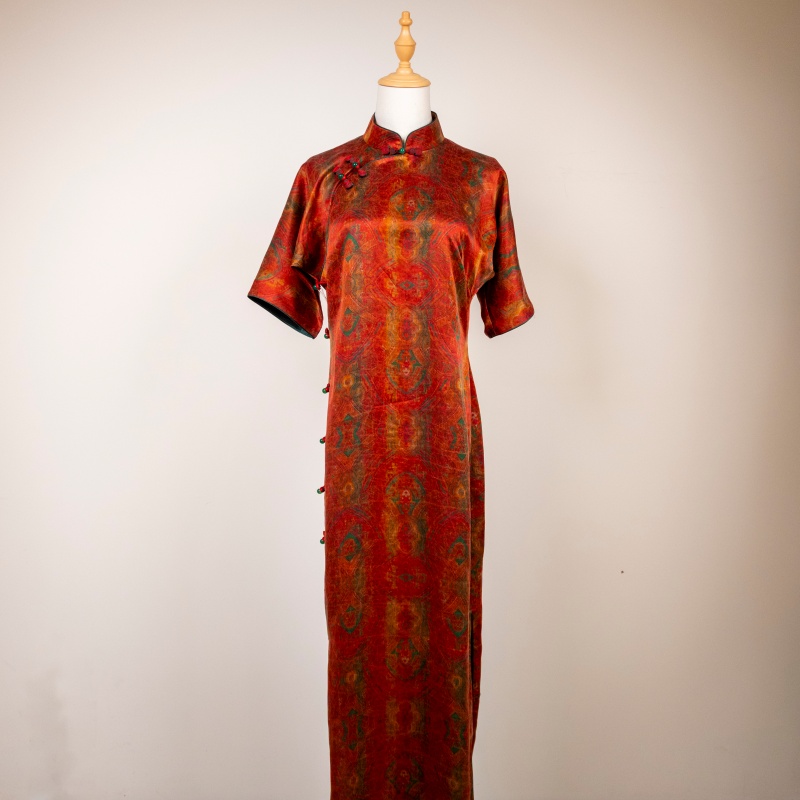
Precautions for maintaining the shape of the cheongsam when sitting and maintaining the proper posture
How to Sit in a Cheongsam Without Wrecking the Shape
Nobody warns you about this part. You spend hours picking the right cheongsam, getting the fit perfect, and then one dinner party ruins it. You sit down, lean back, cross your legs, and when you stand up the entire back is wrinkled, the hips are stretched out, and the pankou knots are pulled loose. Sitting in a cheongsam is not the same as sitting in jeans. The fabric doesn’t forgive. But if you know what to avoid, you can sit comfortably without destroying the garment.
Why Cheongsams Deform So Easily When You Sit
Silk and satin have almost no memory. Cotton bounces back. Denim holds its shape. But silk remembers every crease, every pull, every angle you forced it into. When you sit in a cheongsam, the fabric bunches at the waist, stretches across the hips, and compresses along the thighs. If you sit wrong, those creases set permanently within minutes.
The pankou knots are the weakest link. They’re hand-tied, they sit on the surface, and they take all the pressure when you lean back against a chair. One bad sit and a knot comes undone or shifts out of place. The side seams near the slit are also vulnerable — they carry the entire tension of your leg movement, and sitting with your legs apart puts massive stress on that area.
The Right Way to Sit Down in a Cheongsam
Lower Yourself Slowly and Keep Your Knees Together
This is the golden rule. Before you sit, stand facing the chair and turn slightly so your back hits the chair first, not your hips. Lower yourself straight down. Your knees should stay together the entire time. The moment you let your knees drift apart, the slit pulls open and the side seams stretch. You don’t need to clamp your legs shut — just keep them close, thighs touching, knees aligned.
If you’re sitting in a low chair or a sofa, don’t drop straight down. Lower yourself to the edge first, then slide back slowly. Dropping into a deep seat forces the hem to bunch under you and creates deep creases that won’t come out.
Never Cross Your Legs at the Knee
I know every etiquette guide says to cross your legs. Forget that advice when you’re wearing a cheongsam. Crossing at the knee twists the fabric at the hip and creates a diagonal pull across the entire front panel. That twist doesn’t just wrinkle the silk — it permanently distorts the waistline.
If you must cross your legs, do it at the ankle. One foot tucked behind the other, toes pointed, keeps the fabric aligned and the hem from riding up. It looks just as elegant and it doesn’t destroy your cheongsam.
Use Both Hands When You Sit and Stand
Place one hand on each side of the chair arm or on your thighs as you lower yourself. This does two things: it slows you down so you don’t drop into the chair, and it keeps the fabric from bunching under your hips. When you stand up, push off with both hands, not your legs alone. Pushing off with your legs jerks the fabric upward and stretches the hem. Pushing off with your hands gives you a smooth, controlled rise.
Sitting Postures That Quietly Destroy Your Cheongsam
Leaning Back Against the Chair
This is the most common mistake. You get comfortable, you lean back, and your upper back presses against the chair while your hips slide forward. That forward slide stretches the entire front panel and compresses the back. The waist area gets pulled out of shape, the pankou knots at the neckline shift, and when you stand up the cheongsam hangs wrong for the rest of the night.
Sit upright with your back straight. If the chair has a curve, place a small cushion or folded cloth behind your lower back so you can lean without sliding. The cushion supports your posture and keeps the fabric from shifting.
Resting Your Arms on the Table
When you lean forward to eat or talk, your forearms press against the table edge. That pressure pushes the sleeve fabric upward and creates a crease at the elbow that never fully releases. Instead of resting your forearms flat, keep your elbows slightly off the table. Let your hands do the work, not your arms. If you need to lean forward, use one hand to support your weight while the other hand stays free.
Sitting on One Hip
It looks casual. It feels natural. And it’s terrible for a cheongsam. Sitting on one hip shifts all your weight to one side, which stretches that side of the fabric while compressing the other. After thirty minutes, one hip of the cheongsam is visibly longer than the other. The side seam near the slit takes the worst of it. Keep both hips flat on the chair at all times.
How to Handle Specific Seating Situations
Dining Chairs with Arms
These are actually the safest option. The arms prevent you from leaning too far to either side, and the upright back supports your posture. Sit with your back against the chair, knees together, feet flat on the floor. If the chair is too deep, slide forward so your back touches the upright part, not the seat cushion.
Sofas and Low Seating
Low seating is the hardest because you can’t sit upright without your knees going above your hips. The solution is to sit on the edge of the sofa, not deep in it. Keep your back straight, knees together, and feet on the floor. If you need to recline, lean back slowly using your hands on the sofa arms for support. Never let your legs sprawl out — the slit will gape open and the hem will drag across the cushion.
Car Seats
Getting into a car in a cheongsam is a whole different problem. Don’t twist your body to lower yourself into the seat. Face the car door, sit on the edge of the seat first with both legs outside, then swing both legs in together. Swinging in keeps the fabric from scraping across the seat. Once seated, keep your knees together and your back against the seat. Don’t recline more than a few degrees — the angle stretches the waist and pulls the pankou knots loose.
Quick Fixes When You’ve Already Sat Wrong
If you stood up and the cheongsam is wrinkled, don’t panic. Don’t tug at the fabric — that stretches it further. Step into a quiet space like a restroom, stand in front of a mirror, and gently smooth the fabric downward from the waist to the hem. Use both hands, light pressure, no pulling. The silk will relax within a few minutes if the creases aren’t too deep.
For a pankou knot that shifted, don’t yank it back into place. Use your thumb and forefinger to gently nudge it back to its original position. If it’s completely undone, re-tie it loosely and re-tie it properly later when you’re home. Forcing it back into place while it’s tight against the fabric will crack the silk around the knot.
If the hem is twisted, hold the bottom edge with both hands and slowly untwist it by rotating your wrists, not by pulling the fabric. Think of it like untwisting a rope — you rotate, you don’t yank.