
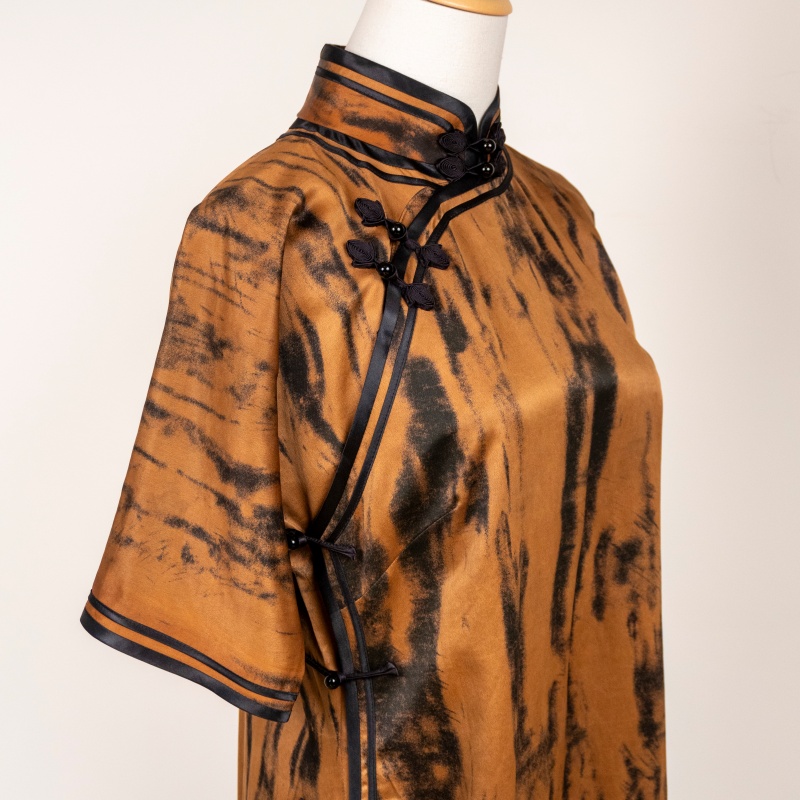
Traditional Cheongsam Neckline Anti-Slip Wearing Tips
How to Stop Your Cheongsam Collar From Rubbing Your Neck Raw
The mandarin collar on a cheongsam is beautiful until it isn’t. You put it on, walk out the door, and within an hour the edge of the collar is digging into the side of your neck like a wire. By the end of the evening, the skin is red, raw, and stinging every time you touch it. The collar itself starts to show wear — fraying edges, discoloration, fabric thinning right where it presses hardest. This is the most common complaint from anyone who wears a cheongsam for more than two hours, and almost nobody knows how to fix it without altering the garment.
Why the Collar Destroys Your Neck Before Anything Else
The Edge Is Sharper Than It Looks
A mandarin collar looks soft from the outside. The fabric wraps smoothly around your neck and the pankou knots sit neatly at the side. But flip it inside out and you’ll see the truth: the raw edge of that collar is a straight cut with no hem, no binding, and no padding. That raw edge sits directly against the thinnest skin on your neck — right over the carotid artery on one side and the windpipe on the other.
Every time you swallow, turn your head, or even breathe deeply, that edge presses into the skin. The silk is smooth enough that it doesn’t slide — it grips. And because the collar is stiff enough to hold its shape, it doesn’t flex with your neck. It stays rigid while your skin moves underneath it. That mismatch is what causes the rub.
Sweat Turns Silk Into Sandpaper
Dry silk against dry skin is manageable. But your neck sweats — a lot. The collar traps that moisture against your skin and the silk absorbs it. Wet silk loses its smoothness. The fibers swell slightly, the surface becomes rougher, and what was a gentle press turns into a grinding motion. After an hour of wearing a cheongsam in a warm room, the collar edge feels like fine-grit sandpaper against your neck.
The pankou knot makes this worse. The knot sits right at the pressure point where your neck meets your shoulder. It’s thicker than the rest of the collar, it doesn’t absorb sweat the same way, and it creates a hard ridge that digs in with every head movement.
What to Do Before You Put the Cheongsam On
Apply the Right Barrier to Your Neck
Most people put on lotion before dressing. That’s fine for your arms and legs, but lotion is too thick for the neck area under a collar. It creates a slippery layer that makes the silk slide around instead of staying in place, which means the collar shifts and the edge finds a new spot to dig into.
Use a thin, fragrance-free body oil instead. Not lotion — oil. A few drops rubbed into the sides of your neck creates a smooth barrier that lets the silk glide without shifting. The oil also softens the collar edge slightly so it conforms to your neck instead of cutting into it. Apply it at least fifteen minutes before you put on the cheongsam so it absorbs fully.
If you have sensitive skin, test the oil on a small patch first. Some oils react with silk dye and cause faint discoloration along the collar line.
Soften the Collar Edge at Home
New cheongsams have stiff collars. The fabric hasn’t been worn in yet, so the edge holds its cut shape rigidly. A stiff edge against soft skin is a recipe for friction. Before your first wear, soften the collar by gently rolling the inside edge between your fingers for a few minutes. Not aggressively — just enough to break the initial stiffness of the cut.
You can also hang the cheongsam in the bathroom while you take a hot shower. The steam penetrates the silk and relaxes the collar edge without water damage. Do this for two or three wears in a row and the collar will start to mold to your neck shape naturally. After that, the friction drops significantly because the edge is no longer cutting into fresh skin — it’s resting against skin it’s already adapted to.
Check the Collar Fit Against Your Neck Shape
Not every mandarin collar fits every neck. Some sit high and tight, pressing directly into the jawline. Others sit low and loose, sliding down with every movement. If your collar sits too high, the edge presses into the soft tissue under your jaw every time you talk or eat. If it sits too low, it slides down and the pankou knot digs into your trapezius muscle.
The ideal collar sits about half an inch below your jawline, snug but not tight. You should be able to slide one finger between the collar and your skin all the way around. If you can’t, the collar is too tight and will cause friction no matter what tricks you use. If you can fit two fingers, it’s too loose and will shift constantly, which creates its own friction problem.
Real-Time Tricks While You’re Wearing It
How You Turn Your Head Changes Everything
Most people turn their head by rotating the entire neck. On a cheongsam, this drags the collar edge across the skin in a long sweep. The edge catches, pulls, and grinds. The fix is to turn from the chin instead of the neck. Tilt your chin slightly to the side first, then let the rest of your head follow. This keeps the collar edge pressed against the same spot on your skin instead of dragging it across a new area.
It feels awkward for the first few turns. After ten minutes, it becomes natural. And your neck stays intact for the rest of the evening.
Stop Touching the Collar
Every time you adjust the collar with your hand, you’re pushing the edge deeper into your skin. The collar shifts slightly, the edge finds a new pressure point, and the rub starts over. Adjust the collar once when you first put it on, then leave it alone. If it feels like it’s shifting, resist the urge to fix it. The shifting is minor. The damage from repeated adjustments is major.
If the collar is sliding down, don’t pull it back up with your fingers. Use both hands to lift the entire front panel slightly, let the collar settle back into place, then release. This repositions the collar without dragging the edge across your skin.
Posture Keeps the Collar From Digging In
Slouching pushes your chin forward, which presses the front of the collar into your throat. The edge digs into the windpipe area and the pankou knot on the side gets pushed into your neck muscle. Stand straight with your shoulders back and your chin level. This distributes the collar pressure evenly around the entire neck instead of concentrating it on one spot.
If you’re sitting for a long event, keep your back against the chair. Leaning forward compresses the collar against your throat. Leaning back releases the front pressure but increases the pressure at the back of the neck where the collar meets your spine. Upright is the only position that keeps the pressure balanced.
When the Damage Has Already Started
Don’t Ignore the First Sign of Redness
The moment your neck feels warm under the collar, something is wrong. That warmth is friction generating heat. If you ignore it, the skin breaks down within the hour. The moment you feel it, find a quiet spot and loosen the collar slightly. Unfasten the top pankou knot just enough to release a quarter inch of pressure. That small release stops the heat buildup and prevents the skin from breaking.
Re-fasten the knot when you return to the main area. A slightly looser collar for five minutes saves you from a raw neck for the rest of the night.
Treat Raw Skin Without Removing the Cheongsam
If your neck is already red and stinging, don’t take the cheongsam off just to apply cream. That defeats the purpose of wearing it. Instead, carry a small tube of aloe vera gel or a fragrance-free balm in your clutch. Step into a restroom, apply a thin layer to the affected area, and blot gently with a tissue. The gel cools the skin and reduces inflammation without making the silk slippery.
Don’t use petroleum-based products. They leave a residue that transfers to the collar fabric and attracts dust. Stick to water-based gels and balms.
Know When to Call a Tailor
If the collar edge is fraying, the fabric is thinning, or the pankou knot is pulling loose from repeated friction, it’s time for a professional fix. A tailor can reinforce the collar edge with a thin silk binding that sits against your skin instead of the raw cut. This adds a soft barrier between the edge and your neck without changing how the collar looks from the outside.
Don’t try to fix a fraying collar yourself. Sewing on silk requires a specific needle and thread combination. The wrong thread creates a visible line. The wrong needle leaves holes that unravel. A ten-minute tailor visit saves you from a collar that looks repaired instead of elegant.
Habits That Protect Your Collar Long-Term
Rotate Your Cheongsams
Wearing the same cheongsam every week means the collar edge gets pressed into the exact same spot on your neck every time. The skin never gets a chance to recover. Rotate between at least two cheongsams so the collar edge hits different areas of your neck on different days. This gives the skin time to heal and reduces the cumulative friction damage.
Wash the Collar Area Gently and Often
Sweat, body oil, and skin cells build up on the inside of the collar after every wear. That buildup makes the silk rougher over time, which increases friction on the next wear. After every single wear, sponge the inside of the collar with a damp cloth. Don’t soak it — just press the cloth against the fabric and lift. This removes the residue without stressing the silk.
Full wash the cheongsam after every three to four wears. The collar area specifically needs attention — gently press the fabric against itself to release trapped oils. Never wring the collar. Never twist it. Lay it flat and let it dry.
Store the Collar Open, Not Closed
When you hang a cheongsam on a hanger, the collar tends to fold inward and press against itself. That fold creates a crease line that hardens over time. A hardened crease means a stiff edge, and a stiff edge means friction. Store the cheongsam with the collar spread open — drape it over a wide hanger so the collar falls naturally to both sides instead of folding inward. This keeps the edge soft and the shape intact.