
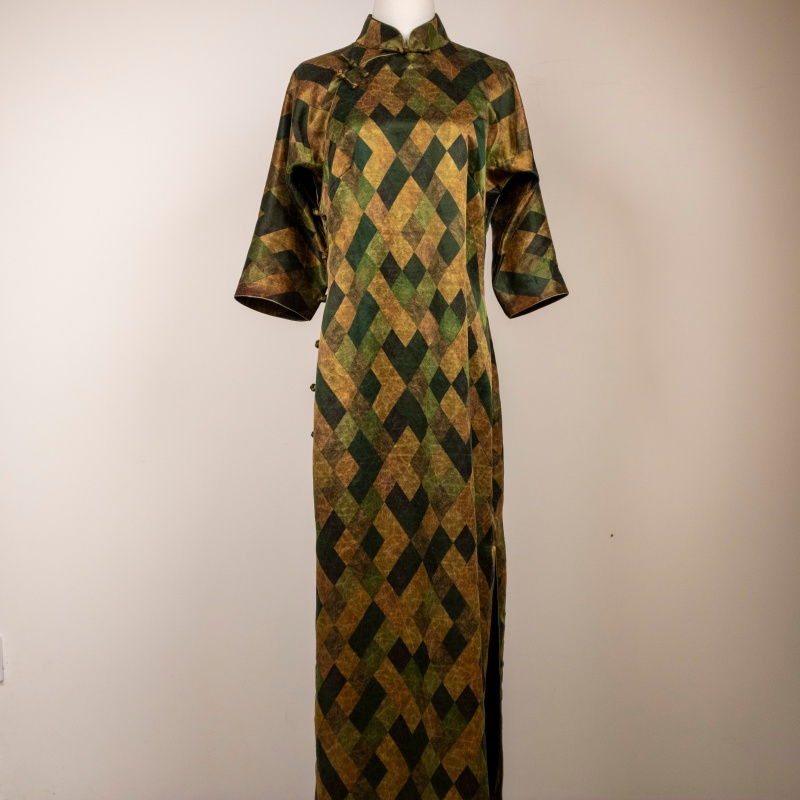
The method of preventing the cuffs of a handmade cheongsam from fraying
Why Your Hand-Embroidered Cheongsam Sleeves Keep Rolling Up and How to Stop It
You’ve spent hours picking the perfect cheongsam. The embroidery is flawless, the fit is immaculate, and then you put it on and within twenty minutes the sleeves are bunched up around your elbows like you rolled them up yourself. You didn’t. The sleeve just did it on its own. Sleeve roll is the most annoying problem in cheongsam wearing, and almost nobody talks about how to actually fix it without altering the garment permanently.
Why Cheongsam Sleeves Roll in the First Place
The sleeve on a cheongsam is cut as a single tube with no seam at the cuff. That’s what makes it look clean and elegant. But it also means there’s nothing holding the edge in place. When you bend your arm, the fabric has nowhere to go except upward. The silk slides against your skin, gathers at the elbow, and rolls into a tight bunch.
Embroidery makes it worse. Any stitched detail near the cuff adds weight to that edge, which pulls the fabric downward when your arm hangs straight and upward when you bend. The heavier the embroidery, the faster the roll. Sleeves with wide cuffs roll even more because there’s more fabric to bunch up.
The real culprit though is arm movement. Every time you reach for something, pick up a glass, or gesture while talking, your forearm rotates slightly. That rotation drags the silk cuff along your skin and feeds the roll. After ten repetitions, the sleeve is halfway up your forearm.
The Right Sleeve Length Changes Everything
A Sleeve That’s Too Long Will Always Roll
If your cheongsam sleeves extend past your wrist bone, they will roll. Every time. The extra fabric has nothing to grip onto and it slides freely. The ideal sleeve length ends right at the wrist bone — not past it, not before it. When your arm hangs straight, the cuff should sit exactly where your hand meets your wrist. When you bend your elbow, the cuff moves up about half an inch and stops. That half inch of movement is normal. Anything more means the sleeve is too long and the roll is inevitable.
If your sleeves are currently too long, don’t hem them yet. Try the methods below first. Sometimes the roll problem disappears once you change how you wear the garment.
A Sleeve That’s Too Short Looks Worse Than a Rolled One
Cutting the sleeves shorter seems like an obvious fix. It’s not. A sleeve that ends above the wrist bone looks choppy and breaks the line of the arm. It also exposes more skin than the original design intended, which defeats the purpose of wearing a cheongsam in the first place. The goal is to stop the roll, not to shorten the sleeve.
Physical Tricks That Keep Sleeves Down Without Altering the Garment
Use Double-Sided Fabric Tape Along the Inside Cuff
This is the fix most people don’t know about. Buy a roll of double-sided silk tape — the kind used for hemming without sewing. Cut thin strips about half an inch wide and place them along the inside of the cuff, spaced about two inches apart. The tape creates just enough friction against your skin to keep the sleeve from sliding upward. It’s invisible from the outside, it doesn’t add bulk, and it comes off easily when you wash the cheongsam.
Apply the tape about an inch above the actual cuff edge. This way the tape sits against your skin but the cuff edge still looks clean and finished from the outside. Don’t use regular double-sided tape — the adhesive is too strong and will leave residue on silk.
Wear a Slim Bangle or Bracelet to Anchor the Cuff
A thin bangle worn about two inches above the wrist creates a physical stop for the sleeve. When the fabric tries to roll up, it hits the bangle and stays put. This works best with bangles that sit snug against the skin — loose bangles let the fabric slip past them.
The bangle should be lightweight. A heavy bracelet pulls the sleeve down too far and creates a bunch at the top instead of the bottom. A simple thin metal or jade bangle is ideal. It anchors the cuff without adding visual clutter.
Tuck the Cuff Under Itself Once — Just Once
Before you leave the house, take the cuff edge and fold it under itself by about half an inch. Not a full roll — just a single tuck. This creates a slightly thicker edge that grips your skin better than a raw hem. The tuck stays in place because the silk is stiff enough to hold the fold when your arm is straight, and it releases naturally when you bend your elbow.
This is a temporary fix for the day. When you take the cheongsam off, undo the tuck so the cuff returns to its original shape. Don’t sew the tuck in place — that creates a permanent crease line that looks wrong when the sleeve hangs straight.
How Your Arm Position Affects Sleeve Roll
Stop Resting Your Forearms on Surfaces
Every time you rest your forearm on a table, armrest, or counter, the cuff drags backward along your skin. That backward drag is what feeds the roll. After three or four rests, the sleeve is bunched up past your elbow.
Keep your forearms off surfaces. When you need to lean on something, use your upper arm or your elbow instead. If you must rest your forearm, place a cloth or napkin between your skin and the surface. The cloth reduces friction and slows the roll significantly.
Bend From the Elbow, Not the Wrist
Most people reach for things by extending their hand and letting the wrist do the work. On a cheongsam, this pulls the sleeve cuff upward with every reach. Instead, bend from the elbow. Keep your wrist straight and let your entire forearm move as one unit. This keeps the cuff edge aligned with your skin instead of dragging it upward.
It feels unnatural at first. After a day of practicing, it becomes automatic. And your sleeves stay down the entire time.
Don’t Push Sleeves Up With Your Other Hand
This is the habit nobody admits to. You’re talking, gesturing, and your sleeve starts to roll. So you use your other hand to push it back down. That push slides the fabric upward even further because you’re pressing against the roll instead of smoothing it flat.
When a sleeve starts to roll, use both hands to smooth it downward from the elbow to the wrist. Start at the top of the bunch and push the fabric down toward your hand. Don’t grab the cuff and yank it — that stretches the silk and makes the roll worse next time.
Embroidery-Specific Sleeve Roll Problems
Heavy Cuff Embroidery Needs Extra Anchoring
If your cheongsam has dense embroidery along the cuff — floral patterns, beadwork, or thick thread work — the weight alone will pull the sleeve into a roll. The embroidery sits on top of the fabric and gravity does the rest. For these sleeves, the double-sided tape trick is mandatory. Tape alone isn’t enough because the embroidery adds too much weight.
Pair the tape with a slim bangle worn just above the embroidery line. The bangle catches the heavy cuff and the tape keeps it from sliding. Together they hold even the most heavily embroidered sleeves in place all day.
Beaded Cuffs Roll the Fastest
Beads add point weight to the cuff edge. Every bead acts like a tiny anchor that catches on your skin and pulls the fabric upward. Beaded cheongsam sleeves are the hardest to keep down, and they require the bangle-plus-tape combination every single time you wear them.
If the beads are large enough to create gaps between them, sand or dust can get trapped in those gaps and add even more friction. Check the bead area regularly during long events and shake the sleeve gently to release any trapped particles.
What Not to Do
Don’t Use Safety Pins Inside the Sleeve
Some people pin the cuff to their undershirt or to their skin with a safety pin. This works for about ten minutes. Then the pin pokes you, the fabric bunches around the pin, and you end up with a damaged cuff and a sore arm. Don’t do it.
Don’t Sew a Permanent Elastic Band Into the Cuff
Tailors sometimes suggest sewing elastic into the cuff to keep it down. On a hand-embroidered cheongsam, this is a disaster. The elastic creates puckering along the cuff edge, it shows through thin silk, and it makes the sleeve look cheap. The entire point of a cheongsam is the clean line. An elastic band destroys that line permanently.
Don’t Spray Starch on the Cuff
Stiffening the cuff with starch sounds logical. It works for about an hour. Then the starch cracks when you bend your arm, the fabric feels like paper, and the crack lines attract dirt. Starch also yellows silk over time, especially near the skin where body heat accelerates the chemical reaction. Skip it entirely.