
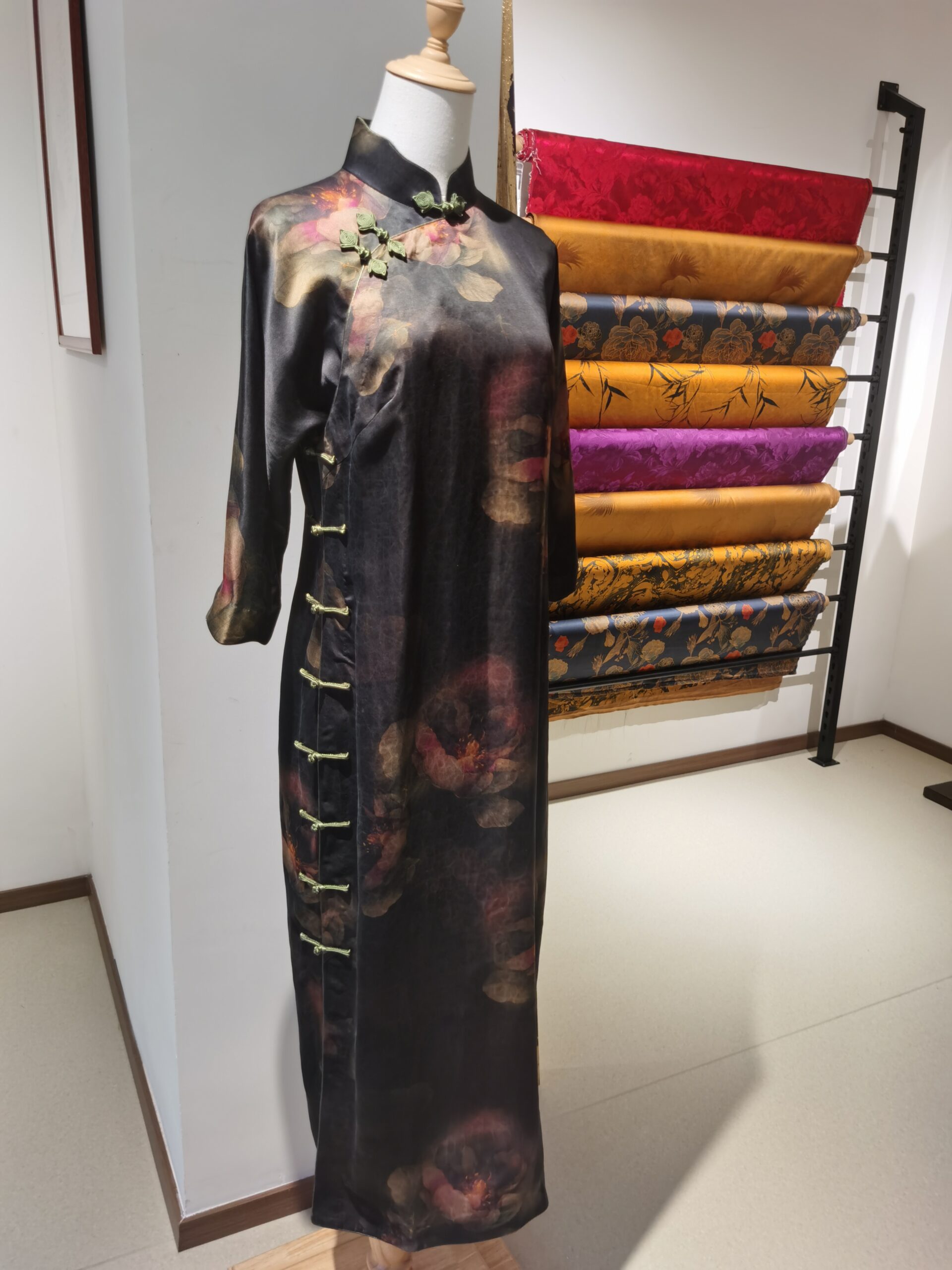
Tips for cleaning silk cheongsam without bleaching
Silk Qipao and Bleach: Why You Should Never Even Think About It
There will come a day when your silk qipao gets a stain that looks impossible to remove. A dark smudge on the front panel. A yellowish ring around the collar that no amount of pressing will lift. A spot from something you spilled at dinner that you did not notice until the next morning.
That is the moment when bleach crosses your mind. It is bright. It is strong. It works on cotton. It must work on silk too, right?
Wrong. Bleach on a silk qipao is not a cleaning method. It is a destruction method. It does not lift stains — it eats the fabric, kills the color, and weakens every fiber it touches. The damage is fast, it is permanent, and it is completely irreversible.
This is not an exaggeration. This is what happens when chlorine or oxygen bleach meets protein fiber.
What Bleach Actually Does to Silk Fiber
Bleach is designed to break down organic material. That is its entire purpose. On cotton towels and white t-shirts, that is useful. On silk, it is catastrophic.
Silk Is Protein — And Bleach Eats Protein
Silk is made of fibroin, a natural protein. Bleach — whether chlorine or oxygen-based — is an oxidizing agent. It breaks chemical bonds in organic molecules. When bleach touches silk protein, it does not discriminate between dirt and fiber. It attacks both.
The fibroin chains break apart. The fiber loses its tensile strength. The surface becomes rough and brittle. After one bleach treatment, the silk feels different. Slightly gritty. Slightly stiff. The natural luster is gone from the treated area. After two treatments, the fabric starts to thin. After three, you have holes.
This is not a gradual fade. This is structural collapse at the molecular level. And it happens faster than you think.
Color Destruction Is Instant
Dye on silk is bonded to the protein fiber. Bleach severs that bond in seconds. The color does not fade gradually. It vanishes. You can watch a red silk qipao turn pink, then white, then yellow in the space of a few minutes if the bleach concentration is high enough.
Even “color-safe” bleach is not safe for silk. Oxygen bleach is gentler than chlorine bleach, but it is still an oxidizer. It will still strip dye from silk fiber. The only difference is speed — chlorine bleach destroys color in seconds, oxygen bleach takes minutes. But the result is the same: a faded, patchy, ruined qipao.
The Yellowing Problem Nobody Talks About
Here is something most cleaning guides leave out. Bleach does not always remove color completely. Sometimes it removes it unevenly. The dye lifts in some areas but not others, leaving behind a yellowish residue — especially on white or light-colored silk.
This yellowing is not a stain. It is a chemical reaction between the bleach and the sericin coating on the silk. The sericin oxidizes and turns yellow permanently. No amount of rinsing will remove it. The only fix is professional re-dyeing, which is expensive and does not always match the original color.
Why People Reach for Bleach Anyway — And Why That Instinct Is Wrong
Bleach feels like the obvious answer because it works on everything else in your laundry basket. But silk is not everything else. Understanding why the instinct is wrong helps you resist it when the pressure is on.
The Cotton Logic Does Not Apply
You bleach white cotton socks. You bleach stained linen tablecloths. You bleach yellowed underwear. All of that works because cotton is cellulose — a plant-based fiber that bleach handles well.
Silk is animal-based protein. It behaves completely differently. The same chemical that brightens cotton destroys silk. The rules are not the same. What works in one laundry load will kill the garment in the next.
Stubborn Stains Are Not a Bleach Problem
When a stain does not come out with neutral detergent, the answer is not to escalate to bleach. The answer is to change the approach. Use a different solvent. Try glycerin. Try the ammonia method. Try longer soak times. There are always options that do not involve destroying the fiber.
Bleach is a shortcut that leads nowhere. It does not make a stubborn stain disappear. It makes the fabric around the stain disappear instead.
The “Just a Little Bit” Trap
Most people who ruin silk qipaos with bleach did not dump a full cup on the fabric. They added a splash. A capful. “Just a little to see if it works.” That is all it takes.
Bleach does not need a lot to cause damage. Even a dilute solution will start breaking down silk fiber on contact. The damage is not proportional to the amount. A drop is enough to start the reaction. By the time you notice the fabric changing color, the fiber is already compromised.
What to Use Instead of Bleach on a Silk Qipao
Every stain that makes you reach for bleach has a better solution — one that does not destroy the fabric.
For White or Light-Colored Silk: The Sunlight Method
If your qipao is white or very pale and has a yellowish stain that neutral detergent cannot lift, try controlled sunlight exposure. Hang the qipao in indirect sunlight — not direct, never direct — for two to three hours. The mild UV exposure can break down some surface yellowing without attacking the fiber.
This only works on light colors. Do not try this on dyed silk. UV light fades dye just as fast as bleach does, just more slowly. For white silk only, and only in indirect light.
For Dark Stains on Any Color: The Glycerin-Ammonia Combination
Glycerin lifts oil-based stains. Diluted ammonia lifts yellow rings. Used together, they handle most stains that people think require bleach.
Apply glycerin to the stain first. Let it sit for twenty minutes. Blot it away. Then apply the diluted ammonia solution — one part ammonia to ten parts cool water — and dab gently. Rinse thoroughly with cool water. This two-step process removes stains that look bleach-worthy without any bleach involved.
For Set-In Stains: The Patience Method
Some stains do not respond to any home treatment. They are old, they are deep, and they have bonded with the fiber. The honest answer is to take the qipao to a professional cleaner who specializes in silk.
A professional has access to solvent-based cleaners that break down stains at a molecular level without touching the fiber structure. This is what dry cleaners do — they use chemical solvents instead of water and bleach. It costs more than a home treatment. But it costs far less than replacing a handmade qipao.
The Specific Dangers of Bleach on Decorated Silk
A plain silk qipao is fragile enough. A handcrafted qipao with embroidery, beading, or frog buttons is even more vulnerable. Bleach does not just damage the fabric — it destroys every decoration on it.
Embroidery Thread Disintegrates
Silk embroidery thread is thinner and more delicate than the base fabric. Bleach weakens it almost instantly. The thread becomes brittle, starts to fray, and can snap under its own weight. On dense embroidery, this means entire sections of the design start to fall apart.
Cotton embroidery thread fares slightly better, but it still absorbs bleach and discolors. A white cotton thread on a dyed silk qipao will turn yellow or go patchy within minutes of bleach exposure.
Beads and Sequins Lose Their Coating
Most beads on a qipao are glued to the fabric. The adhesive is organic. Bleach dissolves organic adhesive. The beads do not just loosen — they fall off. And once a bead is gone, the hole it left behind is permanent.
Sequins are sewn on with tiny stitches. Bleach weakens those stitches and oxidizes the sequin surface, turning shiny sequins dull and cloudy. The decoration that made the qipao special is gone in minutes.
Frog Buttons Fall Apart
Frog buttons are hand-tied knots. The thread is silk or cotton, and the knot relies on friction to stay in place. Bleach attacks the thread and dissolves the sericin coating that gives the knot its grip. The buttons loosen, droop, and eventually fall off. Re-tying them requires matching the original thread exactly — which is almost impossible after the fabric has been bleached.
How to Recognize Bleach Damage Before It Gets Worse
Sometimes bleach damage is not obvious right away. It shows up hours or days later. Knowing what to look for saves you from making the same mistake twice.
The Fabric Feels Different
After bleach exposure, even if the color looks okay, the silk will feel different. Slightly rough. Slightly stiff. The smoothness is gone. Run your fingertip across the area — if it catches or drags instead of gliding, bleach has damaged the fiber.
The Color Looks Uneven
Bleach does not always remove color uniformly. You might see patches where the color is lighter, or a faint yellow halo around the treated area. This is the beginning of sericin oxidation. It will get worse over time, especially with sun exposure.
The Fabric Thins Over Time
Bleach weakens silk fiber structurally. The first few washes after bleach exposure might look fine. But the fabric is thinner than it was before. After five to ten washes, the weakened area starts to show wear — pilling, snagging, even small holes. This is the fiber breaking down from the inside out.
What to Do If You Accidentally Used Bleach on Your Qipao
It happens. You grabbed the wrong bottle. You added bleach to the wash by mistake. The water turned cloudy and your stomach dropped.
Rinse Immediately — Thoroughly
The moment you realize bleach has touched the qipao, pull it out and rinse it with cool water. Do not use detergent. Do not use anything. Just cool water, running over the affected area for at least five minutes. This dilutes the bleach and stops the chemical reaction.
The faster you rinse, the less damage is done. Every second counts. Do not stand there panicking. Rinse first, panic later.
Do Not Try to Neutralize It Yourself
Some people suggest using vinegar or baking soda to “neutralize” bleach on fabric. Do not do this. The acid-base reaction creates heat and can damage the silk further. Rinsing with cool water is the only safe immediate response.
Assess the Damage Honestly
After rinsing, lay the qipao flat on a white towel and look at it carefully. If the color is intact and the fabric feels normal, you may have caught it in time. If the fabric feels rough, the color is patchy, or there is visible thinning, take it to a professional. Do not try to wash it again at home. The fiber is already compromised, and another wash could finish it off.
Bleach and silk are enemies. There is no middle ground. No safe amount. No magic trick that makes it work. The moment bleach touches silk fiber, the countdown starts. The only winning move is to never play the game in the first place.