
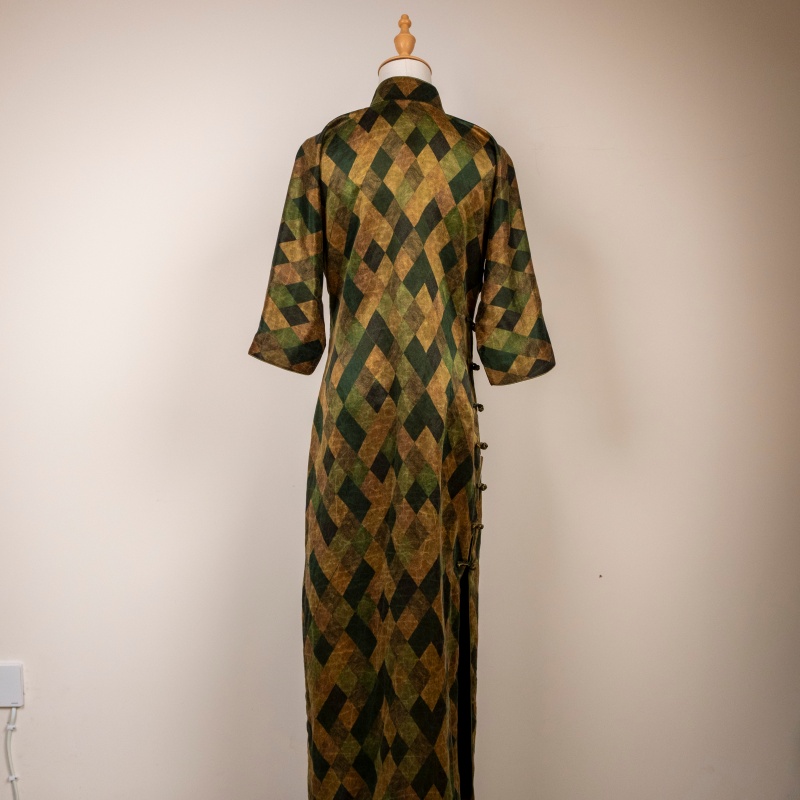
Craftsmanship-style cheongsam dust removal cleaning techniques
Handcrafted Qipao Dust Removal: How to Clean Without Ever Touching the Fabric With Water
Dust is the silent enemy of every handcrafted qipao. It settles into the embroidery threads. It gathers in the folds of the frog buttons. It builds up along the collar piping where your skin touches every time you put the dress on. And unlike a stain, dust does not announce itself. You do not notice it until the qipao looks dull, flat, and tired — even though you have only worn it twice.
The instinct is to grab a damp cloth and wipe it down. That works for cotton. It works for polyester. On a handcrafted silk qipao, it is a mistake. Water and dust do not mix well on protein fibers. The water pushes the dust deeper into the weave, creates water spots, and can loosen the embroidery thread all at once.
The right way to handle dust on a handcrafted qipao is to never use water at all. Dry cleaning only. Every single time.
Why Dust Is More Dangerous Than You Think on Handcrafted Silk
Most people think dust is just dirt. It is not. On a handcrafted qipao, dust is a slow-acting destroyer.
Dust Contains Oils That Eat Silk Over Time
Household dust is not just dead skin and fabric fibers. It contains cooking oil residue, skin sebum, perfume particles, and microscopic amounts of whatever was in the air that day. When this mixture settles on silk, it sits there and slowly breaks down the sericin coating — the natural protective layer that gives silk its shine and softness.
After a few months of untouched dust, the fabric under the dust layer feels different. Slightly rough. Slightly stiff. The luster is gone in that spot. You cannot reverse this. The sericin does not grow back. The only defense is removing the dust before it has time to do damage.
Dust Gets Into Embroidery and Stays There
On a plain silk qipao, dust sits on the surface and is easy to remove. On a handcrafted qipao with embroidery, dust works its way into the raised stitches, under the beads, and into the tiny gaps between thread and fabric. Once it is in there, a simple wipe will not get it out. You need the right tool and the right technique.
This is why handcrafted qipaos that hang in the closet for months sometimes look worse than ones that are worn regularly. The dust accumulates in places you cannot see, and by the time you notice it, the embroidery has already started to yellow.
The Right Tools for Dry Dust Removal
You do not need anything fancy. But you do need the right tools. Using the wrong one causes more damage than the dust itself.
A Soft-Bristle Brush Is Your Best Friend
Not a hard brush. Not a toothbrush. A soft-bristle brush — the kind used for makeup or for dusting delicate fabrics. The bristles should be natural fiber or very soft synthetic. They need to be flexible enough to bend when they touch the silk.
Brush in one direction only. Start at the top of the qipao — the collar area — and work downward. This lets gravity pull the dust away from the fabric instead of pushing it deeper. Use long, light strokes. Do not press hard. The brush should barely touch the surface.
For embroidered areas, use a smaller brush — a clean makeup brush or a soft detail brush. Work around each embroidered section gently, following the direction of the stitches. Never brush across the stitches. Always brush along them.
A Lint Roller Works — But Use It Carefully
A lint roller can pick up surface dust quickly. But it is aggressive on silk. The adhesive pulls at the fiber surface and can create tiny snags, especially on charmeuse or dupioni silk.
If you use a lint roller, use the least sticky setting available. Roll it over the fabric in one direction — never back and forth. Do one pass. Do not go over the same spot twice. The goal is to lift dust, not to scrub it off.
Skip the lint roller entirely on embroidered or beaded areas. The adhesive will pull at the embroidery thread and can loosen beads. Use the brush instead.
Compressed Air Is Useful — With Limits
Canned compressed air can blow dust out of hard-to-reach areas — inside the collar, under the frog buttons, between embroidery sections. It is fast and it does not touch the fabric.
But there is a catch. The propellant in most canned air leaves a residue. That residue attracts more dust over time, which means you will be cleaning more often, not less. If you use compressed air, do it outdoors or in a well-ventilated space, and follow up immediately with a brush to remove any residue the air left behind.
Never point the can directly at embroidery or beading. The force can dislodge loose beads or push embroidery thread out of place. Hold the can at least six inches away and use short bursts.
Cleaning Specific Dust-Prone Areas on a Handcrafted Qipao
Different parts of the qipao collect dust differently. Treating each area the same way wastes time and risks damage.
The Collar and Neckline
This is ground zero for dust. The collar sits against your neck, which means it collects skin flakes, hair, and sebum along with regular household dust. It is also the most visible part of the qipao. A dusty collar makes the entire dress look neglected.
Start with the brush. Work along the collar piping from one end to the other. Then take a clean, dry microfiber cloth — not a towel, not a paper towel — and wipe the collar surface in one direction. The microfiber traps dust without pushing it around.
For the inside of the collar, where dust hides from view, use a cotton swab. Run it along the inner edge gently. You will be surprised how much gray dust comes off. Do this every time you take the qipao out of the closet, even if it looks clean.
Frog Buttons and Knotted Closures
Frog buttons are dust magnets. The knots create tiny pockets where dust settles and stays. The loops collect lint. And because most people are afraid to touch them, the dust just accumulates wash after wash.
Use a soft-bristle detail brush to sweep around each button. Then take a toothpick — a clean one — and gently probe the gaps around each knot. You do not need to pull anything apart. Just loosen the dust so the brush can pick it up.
Never use a damp cloth on frog buttons. The water seeps into the knot and weakens the thread. The knot loosens over time and the button starts to dangle. Dry brushing only. Always.
Embroidered Panels
Embroidery raises the surface of the fabric, which means dust lands on top of it instead of sitting flat. This makes it easier to see — but harder to remove without damaging the threads.
Use the soft-bristle brush and work along the direction of each stitch. For dense embroidery like peony or dragon motifs, use a makeup brush to reach into the recessed areas between raised sections. The brush should glide over the surface, not dig into it.
After brushing, go over the entire embroidered section with a dry microfiber cloth. Press gently — do not wipe. The cloth picks up the dust that the brush loosened. One press, lift, move to the next section.
The Hem and Side Slits
The bottom of the qipao collects dust from the floor. The side slits catch dust every time you move. These areas are also where the fabric is thinnest and most vulnerable to snagging.
Brush the hem upward — from the bottom edge toward the waist. This lets dust fall away from the fabric instead of settling deeper. For the side slits, use a detail brush to sweep along the inner edge where dust hides.
If the hem has piping, brush along the piping, not across it. Crosswise brushing can crack the piping over time. Always follow the direction of the seam.
How Often Should You Dust a Handcrafted Qipao
This depends on where you live and how often you wear it. But a general rule works for most people.
After Every Wear
A quick brush takes sixty seconds. Run the soft-bristle brush over the collar, the cuffs, and the front panel. Wipe the collar with a dry microfiber cloth. That is it. This removes the dust from that specific wear before it has time to bond with the oils on your skin.
Once a Week If It Is Hanging in the Closet
Even unworn qipaos collect dust. A full dry clean — brush every section, wipe the collar, clean the frog buttons, check the hem — takes about five minutes. Do it on the same day each week so it becomes a habit.
Once a Month for a Deep Dry Clean
This is the full treatment. Lay the qipao flat on a clean white surface. Brush every inch — collar, body, sleeves, hem, slits, frog buttons, embroidery. Use compressed air in the hard-to-reach spots. Follow up with microfiber cloth on every section. Check for loose threads or beads that dust may have loosened.
This monthly deep clean keeps the qipao looking fresh without ever exposing it to water. It is the single best thing you can do for a handcrafted silk garment between professional cleanings.
Mistakes That Turn Dust Into Permanent Damage
The cleaning method matters. But so does what you do wrong.
Do Not Use a Feather Duster
Feather dusters push dust around. They do not remove it. On a handcrafted qipao, a feather duster spreads dust from the collar into the embroidery, from the body into the frog buttons. It also generates static, which pulls more dust to the fabric immediately after you finish.
Do Not Blow on the Fabric
Saliva particles land on the silk. The moisture from your breath creates tiny water spots. And the force of blowing pushes dust deeper into the weave. Just do not do it.
Do Not Skip the Inside of the Qipao
The inside collects just as much dust as the outside. The lining, the interfacing, the inner seams — all of it needs attention. A qipao that looks clean on the outside but is dusty on the inside will smell musty within a few months. Brush the interior the same way you brush the exterior.
Do Not Store in a Plastic Bag
Plastic traps moisture and dust together. The dust settles on the fabric, the moisture activates it, and the combination eats the silk from the inside out. Use a breathable cotton garment bag or store the qipao on a padded hanger in an open closet. Air circulation is your best defense against dust buildup.
Dust does not sound like a big problem until it is. A handcrafted qipao can survive stains, sweat, and even light spills if you handle them right. But dust left unchecked for months will dull the fabric, yellow the embroidery, and loosen the thread. A soft brush, a microfiber cloth, and five minutes a week is all it takes to keep it looking like the day you put it on.