
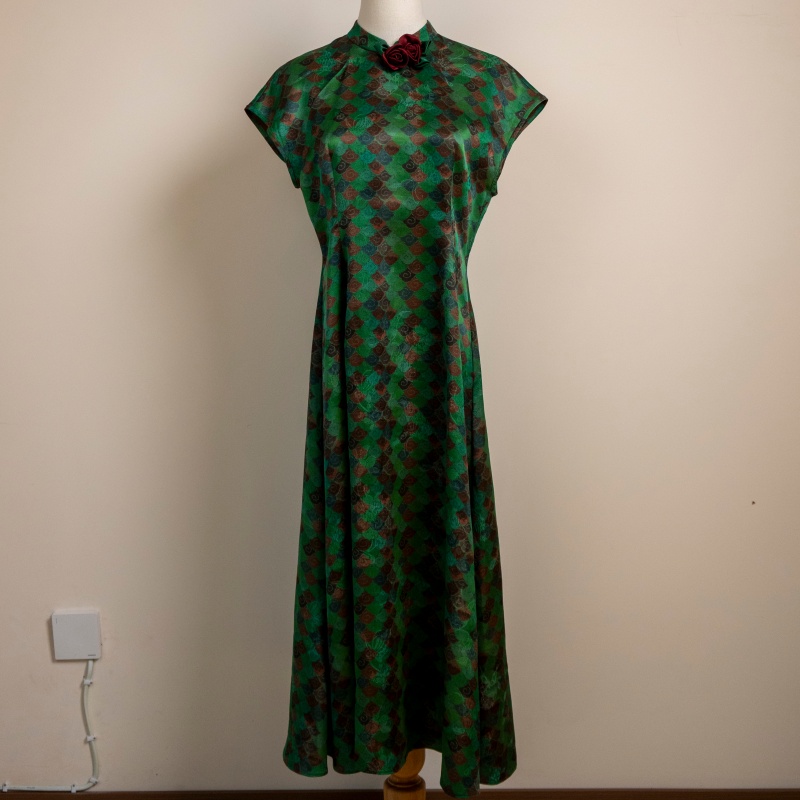
The rolled edges of the silk cheongsam can be gently cleaned.
How to Gently Clean the Piping on Your Silk Cheongsam Without Damaging It
Silk cheongsam piping is one of the most beautiful details on the garment. Those thin, rolled edges of fabric that trace the collar, the seams, the openings — they give the whole piece its structure and elegance. But they also collect everything. Sweat, skin oil, makeup, dust from the air. And because piping is narrow and raised, it traps grime in a way that flat silk fabric does not.
The problem is that piping is also the most fragile part of the cheongsam. The rolled edge can unravel. The silk can shrink. The dye can bleed if you use the wrong thing. So cleaning it requires a completely different approach than cleaning the rest of the dress.
Why Piping Gets Dirty in Ways the Rest of the Dress Does Not
The rolled construction of piping creates a tiny channel along its length. That channel catches sweat, sebum, and environmental dust every time you wear the cheongsam. Over time, the piping turns from crisp and bright to dull and slightly yellowish. That yellowing is not age — it is oxidized body oil that has soaked into the silk fibers.
The collar piping is the worst offender. It sits directly against your neck, which means it absorbs sweat and skin oil with every wear. The underarm piping picks up deodorant residue and friction grime. The front opening piping gets touched constantly by your fingers, each touch depositing a thin layer of oil.
The Unraveling Risk Nobody Warns You About
Piping is held together by tightly rolled fabric and hand-stitched thread. If you scrub it, agitate it, or soak it, the rolling comes undone. The fabric edges separate, the thread loosens, and the piping starts to fray. Once that happens, you cannot re-roll it perfectly by hand. The shape is gone. The clean line that made the cheongsam look sharp becomes a wavy, messy edge.
This is why most of the advice you find online about cleaning silk is useless for piping. They tell you to soak the garment, to use a gentle cycle, to wring it out. None of that works for piping. You have to treat it like a separate, much more delicate component.
The Only Safe Way to Clean Silk Piping
Forget everything you know about washing silk. Piping needs spot cleaning only, and it needs to be done with almost no moisture at all.
A Barely Damp Cloth Is Your Best Tool
Take a clean, lint-free white cloth. Dampen it with cool water — not warm, never warm. Wring it out until you cannot squeeze any more water from it. It should feel slightly cool and barely moist, not wet.
Gently press the cloth along the length of the piping. Do not rub. Press and lift. Press and lift. You are blotting surface oil and dust, not scrubbing. Work in small sections, about five centimeters at a time. Use a clean section of the cloth for each pass so you are not spreading grime back onto the piping.
For stubborn yellowing from body oil, add one single drop of neutral pH soap to the damp cloth. Not dish soap. Not laundry detergent. A true neutral soap with no added fragrances or dyes. Blot the same way — press and lift, never rub.
The Cotton Swab Method for Tight Corners
The corners where piping meets piping — like where the collar piping joins the shoulder seam — are impossible to reach with a cloth. That is where a cotton swab comes in.
Dampen the swab with the same cool water and neutral soap mixture. Squeeze out excess moisture. Gently run the swab along the piping edge, following the roll. The cotton picks up grime that the cloth cannot reach. Change swabs frequently. A dirty swab just pushes oil around.
Do not press hard into the seam. The swab should glide along the surface. If you feel resistance from the stitching, back off. You are cleaning the piping, not prying it open.
What Destroys Silk Piping During Cleaning
Some mistakes are so common they feel normal. They are not.
Hot Water Will Shrink and Warp Piping Instantly
Silk fibers contract when exposed to heat. Piping is already under tension from the rolling process. Add hot water and the fibers shrink unevenly. The piping puckers, twists, or pulls away from the seam. Even water that feels warm to your hand — around forty degrees — is too hot for silk piping. Stick to cold or room-temperature water only.
Do Not Use Any Solvent-Based Cleaner
Nail polish remover, rubbing alcohol, vinegar — all of these attack silk fibers. They strip the natural sericin coating that gives silk its sheen. The piping goes from lustrous to matte. The color fades. The fabric feels rough instead of smooth. If a stain does not come out with water and a drop of neutral soap, it is not coming out without professional help.
Never Machine Wash a Cheongsam With Piping
I do not care if the care label says hand wash cold. The agitation of any washing machine — even the gentle cycle — will twist and compress the piping. The rolled edges get crushed flat. The stitching pulls loose. By the time the cycle ends, your piping looks like a crumpled rope instead of a clean, sharp line.
If the entire cheongsam needs cleaning, hand wash it in a basin of cool water with a tiny amount of neutral soap. Swirl it gently. Do not wring. Do not twist. Lift it out, let it drain, and lay it flat to dry. And even then, the piping will not come out as clean as spot cleaning would have achieved.
Drying Piping Without Ruining Its Shape
How you dry the piping matters almost as much as how you clean it.
Reshape While Damp
After blotting with the damp cloth, the piping will be slightly moist. This is the best time to reshape it. Use your fingers to gently press the piping back into its original rounded form. If it has flattened out from wear or cleaning, hold it in place for a few seconds while the silk sets.
Do this along the entire length. Collar, seams, front opening. Every section. It takes two minutes and it makes a visible difference in how the piping looks when it dries.
Lay Flat and Never Hang
Hanging a wet cheongsam stretches the fabric under its own weight. The piping, being the heaviest edge detail, pulls downward and distorts. The rolled edge becomes oval instead of round. The stitching gaps open.
Lay the cheongsam flat on a dry towel. Roll the towel up gently to absorb excess moisture. Then unroll and lay the garment flat on a fresh dry towel. Let it air dry in a shaded spot. No direct sunlight — UV breaks down silk fibers and fades dye within hours. No radiators, no hair dryers, no heat of any kind.
Keeping Piping Clean Between Full Cleanings
The easiest way to maintain piping is to prevent heavy buildup in the first place.
Wipe the Collar Piping After Every Wear
Keep a small, clean white cloth in your closet or dresser. After each wear, before you hang the cheongsam up, wipe the collar piping with the dry cloth. It takes ten seconds. It removes the sweat and oil before they soak into the fibers. This single habit prevents most of the yellowing that makes people think their cheongsam is getting old.
Avoid Touching the Piping With Oily Fingers
Every time you touch the piping with bare fingers, you leave oil behind. Over a month of daily wear, that adds up to a noticeable film. If you need to adjust the cheongsam, use clean fingers or wear cotton gloves. It sounds fussy. It is. But it is the difference between piping that stays crisp for years and piping that looks dirty after six months.
Store Unpressed and Unfolded
Do not fold the cheongsam with the piping creased. Do not store it under heavy items. The best storage is on a padded hanger, unclipped so the garment hangs freely without pressure on the seams. If you must fold it, wrap it in acid-free tissue paper and place it in a breathable garment bag. The piping should never bear weight or sit under compression.