
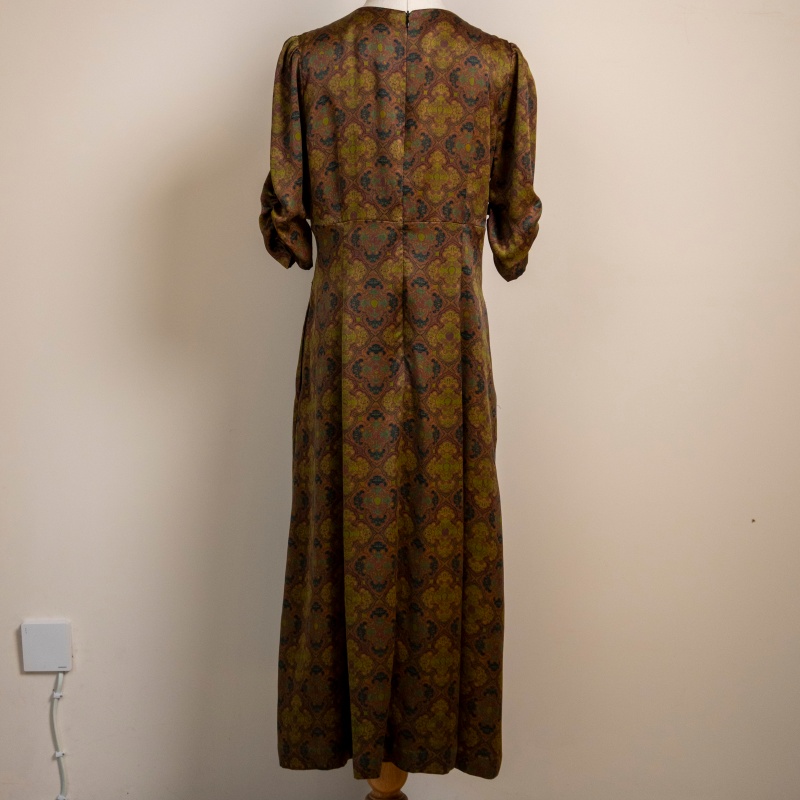
Method for timely handling of food stains on silk cheongsam
How to Remove Food Stains From Silk Cheongsam Before They Set
Silk cheongsam looks effortless until a drop of chili oil lands on the front panel. Then panic sets in. Silk is one of the most delicate fabrics you will ever own, and food stains hit it harder than almost anything else. Oil soaks in fast. Sauce leaves color. Soy sauce darkens within minutes. The difference between a stain that vanishes and one that becomes permanent is usually the first five minutes after the spill.
This is not about deep stain removal. This is about what to do in the moment, right at the table, before the stain has a chance to bond with the silk fibers.
The Golden Rule — Act in the First Five Minutes
Every second counts with silk. Unlike cotton or polyester, silk fibers are smooth and tightly woven. Liquid does not sit on top — it slides right in. A soy sauce drop that looks harmless on the surface is already seeping into the fiber by the time you notice it.
Why Waiting Even Thirty Minutes Changes Everything
Most food stains on silk become permanent not because of the food itself, but because of what happens after the spill. Proteins in sauce and oil bind to silk fibers as they dry. Tannins in tea and coffee oxidize and darken. Sugar caramelizes and turns yellow. All of these reactions accelerate once the liquid starts evaporating.
If you treat the stain within five minutes, you are dealing with a surface spill. After thirty minutes, you are dealing with a chemical reaction embedded in the fiber. The cleaning method changes completely. The success rate drops dramatically.
Oil-Based Stains — Chili Oil, Butter, Salad Dressing
Oil is the worst offender on silk cheongsam. It soaks in, spreads, and leaves a translucent mark that looks worse under light than it does in the shade.
Blot — Never Rub
Grab a clean napkin or paper towel. Press it firmly against the stain. Lift. Press again. You are trying to pull the oil out of the fiber, not push it deeper. Rubbing spreads the oil across a wider area and drives it further into the silk.
Do this until the napkin comes away with visible oil but the stain on the fabric starts to fade. You will not remove all of it at the table. That is fine. You just removed enough so the remaining residue is manageable when you get home.
Talcum Powder or Cornstarch as an Emergency Absorber
If you do not have a napkin handy, talcum powder or cornstarch works in a pinch. Dust a generous amount over the wet oil stain. Let it sit for five to ten minutes. The powder absorbs the oil as it draws moisture out of the fabric. Brush the powder off gently with a soft cloth. The stain should be noticeably lighter.
This is not a permanent fix. It is a damage-control move that buys you time until you can properly treat the stain.
Do Not Use Water on Oil Stains
Water and oil do not mix. Pouring water on a chili oil stain on silk pushes the oil deeper into the fiber and can leave a water ring around the stain that is even harder to remove. If you must use any liquid at the table, use a tiny amount of club soda — the carbonation helps lift oil without soaking the silk the way plain water does.
Sauce Stains — Soy Sauce, Tomato, Curry
Sauce stains are tricky because they contain both water and pigment. The water evaporates fast, but the color stays behind and bonds to the silk.
Dilute Immediately With Cold Water
If you have access to a restroom, hold the stained area under cold running water from the back of the fabric. Not hot water — cold. Hot water sets protein-based stains and can shrink silk. Cold water flushes the pigment out from behind without pushing it deeper.
Hold the fabric taut with both hands so the water flows through the fibers rather than pooling on the surface. You want the water to carry the stain out, not spread it around.
Blot With a Damp Cloth — Not a Wet One
If running water is not an option, dampen a clean white cloth with cold water. Blot the stain gently. Change to a clean section of the cloth frequently so you are not rubbing pigment back into the fabric. The goal is to lift the color out, not scrub it in.
For soy sauce specifically, the tannins darken as they dry. Speed matters more here than with oil. Every minute you wait, the stain gets darker and harder to reverse.
Protein Stains — Egg, Milk, Blood
Protein stains behave differently from oil or sauce. They do not spread as much, but they bond to silk fibers almost instantly once they start drying.
Cold Water Only — Always
Hot water cooks protein into fabric. That is why an egg stain set with hot water becomes permanent. Use cold water exclusively. Blot the area with a damp cloth soaked in cold water. Do not rub. Lift the protein out of the fiber gently.
If the stain is already drying and feels stiff to the touch, do not scrape it off. Wet the area again with cold water to re-soften the protein, then blot. Forcing dried protein off silk tears the fibers and leaves a rough patch that is visible even without the stain.
Saliva Works in a Dire Emergency
This sounds gross, but saliva contains enzymes that break down protein. If you spill egg or milk on your cheongsam and have nothing else available, a small amount of saliva dabbed on the stain and blotted gently can help. It is not ideal. It is better than nothing. Rinse with cold water as soon as you can.
What to Do When You Get Home
The emergency steps above are about damage control. The real cleaning happens at home.
Hand Wash in Cold Water With a Mild Detergent
Fill a basin with cold water. Add a small amount of mild liquid detergent — the kind you would use for delicate fabrics. Submerge the cheongsam and gently agitate the water around the stained area. Do not wring. Do not twist. Let the detergent work on the stain for fifteen to twenty minutes.
Rinse thoroughly in cold water until no suds remain. Residual detergent attracts dirt and can yellow silk over time.
Never Put a Stained Cheongsam in the Dryer
Heat sets stains permanently. Even if the stain looks gone after washing, the dryer will bake it back into the fiber. Lay the cheongsam flat on a dry towel, roll the towel to absorb excess water, then lay it flat to air dry away from direct sunlight. Sunlight fades silk dye and weakens the fibers.
Stains You Cannot Save — And When to Walk Away
Some stains are beyond saving no matter how fast you act. Curry with turmeric leaves a yellow mark that bonds to silk at a molecular level. Beet juice is almost impossible to fully remove. Ink from a pen is permanent.
If you have tried cold water blotting, talcum powder, and gentle hand washing and the stain is still visible, stop. Further scrubbing damages the silk more than the stain does. A faint mark that most people will never notice is better than a worn-out patch where you scrubbed too hard.
For high-stakes events — a wedding, a formal dinner — carry a small stain remover pen and a packet of blotting papers in your clutch. They are not a substitute for proper cleaning, but they can turn a disaster into a non-issue in thirty seconds.