
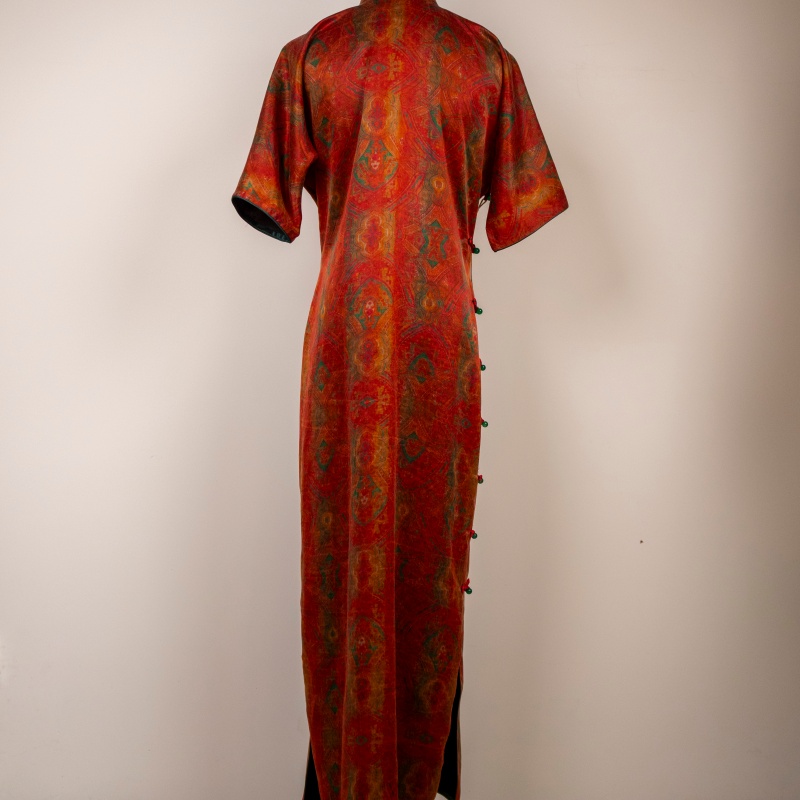
Handmade cheongsam should not be soaked in water for a long time during cleaning.
Why You Should Never Soak a Handmade Cheongsam — And What to Do Instead
The instinct when something gets dirty is to soak it. Drop it in a bucket, fill the sink, let it sit for an hour. That works for cotton t-shirts and denim jeans. It does not work for handmade silk cheongsam. In fact, prolonged soaking is one of the fastest ways to destroy a garment that took weeks to make.
Silk fibers swell when they absorb water. They stay swollen. They never fully return to their original shape. The hand-stitched seams loosen. The hand-dyed colors bleed. The delicate structure that makes a cheongsam fit the way it does simply falls apart in a bucket of water.
This is not about being overly careful. It is about understanding what happens to silk when it sits in water too long — and how to clean it properly without ever needing to soak it.
What Actually Happens to Silk During a Long Soak
People assume silk is like other fabrics. It is not. Silk is a protein fiber, and protein fibers behave very differently from cotton or polyester when exposed to water for extended periods.
The Fibers Swell and Never Fully Recover
When silk absorbs water, the fibers expand. A short rinse causes minimal swelling that reverses as the fabric dries. But soaking for thirty minutes or longer pushes the fibers past their elastic limit. They stay expanded. The fabric feels looser. The drape changes. The cheongsam no longer hangs the way it did before.
For handmade cheongsam, this is especially damaging because the fit is custom. The seam allowances are precise. The bias cuts are calculated. Once the fibers swell and the seams shift, the entire silhouette changes. You cannot steam that back into shape. The damage is structural, not cosmetic.
Hand-Dyed Colors Bleed Fast in Water
Most handmade cheongsam use traditional dyeing methods that do not have the colorfastness of industrial dyes. These dyes bond to silk at a molecular level, but that bond weakens significantly when the fabric sits in water. A thirty-minute soak can cause noticeable fading, especially along seams and folds where dye concentrates.
Worse, the color does not just fade — it migrates. Dark panels can bleed into lighter ones. A black cheongsam with red piping can turn the piping pink after a long soak. This is irreversible. No amount of re-dyeing will match the original hand-dyed look.
Seams and Hand Stitching Come Apart
Handmade cheongsam rely on hand-stitched hems, hidden seams, and traditional knot buttons. These are not sewn with industrial thread tension. They are sewn with a specific feel and tension that holds the garment together. Prolonged water exposure weakens the thread, loosens the knots, and causes the seams to pucker.
The frog buttons — those intricate knotted fasteners — are particularly vulnerable. Water softens the silk thread they are made from, and after a long soak they can unravel or lose their shape. Re-tying them requires the same skill as the original maker, and most people cannot replicate that by hand.
The Right Way to Clean Without Soaking
You do not need to submerge a cheongsam to clean it. Every stain and every bit of grime can be handled with surface cleaning and quick spot treatment. The key is speed and the right technique.
Spot Clean With Cold Water and a Soft Cloth
For most everyday stains — a splash of tea, a fingerprint of oil, a smudge of makeup — you never need to wet the whole garment. Dampen a clean white cloth with cold water. Blot the stained area gently. Use a fresh section of the cloth for each pass so you are not spreading the stain.
The water lifts the stain off the surface. The cloth absorbs it. You never submerge the fabric. You never let water pool. The cheongsam stays dry except for the tiny spot you are treating, and that spot dries within minutes.
Use a Diluted Detergent Only on the Stain Itself
If water alone does not lift the stain, add one drop of mild liquid detergent to a cup of cold water. Dip a cloth in, wring it out until it is barely damp, and blot the stain. Do not pour detergent directly on the fabric. Do not let the detergent spread beyond the stained area.
Work from the outside edge of the stain inward. This prevents the stain from expanding as you clean it. Blot until the cloth comes away clean. Then blot again with plain cold water to remove any detergent residue. Residual detergent attracts dirt and can stiffen silk fibers over time.
The Thirty-Second Rule
Here is a simple guideline. If you can treat a stain in under thirty seconds with a damp cloth, do not soak the garment. Soaking is for things that are caked in mud or soaked in sweat after a full day of wear. Even then, a quick hand wash in a basin of cold water — not a soak — is the maximum you should do.
Dip the cheongsam in cold water. Swirl it gently for ten seconds. Lift it out. Do not let it sit. Do not walk away. The water has done its job. Excess moisture is the enemy, not the cleaning.
How to Handle Heavy Soiling Without a Full Soak
Sometimes a cheongsam gets genuinely dirty — sweat after a long event, dust from a storage box, a musty smell from being folded away too long. These situations feel like they need a soak. They do not.
The Steam Method Cleans Without Any Water Contact
Hang the cheongsam in the bathroom while you take a hot shower. The steam loosens dust, kills odor-causing bacteria, and relaxes wrinkles without a single drop of water touching the fabric. After fifteen minutes, the cheongsam smells fresh and looks cleaner.
This works because steam is water vapor, not liquid water. The fibers absorb the moisture from the air in tiny amounts that evaporate quickly. No swelling. No color bleeding. No seam damage. Just a clean garment that never got wet.
A Quick Dip and Immediate Rinse
If steam is not enough, fill a basin with cold water. Submerge the cheongsam for five seconds. Lift it out. Swirl it once. Drain the water. Refill with clean cold water. Submerge for another five seconds. Lift and drain.
That is it. Ten seconds total in water. The fabric gets rinsed. The dirt gets flushed out. The fibers never have time to swell. Hang it to dry on a padded hanger — never a wire hanger, which leaves shoulder bumps that never come out.
Dry Cleaning Is Safer Than Home Soaking for Most Stains
If the stain is old, set-in, or you are not comfortable treating it yourself, take it to a dry cleaner. Tell them it is handmade silk. A reputable cleaner knows not to soak silk garments. They use solvent-based cleaning that removes stains without water exposure.
This costs more than home cleaning. But it costs far less than replacing a handmade cheongsam that you ruined with a well-intentioned soak.
Drying Matters as Much as Cleaning
How you dry a cheongsam after cleaning is just as important as how you clean it. Improper drying causes more damage than most stains ever will.
Never Wring. Never Twist. Never Hang Wet.
Wet silk stretches under its own weight. Hang a wet cheongsam on a hanger and the shoulders will droop within minutes. That stretch is permanent. The garment will hang unevenly forever.
Instead, lay it flat on a dry towel. Roll the towel to absorb excess water. Then lay the cheongsam flat on a fresh towel and reshape it by hand — smooth the seams, straighten the hem, adjust the collar. Let it air dry in a shaded area away from direct sunlight.
Sunlight Fades Hand-Dyed Silk Faster Than You Think
UV exposure breaks down the molecular bonds in traditional dyes. A cheongsam dried in direct sunlight for a few hours can show noticeable fading, especially on the front panel and collar. Always dry in shade. Always.
The Mindset Shift — Treat It Like a Garment, Not a Rag
The biggest mistake people make with handmade cheongsam is treating them like everyday clothes that can take a beating. They cannot. A handmade cheongsam is closer to a piece of art than a t-shirt. It deserves surface-only cleaning, quick spot treatment, and gentle handling every single time.
Soaking is not cleaning. It is slow destruction. The stains come out, yes. But so does the shape, the color, and the hand-stitched detail that made the garment special in the first place. A clean cheongsam that lost its shape is not worth having. A cheongsam with a faint stain that still fits perfectly and looks beautiful is worth every bit of effort to preserve.