
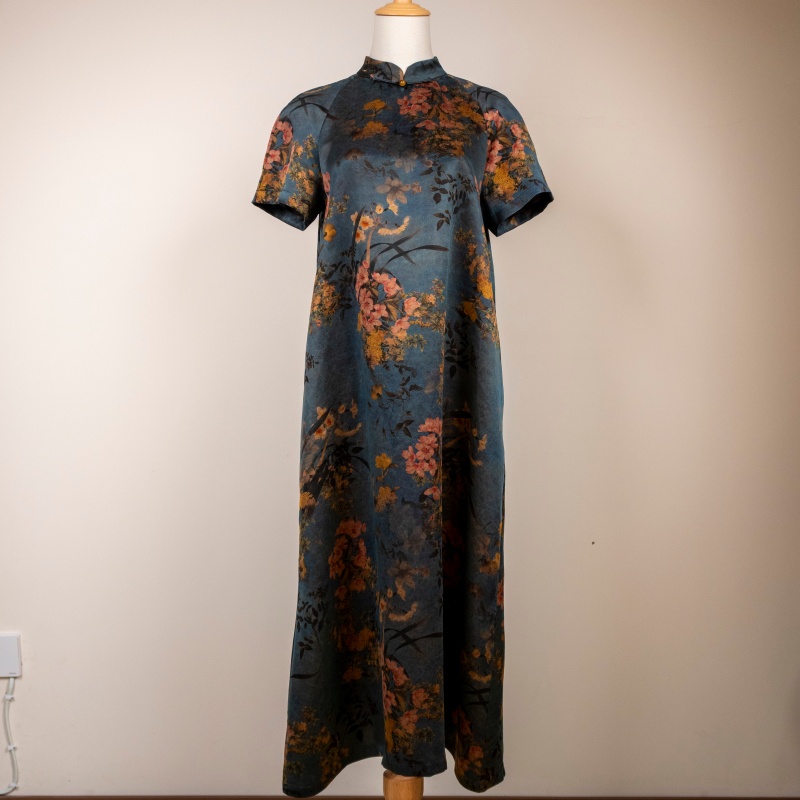
The correct method for drying handcrafted silk cheongsam
How to Dry Handcrafted Silk Cheongsam the Right Way Without Destroying the Fabric
You just washed your handcrafted silk cheongsam by hand, carefully, the way you were supposed to. And now you are staring at it, dripping wet, wondering what to do next. This is the moment where most people ruin everything. They hang it on a wire hanger, slap it in front of a window, or toss it in a dryer out of impatience. Any of those choices will leave you with a misshapen, faded, stiff garment that looks nothing like it did before the wash.
Drying silk cheongsam — especially a handcrafted one with embroidery, beading, or delicate hand-stitched hems — is not a passive step. It is an active part of the cleaning process. Get it wrong and all your careful washing was for nothing.
Why Drying Is Actually More Dangerous Than Washing for Silk Cheongsam
Here is something most people do not realize. Wet silk is at its most vulnerable. The fibers swell when saturated, which means they stretch easier, deform easier, and absorb UV damage faster. A dry silk cheongsam can handle mild sunlight for a short while. A wet one? It will fade, yellow, and lose its shape in minutes.
Handcrafted cheongsam are even more at risk. The embroidery threads are often silk or rayon, and they shrink at a different rate than the base fabric. Beading can shift when the fabric sags under its own weight. Hand-sewn hems can pucker if the tension is uneven. All of this happens during drying, not during washing.
The goal is simple: remove moisture slowly, evenly, and without any direct force on the fabric. That means no wringing, no hanging by the shoulders, no heat, and absolutely no direct sun.
The Only Correct Way to Dry Your Handcrafted Silk Cheongsam
Step One: Remove Water Without Any Twisting
After the final rinse, do not hold the cheongsam up and let water drip off it. Gravity will stretch the fabric unevenly, especially around the shoulders and hem. Instead, lay it flat on a large, clean, dry towel. Roll the towel up with the cheongsam inside it, pressing gently as you roll. The towel absorbs most of the water without any twisting or wringing force.
Unroll and transfer the cheongsam to a fresh dry towel. Lay it completely flat. Smooth out every wrinkle with your hands. Reshape the collar, align the side seams, straighten the hem. This is your last chance to set the shape. If the cheongsam dries crooked, it stays crooked.
Step Two: Dry It Flat, Not Hanging
This is the part that contradicts everything most people assume. You do not hang a wet silk cheongsam. You lay it flat.
Find a clean, dry surface — a table, a bed, a large drying rack covered with a towel. Lay the cheongsam flat with the front facing up. Make sure no part of the fabric is folded over itself or bunched up. If there is embroidery or beading on the front, place a thin layer of tissue paper over it to protect the raised details from pressing into the towel.
Let it sit there. Do not touch it. Do not flip it. Do not move it. The water will evaporate slowly and evenly over 24 to 48 hours depending on the humidity in your room.
If you must hang it at any point — and only after it is mostly dry — use a wide, padded hanger covered in soft cotton. Clip the hanger to the side seams, never the shoulders. Hanging by the shoulders creates permanent stretch marks at the top of the garment that no iron can fix.
Step Three: Choose the Right Location for Air Drying
The drying location matters as much as the method. You need a spot with good airflow but zero direct sunlight. A shaded balcony works if there is a gentle breeze. A room with an open window and a sheer curtain works even better. A bathroom with an exhaust fan is acceptable as long as the fan is not blowing directly on the fabric.
Avoid kitchens — the heat from cooking raises the ambient temperature and can cause uneven drying. Avoid basements — too much moisture in the air slows evaporation and invites mildew. Avoid any spot near a radiator, heater, or air conditioning vent. All of these create hot or cold spots that dry some parts of the cheongsam faster than others, leading to stiffness and water marks.
Special Drying Rules for Cheongsam With Embroidery and Beading
Protecting Raised Details During the Dry
Handcrafted cheongsam often have raised embroidery, beadwork, or appliqued motifs. These details are the first things to get damaged during drying because they are heavier than the base fabric and they press down into the wet silk, leaving permanent indentations.
Before laying the cheongsam flat to dry, place a sheet of tissue paper or unbleached cotton over any raised areas. Secure it lightly with a few pins if needed, but do not press hard. The paper acts as a barrier so the beads and threads sit on top of something instead of crushing into the wet silk beneath.
Remove the paper once the cheongsam is about 80 percent dry. Leaving it on too long can trap moisture under the paper and cause mildew on the embroidery threads.
Why Beading Needs Extra Care When Wet
Beads add weight. When the cheongsam is wet and the silk is soft, those beads pull the fabric downward. Over a few hours, this creates sagging around the beaded areas — the chest, the collar, the side slits. By the time the cheongsam dries, those areas have stretched permanently and the beads sit lower than they should.
The flat-drying method prevents this. When the cheongsam lies flat, gravity pulls evenly across the entire surface. No single area bears extra weight. The beads stay where they belong, and the fabric dries in its original shape.
If your cheongsam has a long row of beads along the collar or front opening, consider placing a rolled towel underneath that specific area to provide gentle support from below. Not pressure — just enough to keep the fabric from sagging under the bead weight.
What to Do If You Are in a Hurry and Cannot Wait 48 Hours
Sometimes you need the cheongsam dry faster. Maybe you are traveling, maybe you need it for an event tomorrow. You can speed things up, but only slightly, and only with the right tools.
Use a fan on the lowest setting, positioned across the room — not pointed at the cheongsam. The goal is to move air gently across the surface, not blast it. Direct airflow on wet silk causes uneven drying and can blow lightweight embroidery threads out of alignment.
You can also use a dehumidifier in the room. Lowering the ambient humidity helps moisture evaporate faster without adding heat. This is safer than a hair dryer, which should never be used on silk under any circumstances. The concentrated heat will shrink the fibers, scorch the dye, and create shiny patches that look like burn marks.
Even with a fan and a dehumidifier, expect at least 12 to 16 hours for a fully dry handcrafted cheongsam. There is no safe shortcut below that.
Common Drying Mistakes That Ruin Handcrafted Cheongsam Permanently
Hanging a wet cheongsam by its shoulder seams is the single most common mistake. The weight of the water stretches the silk at the hanger points. When it dries, those stretch marks become permanent. The shoulders droop. The silhouette collapses. No amount of ironing will bring it back.
Drying in direct sunlight is the second most common mistake. UV rays break down silk protein fibers and fade dye. A cheongsam that dries in the sun for two hours will look noticeably lighter than one that dried in the shade. On dark-colored cheongsam — black, navy, deep crimson — the fading shows up as a dusty, uneven tone that ruins the richness of the color.
Using a tumble dryer is not even worth discussing. It destroys silk. The heat shrinks the fibers, the tumbling distorts the shape, and the lint from other clothes sticks to the wet silk and becomes nearly impossible to remove. If you put a handcrafted cheongsam in a dryer, do not be surprised when it comes out looking like a rag.
How to Know When It Is Actually Dry
Do not guess. Touch the lining, not the outer surface. The lining dries last because it is closer to the body of the fabric and traps moisture longer. If the lining feels even slightly damp, the cheongsam is not ready to store or wear.
A damp cheongsam stored in a closet will develop mildew within days. That smell is almost impossible to remove later. Always confirm full dryness — lining, seams, pocket interiors, every inch — before you put it away.
When it is fully dry, the silk should feel cool to the touch, smooth, and soft. If it feels stiff or slightly rough, it was dried too fast or in the wrong conditions. A slow vinegar rinse before the final drying can restore the softness, but prevention is always better than correction.
A handcrafted silk cheongsam is a labor of love. Someone spent hours cutting, stitching, and finishing every detail. The least you can do is dry it properly so all that work lasts for decades instead of one season.