
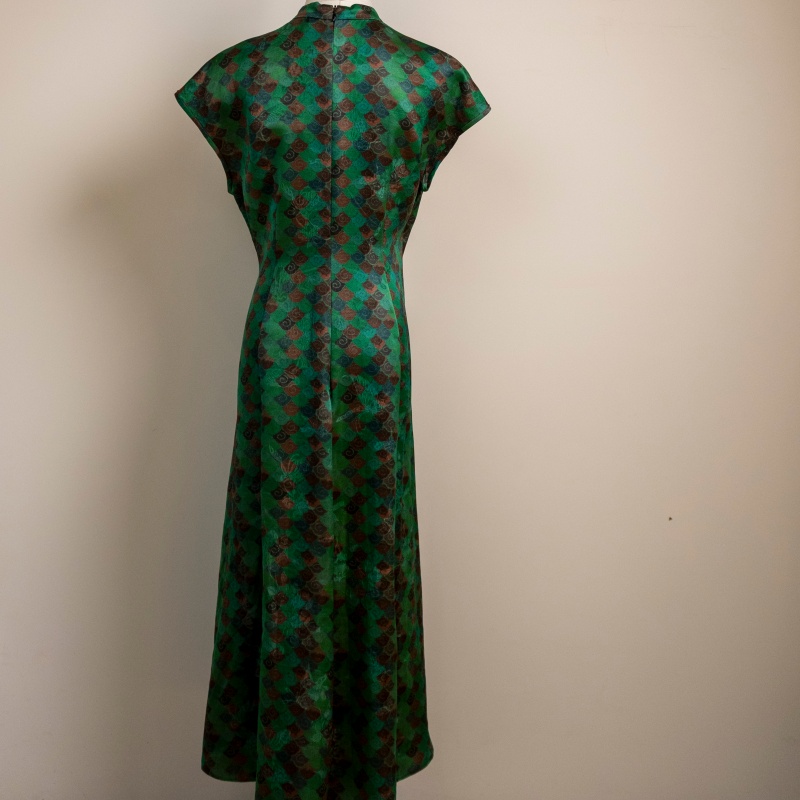
Techniques for naturally drying silk cheongsam and avoiding direct sunlight exposure
How to Air Dry Your Silk Cheongsam Away From Direct Sunlight Without Ruining It
Sunlight and silk are enemies. You already know this. But most people understand it in theory and then ignore it in practice. They wash their cheongsam carefully, handle it gently, and then — the moment it comes out of the water — they toss it on a sunny windowsill or hang it on a balcony and walk away. By the time they come back, the color has faded, the fibers have stiffened, and the whole garment looks two seasons older than it actually is.
Air drying silk cheongsam in the shade is not complicated. But it requires discipline. You have to resist the urge to speed things up with sun or heat. You have to accept that it will take longer. And you have to set up the right conditions before you even start washing.
Why Sunlight Destroys Silk Cheongsam Faster Than Almost Anything Else
UV radiation breaks down the protein structure of silk at a molecular level. This is not gradual. It happens fast — especially when the fabric is wet. Wet silk fibers are swollen and their cuticle scales are open, which means UV rays penetrate deeper and cause more damage per minute than they would on dry fabric.
The dye molecules are just as vulnerable. Sunlight strips color from silk unevenly. The shoulders, chest, and any area that catches more light will fade first. After a few sun-dried cycles, your cheongsam will have a patchy, dusty look that no amount of ironing can fix. The sheen goes too. Silk gets its luster from the way light reflects off smooth, intact fiber surfaces. UV damage roughens those surfaces, and the fabric starts to look matte and lifeless.
This is why shade drying is not a suggestion. It is a requirement. Every single time.
Setting Up the Perfect Shade-Drying Space Before You Wash
Choosing the Right Location
The ideal spot for air drying a silk cheongsam is indoors, away from any window, with consistent airflow. A spare bedroom, a hallway with good ventilation, or a covered balcony that never gets direct sun all work.
If you must dry it near a window, hang a sheer white curtain over the window first. The curtain filters out most UV rays while still letting air through. Do not rely on tinted glass or UV film on windows — those are not 100 percent effective and the cheongsam will still take damage over time.
Avoid drying near any heat source. Radiators, space heaters, kitchen exhaust vents — all of these raise the ambient temperature and cause uneven drying. Uneven drying means some parts of the cheongsam dry fast and stiffen while other parts stay damp and risk mildew. That combination is a disaster.
What to Use Instead of a Regular Hanger
A wire hanger will destroy the shape of your cheongsam while it dries. The thin metal leaves permanent indentation marks on the shoulders and creates stress points where the fabric stretches. Ditch it.
Use a wide, padded hanger covered in cotton or velvet. The padding distributes the weight of the wet garment evenly across the shoulder area. If you do not have a padded hanger, wrap a regular hanger in a clean cotton cloth and secure it with tape. It is not perfect, but it is far better than bare wire.
Clip the hanger to the side seams, not the shoulders. Hanging by the shoulders stretches the fabric downward under the weight of the water. When it dries, those stretch marks stay. The cheongsam sags. The silhouette ruins. Side-seam clipping keeps the shoulders intact and lets gravity pull the fabric straight down without distortion.
The Actual Shade-Drying Process Step by Step
After the Wash: Roll, Do Not Wring
When the cheongsam comes out of its final rinse, it is heavy with water. Do not twist it. Do not squeeze it. Lay it on a large dry towel, roll the towel up with the cheongsam inside, and press gently as you roll. The towel absorbs 60 to 70 percent of the water without any force on the fibers.
Unroll and lay the cheongsam flat on a fresh dry towel. Smooth it out completely. Align the seams, straighten the hem, reshape the collar. This is your last chance to set the silhouette before it dries. If it dries crooked, it stays crooked.
Flat Drying Versus Hanging: Which One Wins
For a cheongsam with heavy embroidery, beading, or hand-stitched details, flat drying is always better. The weight of beads and thick threads pulls the fabric down when it hangs, creating permanent sags. Laying it flat eliminates that problem entirely.
For a simple cheongsam without heavy embellishments, hanging on a padded hanger in the shade works fine. Just make sure it is at least 80 percent dry before you hang it. A fully soaking wet cheongsam should never be hung — the water weight will stretch it beyond recovery.
If you dry it flat, place it on a clean towel or drying rack covered with a soft cloth. Do not let any part of the fabric fold over itself. Folded areas dry slower and develop creases that become permanent.
How Long Does Shade Drying Actually Take
It takes longer than you want it to. A hand-washed silk cheongsam needs 24 to 48 hours to dry completely in a shaded, well-ventilated room. In humid climates, it can take up to 72 hours. That is normal. That is not a sign that something is wrong.
Do not shorten this time with a fan, a hair dryer, or by moving it to a warmer spot. All of those introduce uneven drying, which causes stiffness, water spots, and shape distortion. Patience is the only tool that works here.
Protecting the Color While It Dries in the Shade
The Vinegar Rinse Trick That Locks Dye In Place
Add one cup of white vinegar per liter of cool water during the final rinse. Vinegar is mildly acidic, which neutralizes any alkaline residue left by detergent and helps seal the dye molecules inside the fiber. The vinegar smell vanishes completely once the fabric dries.
This step is especially important for dark-colored cheongsam. Black, deep red, navy — these shades are most vulnerable to fading during drying. The vinegar rinse gives the dye an extra layer of protection against whatever ambient light reaches the fabric, even through a curtain.
Turning the Cheongsam Inside Out Before Drying
Always dry the cheongsam with the inner lining facing out. The outer surface carries the dye and the sheen. Exposing it to even filtered light during drying accelerates fading. The lining side is more forgiving — it does not matter if it fades slightly because nobody sees it.
Flip the cheongsam inside out before you lay it on the towel or hang it on the hanger. Keep it that way until it is completely dry. Flip it back only when you are ready to iron or wear it.
What Happens If You Accidentally Leave It in the Sun
If you come back and find the cheongsam has been sitting in direct sunlight for an hour or two, do not panic. The damage depends on how long it was exposed and how wet it was during that time.
If it was already mostly dry, the damage is superficial. The color may have faded slightly in the exposed areas. A vinegar soak can help restore some of the lost luster. Iron it on low heat with a cloth barrier and the surface will look better, though the dye loss is permanent.
If it was still wet when it sat in the sun, the damage is deeper. The fibers may have stiffened, the color may have shifted unevenly, and the sheen is probably gone. Soak it in vinegar water for 30 minutes, rinse thoroughly, and re-dry it properly in the shade. It will not look exactly like it did before, but you can recover most of the damage if you act fast.
The One Mistake That Undoes Everything Else
You can wash perfectly. You can dry in the shade. You can use vinegar. You can handle everything right. And then you store the cheongsam while it is still slightly damp.
That one mistake — storing a not-quite-dry cheongsam in a closet — causes mildew within weeks. The smell is almost impossible to remove. The yellow stains are nearly permanent. Always confirm full dryness by touching the lining, not just the surface. The lining holds moisture longest. If the lining feels even a little damp, keep drying.
A silk cheongsam dried in the shade, stored completely dry, wrapped in breathable cotton — that is a garment that will look and feel the same ten years from now as it does today. The sun does not care about your patience. But your cheongsam will reward it.