
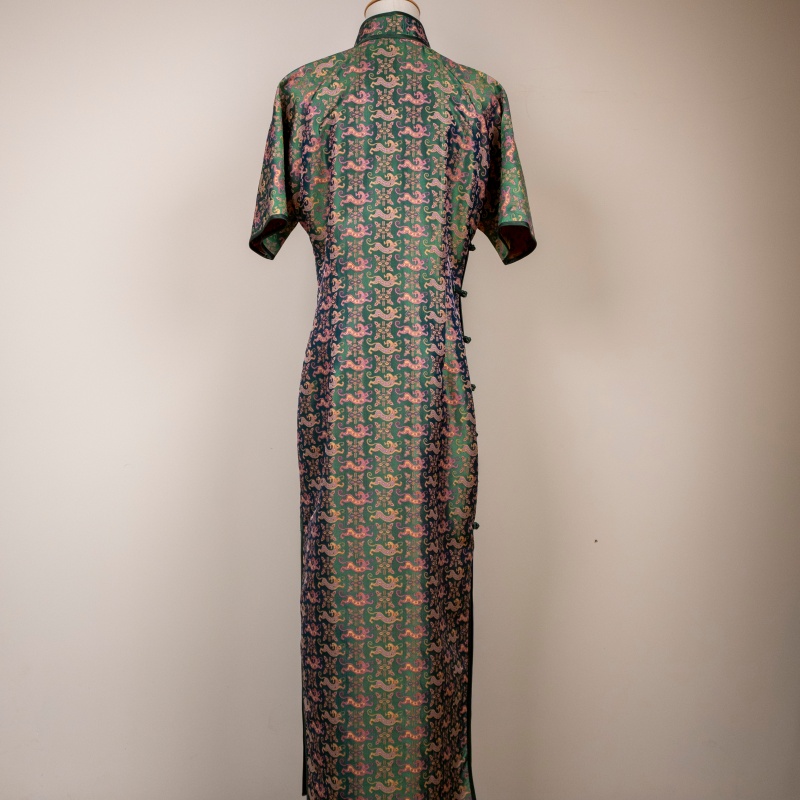
The method of drying a hand-woven cheongsam after cleaning is to lay it flat on a surface.
How to Lay Flat and Dry Your Handcrafted Cheongsam After Washing Without Ruining the Shape
Washing a handcrafted cheongsam is only half the battle. The other half — drying it flat — is where most people fail. They hang it up, they drape it over a chair, they toss it on a drying rack at an angle. By the time it dries, the shoulders have stretched, the embroidery has shifted, and the silhouette looks nothing like it did before the wash. All that careful hand-washing, wasted in thirty seconds of bad drying.
Flat drying is not optional for handcrafted cheongsam. It is the only method that preserves the shape, the drape, and the integrity of every hand-stitched detail. And it takes more patience than most people expect.
Why Flat Drying Is the Only Safe Option for Handcrafted Cheongsam
Handcrafted cheongsam are not factory garments. They have hand-sewn hems, delicate embroidery, beaded accents, and sometimes multiple layers of silk lining stitched together with precision. Every one of those elements reacts badly to gravity pulling from a single point — which is exactly what happens when you hang a wet cheongsam on a hanger.
Wet silk stretches. That is a fact. When the fibers are saturated, they lose their structural resistance and elongate under even light weight. A hanger puts all that weight on two small points at the shoulders. Within hours, those points have stretched permanently. The cheongsam sags. The collar pulls away from the neck. The side seams shift. No iron can fix that.
Flat drying eliminates gravity as a distortion force. When the cheongsam lies flat, the weight of the water distributes evenly across the entire surface. No single area bears extra load. The shape stays locked in place while the moisture evaporates slowly.
Preparing the Drying Surface Before You Touch the Cheongsam
What Surface Works Best
You need something large, clean, dry, and flat. A bed works if you do not mind using it for a day or two. A dining table covered with a clean cotton sheet works better. A large drying rack covered with a soft towel works too, as long as the surface is level.
Do not use a towel that has texture or loops. Terry cloth towels leave impressions on wet silk that dry into permanent marks. Use a flat-weave cotton towel or a clean bed sheet. Smooth it out completely before placing the cheongsam on it. Any wrinkle in the towel will transfer to the fabric.
Positioning the Cheongsam on the Surface
Lay the cheongsam face down first. Yes, face down. The inner lining faces up. This protects the outer surface — the side with the dye, the sheen, the embroidery — from pressing into the towel.
Smooth it out with your hands. Align the side seams so they run straight. Straighten the hem. Flatten the collar. If there are hidden pockets, open them slightly so air can reach inside. Every fold you leave now will dry as a crease.
The Step-by-Step Flat Drying Process
The First Two Hours: Let Gravity Do Its Work
After you lay the cheongsam flat, do not touch it for at least two hours. During this time, the heaviest water drains downward through the fabric and into the towel below. The cheongsam will feel noticeably lighter after this period.
Do not flip it yet. Flipping too early disturbs the drying process and can create new wrinkles. Let the first side finish its initial water release before you do anything else.
Flipping the Cheongsam at the Four-Hour Mark
After about four hours, carefully flip the cheongsam over so the outer surface faces up. This is the side with the embroidery, beading, and visible design. It needs to dry face up so the details are not pressed flat against the towel.
If your cheongsam has heavy beadwork or raised embroidery, lay a sheet of tissue paper over those areas before flipping. The paper prevents the beads and threads from pressing into the wet silk and leaving permanent indentations. Secure the paper lightly with a few pins if it keeps sliding, but do not press down hard.
The Middle Stage: Checking for Dry Spots
Around the eight to twelve hour mark, the cheongsam should be about 60 percent dry. The edges and thin areas — the hem, the sleeve cuffs, the collar — will dry first. The thicker areas — the chest, the waist, the lined sections — will still feel damp.
This is normal. Do not speed it up. If you notice any area drying too fast — usually the edges near a heat source or airflow — move the cheongsam to a more even spot. Uneven drying creates stiffness in the dry areas and mildew risk in the wet areas.
Special Care for Cheongsam With Embroidery and Beading
Why Embroidery Needs Its Own Drying Strategy
Embroidery threads — especially silk and rayon ones — shrink at a different rate than the base fabric. When the cheongsam dries unevenly, the embroidery pulls tight and puckers the surrounding silk. That pucker is permanent. You cannot iron it out.
Keeping the cheongsam flat solves most of this problem. But for heavily embroidered pieces, add an extra step. After flipping the cheongsam face up, place a second dry towel on top of the embroidery areas. Not pressing down — just resting lightly. The top towel absorbs moisture from the raised threads while preventing them from drying too fast compared to the base fabric.
Remove the top towel after six hours. Leaving it on too long traps heat and slows drying in those areas, which invites mildew on the embroidery threads.
Protecting Beads From Shifting During the Dry
Beads are heavy. When the cheongsam is wet, those beads sink into the silk and pull the fabric downward. Over several hours of flat drying, this creates permanent sags around every beaded section.
The solution is simple but easy to forget. Before laying the cheongsam flat, roll a thin towel into a tube and place it underneath the beaded areas — the collar, the front placket, the side slits. The rolled towel provides gentle support from below so the beads do not press into the wet silk. It is not a hard surface. It is just enough lift to keep the fabric from sagging.
Check the rolled towel every few hours. As the cheongsam dries and gets lighter, you can remove the support gradually. By the time the cheongsam is 80 percent dry, the beads no longer need it.
How Long Flat Drying Actually Takes and Why You Cannot Rush It
A handcrafted silk cheongsam takes 24 to 48 hours to dry completely when laid flat in a shaded, well-ventilated room. In humid climates, it can stretch to 72 hours. That is not a sign that something is wrong. That is the fabric doing what it needs to do.
Rushing it with a fan, a hair dryer, or moving it to a warmer room will cause uneven drying. The edges will stiffen while the center stays damp. The embroidery will shrink while the base fabric is still wet. The shape will warp. All of that is irreversible.
If you are in a hurry, the only safe way to speed things up is to lower the humidity in the room with a dehumidifier. This helps moisture evaporate faster without adding heat or direct airflow. Even then, do not expect the cheongsam to dry in under 12 hours.
Signs That Your Flat Drying Is Going Wrong
If the cheongsam develops wrinkles that do not smooth out when you touch them, the surface underneath was not flat enough. Next time, use a harder surface — a table instead of a bed.
If the edges are stiff but the center is still damp, the airflow is too strong or the room is too warm. Move the cheongsam to a cooler spot with gentler air movement.
If you smell anything musty after 12 hours, the cheongsam is not drying fast enough. Increase airflow slightly or lower the humidity. Musty smell means mildew is starting, and once it sets into silk, it is nearly impossible to remove.
If the embroidery looks puckered or the beads have shifted, the drying was uneven. The embroidery dried faster than the base fabric. Next time, use the top towel method to balance the drying rate.
What to Do After the Cheongsam Is Fully Dry
Do not assume it is dry because the surface feels dry. The lining dries last. Reach inside and touch the lining fabric near the waist and underarms. If it feels even slightly damp, keep drying.
Once the lining is completely dry, reshape the cheongsam one final time. Smooth the collar, align the seams, straighten the hem. If there are any soft wrinkles, steam them out gently with a handheld steamer held at least 15 centimeters away from the fabric. Never iron a dried cheongsam unless you absolutely have to — the heat can create shine marks on silk that look like burns.
Fold or hang the cheongsam only after it is 100 percent dry. Store it in a breathable cotton wrap, not plastic. Keep it away from direct sunlight, heat, and moisture.
A handcrafted cheongsam that is washed and dried flat will keep its shape, its color, and its hand feel for years. The effort is in the patience. The reward is a garment that looks as good on the tenth wear as it did on the first.