
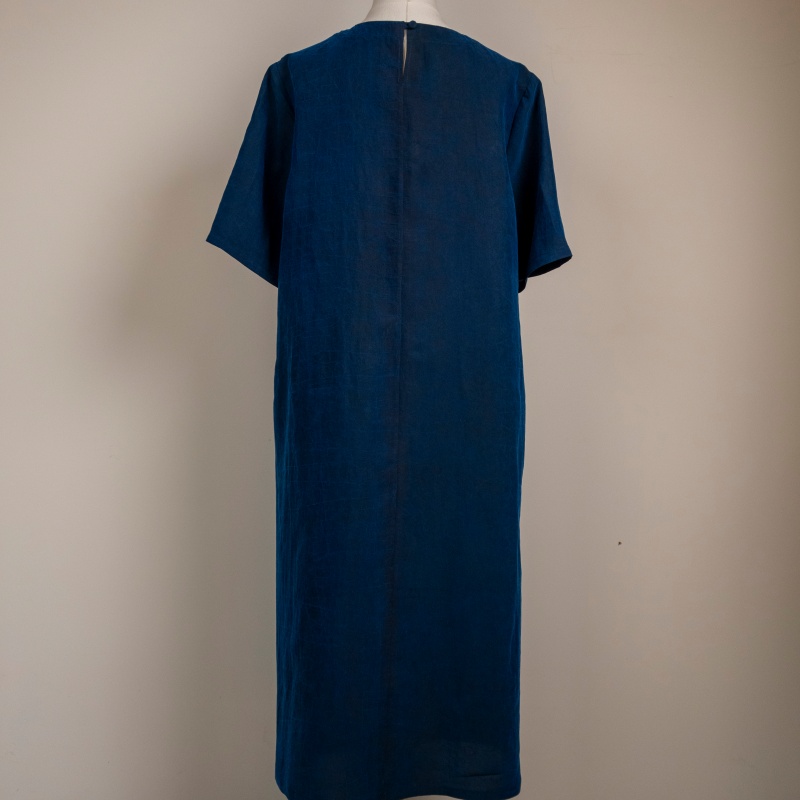
The method for protecting the color of silk cheongsam when hanging it with the reverse side facing out.
How to Dry Your Silk Cheongsam Inside Out to Protect the Color
The color on a silk cheongsam fades fastest during drying. Not during washing. Not during storage. During the hours when wet fabric hangs or lies exposed to whatever light reaches it. Most people do not realize this until they pull their favorite cheongsam out after a wash and notice the shoulders look lighter than the rest, or the collar has gone dull where it caught the most light.
The fix is simple and costs nothing. Turn the cheongsam inside out before you dry it. The lining side faces the world. The dyed side faces itself. What sounds like a small detail is actually the single most effective color-protection step you can take between washes.
Why the Outside of Silk Cheongsam Fades During Drying
Light Hits Wet Silk Harder Than Dry Silk
Dry silk reflects light off its smooth fiber surface. That reflection is what gives silk its luster. But wet silk is different. Water fills the gaps between fibers and makes the surface more transparent. Light penetrates deeper instead of bouncing off. When that light carries UV rays — even filtered UV through a curtain — it reaches the dye molecules and starts breaking them apart.
This effect is invisible while the cheongsam is wet. You do not see the fading happening in real time. But by the time the fabric dries, the damage is already done. The areas that caught the most light — usually the shoulders, the chest, and the upper back — will look noticeably lighter than the rest.
The Dye Molecules Are Most Vulnerable When Wet
Silk dye bonds to protein fibers through a chemical process that is not permanent at the molecular level. When the fibers are dry, the bond is stable. When the fibers are wet and swollen, the bond weakens. UV radiation, oxygen, and even ambient light can disrupt the dye-fiber connection during this window.
Once the cheongsam dries, the fibers shrink back and the bond re-forms. But if the dye was already damaged, it re-forms in a weaker state. That is why a cheongsam can fade a little with every single wash-dry cycle, even if you never wear it in direct sunlight. The cumulative effect is slow but relentless.
How to Dry Inside Out the Right Way
Flipping Before You Lay It Flat
If you are flat drying, flip the cheongsam so the lining faces up before you lay it on the towel. The outer surface — the one with the dye, the sheen, the embroidery — should be pressed against the towel. The towel acts as a barrier between the dyed side and any ambient light that filters into the room.
Smooth the cheongsam out completely before flipping. Make sure no folds are trapped underneath. Every fold that sits between the dyed fabric and the towel creates a pocket where light can still reach the surface.
Flipping Before You Hang It
If you are hanging to dry, clip the hanger to the side seams as usual, but make sure the cheongsam is already inside out before you clip it on. Unclip any existing hanger, lay the cheongsam flat, flip it, smooth it out, then re-clip the hanger to the side seams.
This takes an extra thirty seconds. It is the most valuable thirty seconds in the entire drying process.
When to Flip It Back
Leave it inside out for the entire drying period. Do not flip it back halfway through to check on it. Every time you expose the outer surface, you give light a chance to attack the dye.
Only flip it back when the cheongsam is completely dry. Touch the lining to confirm — the lining dries last, so if the lining is dry, the outer surface has been dry for a while already. At that point, flipping it back carries no risk.
Why the Lining Side Does Not Need Protection
The inner lining of a silk cheongsam is usually undyed or very lightly dyed. It does not carry the same color risk as the outer shell. Exposing it to light during drying does not cause visible fading. That is why it is safe — and actually better — to let the lining face outward.
The lining also dries slightly faster than the outer surface because it is thinner and closer to the airflow. Letting it face out helps balance the drying rate between the two layers. If the outer surface faced out, it would dry slower because it is thicker and carries more dye weight, creating uneven drying between the layers.
Extra Color Protection Steps to Pair With Inside-Out Drying
The Vinegar Rinse Before Drying
Add one cup of white vinegar per liter of cool water during the final rinse. The acetic acid in vinegar neutralizes any alkaline residue left by detergent and helps reseal the dye molecules inside the fiber. This step works on both sides of the fabric, but it is especially effective on the outer surface because that is where the dye lives.
The vinegar smell disappears completely once the fabric dries. What remains is a subtle pH balance that makes the dye more resistant to light damage during the drying window.
Drying in the Darkest Spot Available
Inside-out drying helps, but it is not a complete shield. Some light still reaches the outer surface through the fabric itself, especially on thin silk. For maximum protection, dry the cheongsam in the darkest room you have. A closet with the door closed works. A room with blackout curtains works even better.
If you must dry near a window, hang a thick curtain or a piece of dark fabric over the window first. Sheer white curtains filter some UV but let plenty of visible light through. Dark fabric blocks both.
Avoiding Any Heat Source Nearby
Heat accelerates dye breakdown. A radiator, a heater vent, a kitchen stove — all of these raise the ambient temperature and speed up the chemical reactions that fade color. Keep the drying area cool and consistent. Room temperature is ideal. Anything above 25 degrees Celsius starts to increase the risk.
What Happens If You Dry It Right Side Out by Accident
It happens. You forget to flip it, or you flip it back too early to check on progress. The damage depends on how long the outer surface was exposed and how much light reached it.
If it was only a few minutes in a dim room, the effect is negligible. You will not notice any difference. If it was an hour or more near a window, the exposed areas may show slight fading. A vinegar soak can help restore some of the lost vibrancy, but the original color will not come back fully.
If it sat in direct sunlight — even for twenty minutes — the damage is visible. The exposed areas will look washed out compared to the rest. At that point, vinegar and steaming can improve the appearance, but the dye loss is permanent. Prevention is the only real solution.
The Routine That Actually Works
Wash the cheongsam in cool water with a silk-safe detergent. Rinse twice in clean cool water. Add vinegar to the final rinse. Roll it in a dry towel to remove excess water. Flip it inside out. Lay it flat on a clean towel in the darkest, coolest, most ventilated spot available. Let it dry for 24 to 48 hours without touching it. Confirm full dryness by touching the lining. Flip it back only when it is completely dry. Store it inside out in a cotton wrap.
That routine takes patience. It takes discipline. It takes resisting the urge to check on it, speed it up, or flip it over because you want to see how it looks. But every time you follow it, the color stays sharper, the sheen stays brighter, and the cheongsam looks closer to the day you first put it on.
Inside-out drying is not a trick. It is basic physics. The side you protect stays protected. The side you expose fades. Choose which side faces the world, and your cheongsam will thank you for it every time you wear it.