
Why can Sichuan produce the world’s finest mulberry silk?
The key lies in four major advantages: a golden natural environment, premium mulberry leaves and silkworm breeds, a millennium-old mature craftsmanship, and a complete high-end industrial chain. Sichuan accounts for over 60% of China’s exports of top-grade 6A raw silk, making it the global core supplier of high-end raw silk.
1. The 30th parallel north—the golden sericulture belt—naturally produces superior mulberry leaves due to its ideal soil, water, and climate conditions.
Rich in minerals, the basin’s purple soil and the weakly acidic, fertile lands of Panxi region provide abundant organic matter, calcium, magnesium, and trace elements, resulting in thick, nutrient-rich mulberry leaves with higher protein and amino acid content. These nutritious leaves produce silk fibers that are coarser, more resilient, and exceptionally lustrous. In the subtropical, humid hills of northern Sichuan, mild winters and cool summers ensure balanced temperature and humidity, enabling a stable year-round silkworm-rearing cycle. This yields uniform, clean, and soft cocoons, perfect for high-end home textiles and apparel. In the plateau regions of Sichuan, large diurnal temperature variations lock in nutrients within the mulberry leaves, producing premium-quality cocoons that are thick-layered, pure white, long-fibered, and highly refined—making them the preferred raw material for international luxury fabrics. With abundant unpolluted mountain spring water sources throughout the province, mulberry leaves have extremely low pesticide residues, resulting in pure white silk without impurities. This eliminates the need for harsh bleaching processes, preserving the fabric’s natural soft glow.
2. Premium Domestic Mulberry Silkworm Seed Resources, Ensuring Superior Silk Quality from the Source
Possessing the world’s only collection of mulberry haploid resources, the Sichuan Provincial Sericulture Research Institute has continuously developed specialized, high-quality silkworm breeds such as Chuan Shan × Shu Shui. These exclusive, high-yield, premium silkworm varieties produce a high proportion of double-cocoon yields in spring, with individual silk fibers reaching up to one kilometer in length. The core quality indicators—uniformity in fiber thickness, cleanliness, tensile strength, and cohesion—are significantly superior to those of ordinary silk-producing regions. International high-end weaving industries exclusively recognize Sichuan cocoon raw materials.
III. Three Thousand Years of Uninterrupted Silk Weaving Craftsmanship: Ancient Techniques Enhanced by Modern Precision
As the birthplace of silk civilization, this region has maintained an unbroken lineage of craftsmanship since ancient times. Legend attributes the origins of sericulture to Lei Zu and King Can Cong of Shu. Archaeological discoveries at Sanxingdui reveal silk fragments dating back 3,000 years. During the Han Dynasty, Chengdu’s Jingguan City became renowned for its brocade, while Sichuan brocade gained fame along the Silk Road during the Tang and Song dynasties. Since antiquity, artisans have mastered a complete set of traditional techniques—from mulberry cultivation and silkworm rearing to cocoon drying, reeling, and refining. Skilled craftsmen carefully control water temperature, tension, and cooking duration to minimize fiber damage.
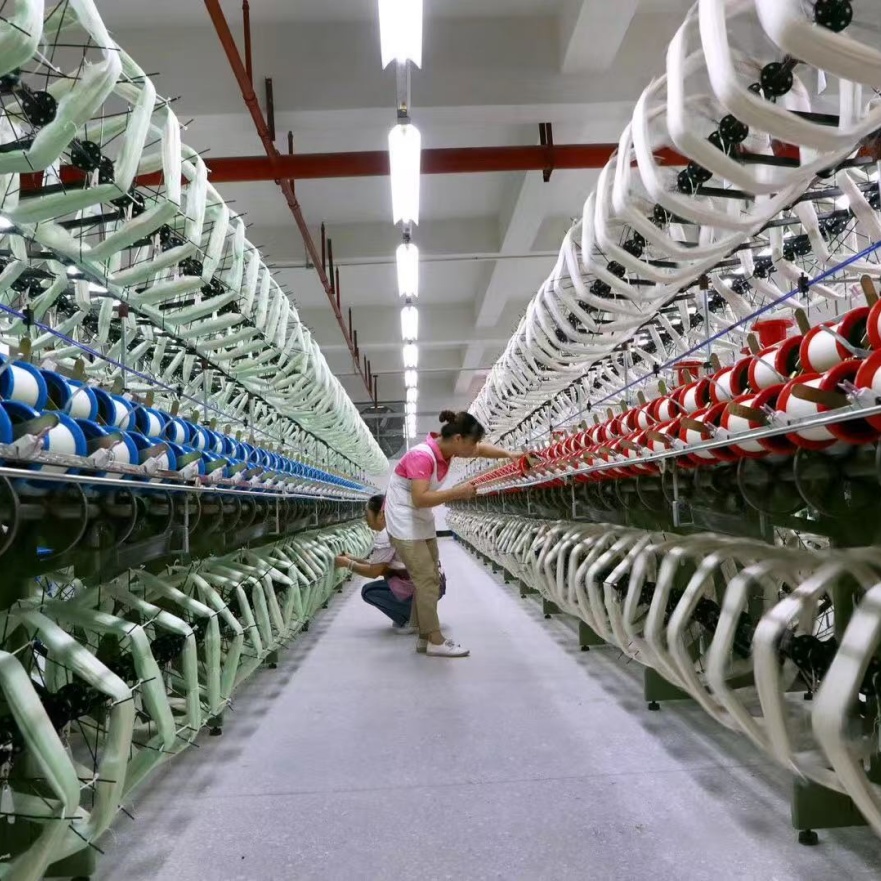
Today, advanced intelligent processing equipment is widely used throughout the province, including pressure-reducing automatic cocoon cookers, high-speed automatic reeling machines, and digital traceability systems. Precise temperature control during cocoon boiling and low-tension reeling preserve the integrity of sericin, resulting in smooth, strong, and less prone-to-pilling raw silk. This process consistently produces top-grade 5A and 6A raw silk—the highest quality standard in the global silk industry.
IV. The Nation’s Largest Integrated High-End Silk Industry Chain
Sichuan leads the country in high-quality silk production, with 2.3 million mu of mulberry orchards across the province yielding 87,000 tons of silkworm cocoons annually. It ranks first nationwide in output of premium 5A and above raw silk, accounting for 60% of China’s top-grade 6A silk exports—supplied to luxury fashion brands in Europe, Japan, and South Korea for high-end silk fabrics, ready-to-wear garments, and custom-made silk bedding.
The entire industry operates as a closed-loop system with full quality control—from eco-friendly mulberry cultivation and standardized sericulture greenhouses to intelligent reeling, weaving, refining, dyeing, and integrated manufacturing of Shu brocade and finished silk products. Nanchong hosts the national satin price index platform, making Sichuan silk the preferred raw material source for global silk enterprises.
With long-term government support, Sichuan is a core hub under the national “East Silk, West Consolidation” strategy and a key focus for building a national-level sericulture industrial cluster. Strict standards govern both cultivation and processing, backed by dual geographical indications: “Liangshan Mulberry Silkworm Cocoons” and “Nanchong Silk,” ensuring superior quality.
V. Summary: Core Advantages of Sichuan Silk Compared to Ordinary Silk
Ordinary silk from typical producing regions: short fibers, low purity, high impurities, requiring heavy chemical processing, mostly used in low-end home textiles.
Sichuan mulberry silk: thick fiber layers, up to 1,000 meters in length, pure white with a matte finish, highly durable, low pesticide residue, and requires minimal chemical treatment. Its soft, smooth, and warm texture makes it internationally recognized as premium silk raw material—earning it the title “the finest mulberry silk in the world.”