
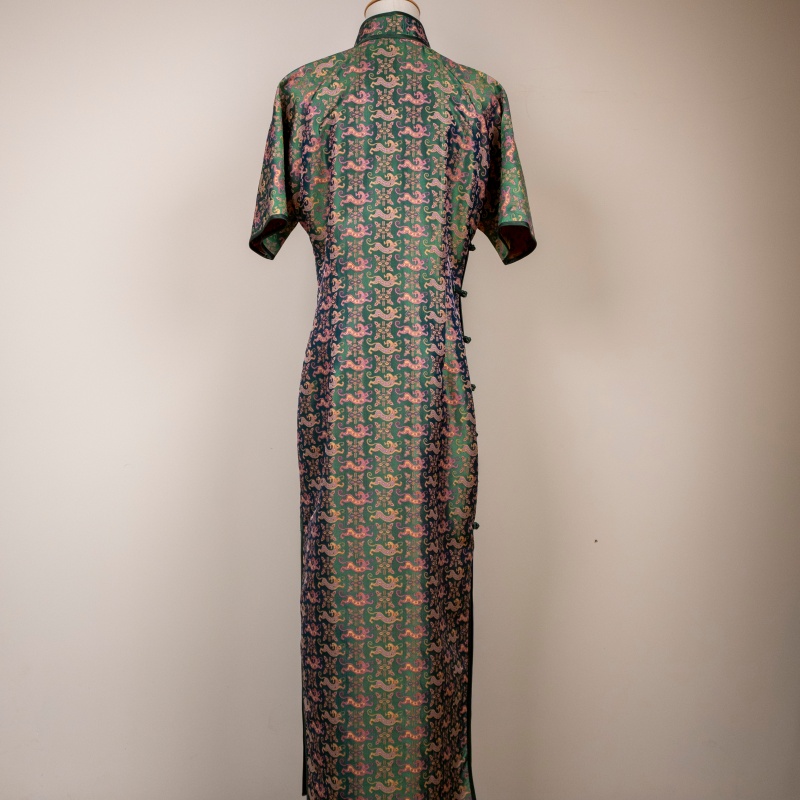
Quick drying method for silk cheongsam
Quick Shade-Drying Methods for Silk Cheongsam That Actually Work Without Damaging the Fabric
You washed your silk cheongsam. You rinsed it properly. And now you are staring at a soaking wet garment with somewhere to be in two hours. The natural drying time for silk is 24 to 48 hours. You do not have that kind of time. So what do you do?
You speed it up. But you have to do it the right way. The wrong shortcut destroys silk faster than slow drying ever could. The right shortcut shaves off several hours without any visible damage. The difference is knowing which methods are safe and which ones are just dressed-up disasters.
Why Normal Air Drying Takes So Long and What You Can Actually Change About It
Silk dries slowly because the fibers hold onto moisture tightly. Protein fibers absorb water deep into the weave, and that water does not want to leave. On top of that, silk has low thermal conductivity, which means it does not transfer heat well. Even warm air takes a long time to pull moisture out of silk compared to cotton or polyester.
What you cannot change is the nature of the fiber. What you can change is the environment around the fiber. Humidity, airflow, temperature, and fabric thickness — these are the variables you actually control. Speed comes from manipulating those variables, not from forcing heat or direct air onto the fabric.
The Dehumidifier Trick That Cuts Drying Time in Half
How It Works and Why It Is Safe
A dehumidifier pulls moisture out of the air. When the air around the cheongsam has less moisture, the water in the fabric evaporates faster because there is a bigger difference between the moisture level in the silk and the moisture level in the air. That difference is what drives evaporation.
This is completely safe for silk. No heat is involved. No direct airflow hits the fabric. The cheongsam just sits there in a drier environment and releases water at a faster rate. You can expect to shave off 8 to 12 hours compared to normal room drying, depending on how humid your space usually is.
Setting It Up Correctly
Place the dehumidifier in the same room where the cheongsam is drying. Position it at least one meter away from the garment. You want the dry air circulating through the room, not blasting directly onto the wet silk.
Set the dehumidifier to 45 to 50 percent relative humidity. Going lower than that dries the air too aggressively and can cause the outer surface of the silk to stiffen before the inside is dry. That creates a hard shell with a damp interior — a perfect recipe for mildew.
Leave it running for the entire drying period. Do not turn it off once the cheongsam looks dry on the surface. The inside dries last.
The Fan and Open Window Combo — Done the Right Way
Why Most People Get This Wrong
A fan on its own is not enough. And a fan pointed directly at the cheongsam is actually harmful. Direct airflow dries the edges and thin areas fast while the thick sections stay wet. That mismatch causes stiffness, puckering, and shape distortion.
The trick is to use the fan to move air across the room, not at the garment. Position the fan on the opposite side of the room from the cheongsam, pointing at the wall or the ceiling. The air bounces off the wall and circulates gently through the room. The cheongsam gets indirect airflow from all directions, which dries it evenly.
Adding an Open Window for Maximum Effect
If the weather outside is dry — below 60 percent humidity — open a window on the opposite side of the room from the fan. The fan pulls air in through the window and pushes it across the room. This creates a steady cross-breeze that accelerates evaporation without any direct force on the fabric.
Close the window if it is raining or if outdoor humidity is above 70 percent. Wet outside air will slow drying and risk water spots on the silk.
This combo can cut drying time to 12 to 16 hours for a standard silk cheongsam. For heavily embroidered pieces, expect 18 to 24 hours. That is still slower than a tumble dryer, but it is the fastest safe method available without professional equipment.
The Towel Squeeze Technique Before You Start Drying
Removing Bulk Water Before the Dry
Most of the drying time is spent evaporating water that you could have removed mechanically. After the final rinse, do not just let the cheongsam drip. That dripping phase can last an hour and does nothing useful.
Lay the cheongsam flat on a large dry towel. Roll the towel up with the cheongsam inside. Press firmly but gently as you roll. The towel will absorb 60 to 70 percent of the water. Unroll and lay the cheongsam on a fresh dry towel.
Now the cheongsam is damp, not soaking. The drying time drops dramatically because there is less water to evaporate. What would have taken 36 hours now takes 18 to 20.
Why You Should Never Wring
Wringing twists the fibers and stretches the fabric unevenly. The embroidery distorts. The beads shift. The shape collapses. The towel roll method removes the same amount of water without any twisting force. It takes thirty seconds longer than wringing. It saves you hours of damage repair later.
Using a Low-Heat Iron on the Damp Cheongsam — The Controversial Method
When This Actually Works
This method is not for everyone. It works best on plain silk cheongsam without heavy embroidery or beading. If your cheongsam has dense embroidery, skip this section entirely — the heat will pucker the threads.
Set your iron to the lowest silk setting. Place a clean cotton cloth over the cheongsam. Press the iron gently onto the cloth — do not slide it. Hold for three to five seconds, lift, move to a new spot, repeat. The heat helps evaporate trapped moisture from the inner layers while the cotton cloth protects the silk from direct contact.
This can cut drying time by another 4 to 6 hours. But you have to be careful. Too much heat creates shine marks on silk that look like burn spots. Too much pressure stretches the fabric. Keep the iron moving and keep the cloth between the iron and the silk at all times.
The Safe Ironing Path
Start with the thin areas — the hem, the cuffs, the collar edges. These dry fastest and need the least help. Move to the thicker sections — the chest, the waist, the lined areas. These hold the most moisture and need the most attention.
Never iron over embroidery or beading. The heat will melt any synthetic thread and warp the beads. Go around those areas. Let them air dry on their own.
Drying Heavy Embroidery Faster Without Ruining It
The Two-Towel Sandwich Method
For cheongsam with heavy embroidery, speed and safety are hard to balance. The embroidery holds moisture longer than plain silk, so it dries slower. But you cannot apply heat or direct airflow to those areas without causing puckering.
Place the cheongsam face down on a dry towel. Lay a second dry towel on top of the embroidery areas. The top towel absorbs moisture from the raised threads while the bottom towel supports the fabric from below. The embroidery is sandwiched between two absorbent layers, which pulls moisture out faster than air drying alone.
Leave the sandwich in place for six to eight hours. Then remove the top towel and continue flat drying normally. This method shaves off 4 to 6 hours for heavily embroidered pieces without any of the distortion risks.
Removing Beads Temporarily
If your cheongsam has removable bead accents — some handcrafted pieces use clip-on or sewn-on beads that can be detached — take them off before drying. Beads trap moisture underneath them and slow drying in those areas significantly. They also add weight that stretches the fabric.
Dry the cheongsam without the beads. It will dry faster and more evenly. Reattach the beads once the garment is completely dry. This sounds like extra work, but it actually saves time because the main garment dries 30 percent faster without the bead weight.
How to Tell If It Is Actually Dry Before You Put It Away
Touch the lining. Not the outside. The lining is always the last part to dry because it sits against the body of the fabric and traps moisture. If the lining feels cool and smooth, the cheongsam is dry. If it feels even slightly damp, it is not ready.
A cheongsam stored while the lining is still damp will develop mildew within a week. The smell is almost impossible to remove. The yellow stains are nearly permanent. That thirty-second check saves you from a ruined garment.
The Fastest Realistic Drying Time You Can Achieve at Home
Plain silk cheongsam: 10 to 14 hours with dehumidifier plus cross-breeze plus towel squeeze.
Lightly embroidered cheongsam: 14 to 18 hours with the same setup plus the two-towel sandwich.
Heavily embroidered or beaded cheongsam: 18 to 24 hours. There is no safe way to go faster than this without risking puckering, stretching, or bead shift.
Any method that promises to dry a silk cheongsam in under six hours is either lying or using heat that will damage the fabric. Accept the timeline. Work with it. Use the right tools. And your cheongsam will come out of the process looking exactly the way it did before the wash.