
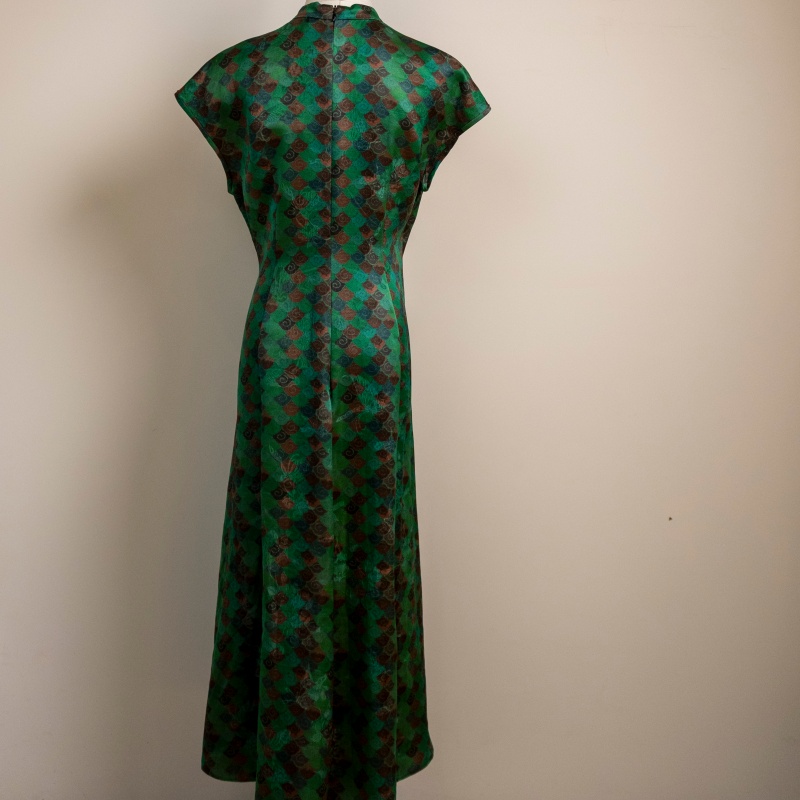
Tips for drying a silk cheongsam in humid weather
How to Dry Your Silk Cheongsam in Humid Weather Without Ruining the Fabric
Washing a silk cheongsam in humid weather feels like a losing game. The air is already thick with moisture. Every surface feels damp. You hang the cheongsam to dry and hours later it is just as wet as when you started. Worse, that trapped moisture starts to smell. Mildew creeps in. Yellow stains appear on the lining. By the time the cheongsam finally dries, it looks and feels nothing like it did before the wash.
Humid weather does not have to destroy your cheongsam. But it does require a completely different drying strategy than what works on a dry day. The rules change. The tools change. The timeline changes. Everything you thought you knew about air drying silk goes out the window when the relative humidity climbs above 70 percent.
What Humidity Actually Does to Wet Silk Cheongsam
Evaporation Slows Down Dramatically
Drying is just evaporation. Water leaves the fabric and enters the air. But when the air is already full of moisture, there is nowhere for the water to go. The difference between the moisture in the silk and the moisture in the air — that is what drives evaporation. In humid weather, that difference shrinks to almost nothing.
At 80 percent relative humidity, a wet silk cheongsam can take three to four times longer to dry than it would on a dry day. What normally takes 24 hours now takes 72 or more. And that is if you do everything right. If you make even one mistake, the cheongsam never fully dries and mildew sets in within days.
Mildew Starts Faster Than You Think
Mildew does not need days to establish itself on wet silk. In humid conditions, it can begin growing within 12 to 18 hours. The first sign is a faint musty smell. The second sign is a yellowish tint on the lining. By the time you see visible spots, the damage is already deep in the fiber.
The lining is the most vulnerable area because it sits against the outer fabric and traps moisture between the two layers. Air cannot reach it easily. In humid weather, that trapped moisture has nowhere to evaporate into. It just sits there, warm and damp, feeding whatever spores are already in the air.
Setting Up a Drying Space That Works in Humid Weather
Why Your Usual Spot Will Not Work
The spot where you normally dry your cheongsam — near a window, in the hallway, on a balcony — is probably the worst place to dry it during humid weather. Those spots have the most ambient moisture. A window lets in humid air. A hallway in an old building traps moisture between walls. A balcony without a roof collects humidity from the ground.
You need a controlled environment. Not a perfect one — just one where you can manage the variables. A small interior room with a door you can close is better than a large open space. A bathroom with an exhaust fan is acceptable if the fan is not blowing directly on the cheongsam. A spare bedroom with a dehumidifier is ideal.
The Dehumidifier Is Not Optional in Humid Weather
On a dry day, a dehumidifier is a nice-to-have. In humid weather, it is mandatory. Without one, you are relying on air that cannot absorb any more moisture. The cheongsam will sit there, wet, for days.
Set the dehumidifier to 45 to 50 percent relative humidity. Place it in the same room as the cheongsam, at least one meter away. Run it continuously for the entire drying period. Do not turn it off at night. Do not turn it off when the cheongsam looks dry on the surface. The inside dries last, and the dehumidifier needs to keep working until every inch is dry.
If you do not own a dehumidifier, you can use silica gel packets placed around the drying area. They absorb moisture from the air locally. They are not as effective as a dehumidifier, but they help. Replace the packets every 24 hours because they saturate quickly in humid conditions.
The Drying Method That Actually Works When the Air Is Wet
Flat Drying Is the Only Option
Hanging a wet cheongsam in humid weather is a mistake. The weight of the water stretches the silk at the hanger points. The humidity slows evaporation so the fabric stays wet longer. The combination means the cheongsam hangs there, heavy and sagging, for days. The shoulder seams stretch permanently. The shape collapses. The embroidery sags.
Flat drying is the only safe method in humid weather. When the cheongsam lies flat, the water distributes evenly across the entire surface. No single point bears extra weight. The shape stays locked while the moisture evaporates slowly.
Lay the cheongsam face down on a clean, dry, flat towel. The outer surface presses into the towel. This protects the dyed side from any ambient light and gives the fabric a stable base. Smooth it out completely. Align the seams. Straighten the hem. Do not let any part fold over itself.
The Towel Absorption Cycle
In humid weather, one towel is not enough. The air cannot pull moisture away fast enough, so you need to help mechanically.
After laying the cheongsam face down for four hours, flip it over and replace the bottom towel with a fresh dry one. The used towel has absorbed as much as it can. A fresh towel continues pulling moisture from the fabric. Repeat this towel swap every four to six hours.
This sounds tedious. It is. But in humid weather, mechanical absorption is the only thing keeping the cheongsam from sitting in its own moisture for days. Each towel swap removes a significant amount of water that the humid air cannot remove on its own.
Elevating the Cheongsam Off the Surface
Place the cheongsam on a drying rack covered with a clean towel, not directly on a flat surface. The rack allows air to circulate underneath the fabric. In humid weather, airflow under the cheongsam matters as much as airflow over it. Trapped moisture between the fabric and the surface creates a microclimate where mildew thrives.
If you do not have a drying rack, place rolled towels under the cheongsam at the corners to lift it slightly off the table or bed. Even two centimeters of clearance makes a difference. It lets air move under the fabric and speeds evaporation from the lining side.
Protecting the Cheongsam From Mildew During Extended Drying
The Vinegar Rinse Is Even More Important in Humid Weather
Add one cup of white vinegar per liter of cool water during the final rinse. Vinegar lowers the pH of the fabric and creates an environment that is hostile to mildew spores. In humid weather, where spores are everywhere and moisture is constant, that pH barrier is your best defense.
The vinegar also helps reseal the dye molecules, which is critical because humid weather slows drying and extends the window during which light can damage the color. Even indoor light causes fading over long exposure times. The vinegar rinse narrows that window.
Checking for Mildew Smell Every Six Hours
In humid weather, you cannot set the cheongsam down and walk away. Check it every six hours. Lift the lining and smell it. If you detect any musty or sour odor, mildew has started.
At the first sign of smell, move the cheongsam to a drier spot immediately. Increase the dehumidifier output if possible. Add fresh silica gel packets around the garment. The earlier you catch it, the easier it is to reverse. Once mildew sets into the fiber, it is nearly permanent.
Do Not Use Fabric Fresheners or Sachets
It is tempting to hang a lavender sachet or spray fabric freshener near the drying cheongsam to fight the smell. Do not do it. Those products coat the silk with synthetic fragrance that mixes with any existing odor and creates something worse. They also attract dust and can cause yellowing on silk over time.
The only safe way to control smell in humid weather is to control the moisture. Dry the cheongsam fast enough and mildew never gets a chance to grow. No sachet can replace actual dryness.
How Long Drying Actually Takes in Humid Weather
Adjust Your Expectations
On a dry day, a plain silk cheongsam takes 24 to 48 hours to air dry. In humid weather — above 75 percent relative humidity — expect 48 to 72 hours. For heavily embroidered pieces, add another 12 to 24 hours. That is not a sign that something is wrong. That is the reality of drying protein fiber in wet air.
Do not try to cut that time short with heat, fans, or hair dryers. All of those create uneven drying, which causes puckering, stiffness, and shape distortion. In humid weather, the margin for error is smaller, not larger. Slow and controlled is the only path that does not end in damage.
When to Give Up on Air Drying and Seek Professional Help
If the cheongsam has not dried after 72 hours despite using a dehumidifier, towel swaps, and flat drying, the humidity in your space is too high for home drying to work. At that point, take it to a professional cleaner who has industrial dehumidifiers and controlled drying rooms. They can dry it in 12 to 18 hours without any of the risks you face at home.
This is not a failure. It is a practical decision. A cheongsam that sits wet for too long in humid weather will develop mildew that no amount of home treatment can remove. Knowing when to hand it off saves the garment.
The Checklist Before You Put a Humid-Weather-Dried Cheongsam Away
Touch the lining first. Not the outside. The lining dries last and traps moisture longest. If the lining feels even slightly damp, do not store it. Keep drying.
Check the embroidery areas. Run your fingers over every stitched section. If any thread feels stiff or rough, that area dried too fast or unevenly. A light vinegar mist followed by gentle steaming can restore the softness, but only if the area is fully dry.
Smell the lining. No musty odor. No sourness. No earthiness. If it smells clean — like nothing — it is dry. If it smells like anything other than clean fabric, keep drying.
Fold or hang only after passing all three checks. Store in a breathable cotton wrap, not plastic. Keep the storage area as dry as possible. If your closet is humid, place the cheongsam in a cotton bag with fresh silica gel packets.
Humid weather is the hardest condition for drying silk. But it is not impossible. The key is accepting that everything takes longer, checking more often, and never skipping the steps that protect the fabric from mildew. A cheongsam dried properly in humid weather looks and feels the same as one dried on a perfect dry day. The difference is just patience and the right setup.