
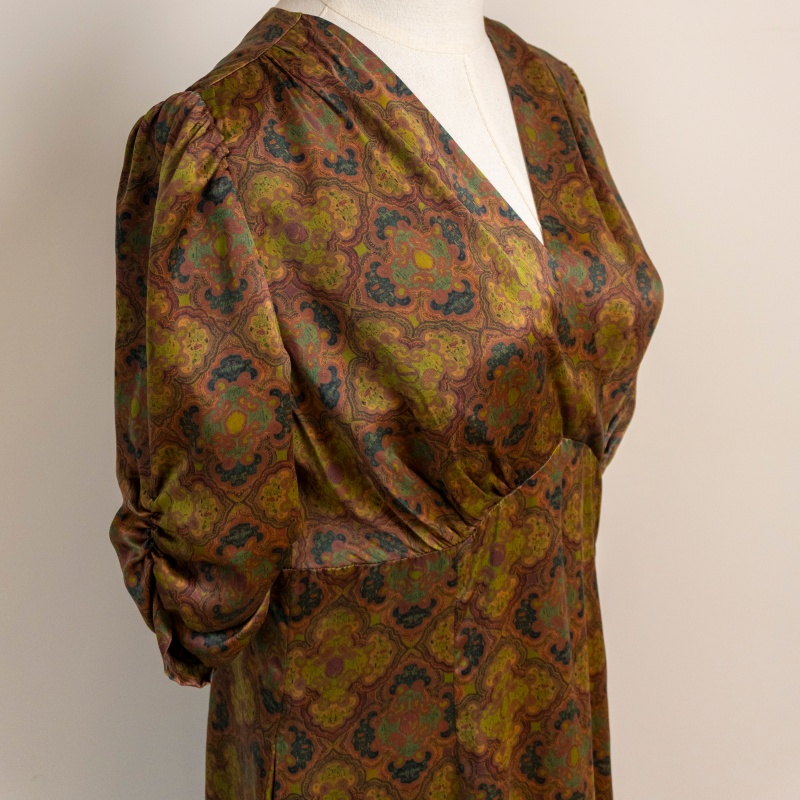
When drying the buttons of the handmade cheongsam, please be careful.
Proper drying of the frog closure sections on handcrafted cheongsams is one of the most overlooked but critical steps to preserve their intricate shape, fine stitching and long-term wear quality. These small, detailed decorative parts are often made with tightly wrapped fabric layers, fine inner threads and subtle padding, which can easily trap moisture if not handled the right way, leading to warping, discoloration or even loose threads over time.
Pre-Drying Preparation for Frog Closure Areas
Before you even move your damp cheongsam to a drying spot, take a few gentle steps to set the frog closures up for a safe drying process. First, lightly reshape each coiled and knotted section of the closure with your clean, dry fingertips right after you finish washing the garment. Smooth out any twisted fabric wraps, tuck any stray loose threads back into their original positions, and make sure each loop sits in its exact intended form instead of being squashed against the main fabric. Do not pull or stretch the delicate wrapped layers, as this can break the fine hand stitching that holds the entire structure together. You can also lay a single sheet of plain, unprinted cotton fabric over the frog closures while you gently press excess water out of the rest of the cheongsam, to avoid squeezing extra moisture deep into the tightly coiled inner layers of the decorative parts.
Optimal Airflow and Surrounding Environment Setup
The space you choose to dry your cheongsam will make a huge difference in how evenly the frog closure sections dry without damage. Pick a spot with soft, steady natural airflow, away from any direct harsh sunlight that can fade the dyed fabric of the closures faster than the rest of the cheongsam. Avoid hanging the garment in areas near open windows on very humid days, because trapped damp air can make the inner layers of the frog closures stay wet for more than 48 hours, which might lead to subtle mildew spots that are almost impossible to remove later. Make sure no other heavy garments or objects are pressed against the frog closures while the cheongsam dries, because constant pressure on the damp, soft wrapped fabric can leave permanent flattened marks that ruin the detailed three-dimensional shape of the handwork. You can place the cheongsam on a clean, flat mesh drying rack instead of hanging it on a narrow hanger, so air can circulate freely around every single side of each frog closure from all directions.
Small Adjustments During the Drying Cycle
Check on the frog closure sections every two to three hours during the first half of the drying process, to make small tweaks that keep their shape perfect. If you notice one side of a knotted closure is drying much faster than the other, you can very gently flip the small section over with your finger to let the slower drying side get equal exposure to the moving air. Do not use any electric fans pointed directly at the frog closures at full speed, because strong concentrated airflow can make the outer fabric wraps curl up at the edges before the inner layers are fully dry. Once the closures feel mostly dry to the touch but still have a very faint hint of softness, you can give them one last light reshape with your fingertips, to lock in their exact original form before they finish setting completely. Never try to speed up the process with any heating devices, because high heat will shrink the fine wrapped fabric layers unevenly, making the frog closures pull tight and distort the surrounding stitching on the cheongsam placket.