
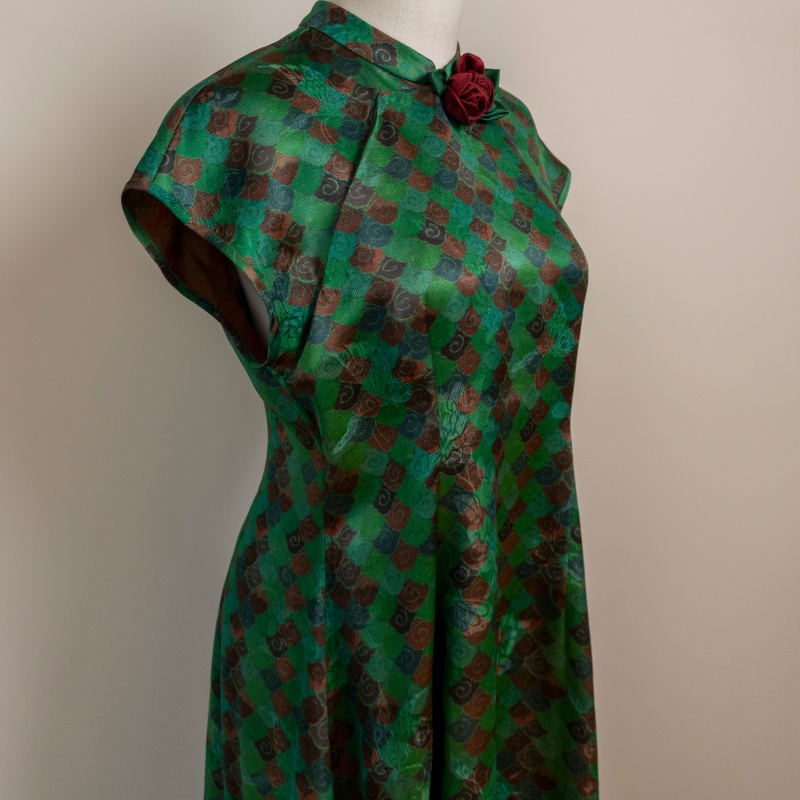
Selection of Ventilation and Sun Exposure Conditions for Silk Qipao
How to Choose the Right Drying Environment for Your Silk Cheongsam
The room you dry your silk cheongsam in matters more than the method you use. You can follow every step perfectly — inside out, flat drying, vinegar rinse — and still ruin the garment if the air around it is wrong. Too humid. Too hot. Too still. Too much light. Any one of those kills the fabric just as surely as a tumble dryer would.
Most people think drying is just about hanging or laying the cheongsam somewhere and waiting. It is not. Drying is about controlling the environment around the fabric. Temperature, humidity, airflow, light exposure — these four variables decide whether your cheongsam comes out soft and supple or stiff and faded.
Getting the environment right is not complicated. But it requires knowing exactly what to look for and what to avoid.
Why the Drying Room Matters More Than the Drying Method
The Air Around the Fabric Is Doing the Actual Work
People focus on the cheongsam. They worry about the hanger, the towel, the vinegar rinse. But the real work happens in the air surrounding the fabric. That air determines how fast water evaporates, how evenly the fabric dries, and whether the dye and fibers stay intact.
Bad air — humid, stagnant, warm — slows evaporation unevenly. The outer surface dries while the inside stays wet. The top dries while the bottom stays damp. The areas near a window fade while the areas in the corner hold their color. The result is a cheongsam that is dry on the outside, damp on the inside, faded on one side, and stiff everywhere.
Good air — cool, dry, moving, dark — pulls moisture out evenly from every part of the fabric. The cheongsam dries at the same rate from edge to edge. The dye stays locked. The fibers stay flexible. The shape holds.
The method matters. But the environment matters more.
Most Home Spaces Are Terrible for Drying Silk
The bathroom seems logical. It has a vent, a towel rack, a flat surface. But bathrooms are among the worst places to dry silk cheongsam. The humidity after a shower can spike to 80 or 90 percent. The air is thick with moisture. Drying a cheongsam in that environment takes twice as long and invites mildew.
The kitchen is worse. Cooking adds heat, grease, and humidity to the air. The temperature swings every time the stove turns on. That inconsistency dries the cheongsam unevenly and can set grease stains into the silk.
The bedroom is better but still risky. Most bedrooms are not well ventilated. The air is still. The humidity hovers around 50 to 60 percent. That is not enough airflow to dry silk efficiently, especially in humid weather.
The balcony sounds ideal. Fresh air, natural light. But balconies collect humidity from the ground, especially on lower floors. Direct sun hits the fabric and fades the color within hours. Wind can blow dust and debris onto the wet silk. A balcony is only safe if it is shaded, elevated, and has steady indirect airflow.
The Ideal Drying Environment — What It Actually Looks Like
Temperature Should Stay Between 18 and 24 Degrees Celsius
Silk dries best at room temperature. Not warm. Not cool. Right in the middle. At 18 to 24 degrees Celsius, water evaporates slowly enough for the fibers to stay flexible but fast enough to avoid mildew.
Above 24 degrees, evaporation speeds up and the outer fibers dry before the inner ones. That mismatch causes stiffness and puckering. Below 18 degrees, evaporation slows so much that the cheongsam stays damp for days, which invites mildew.
A spare bedroom with the door closed usually hits this range. A hallway with no windows works too. Avoid any room with a radiator, a heater vent, or a kitchen stove nearby. Those heat sources push the temperature above the safe range and create uneven drying.
Humidity Should Be Below 50 Percent
This is the single most important variable. If the air is too humid, water cannot evaporate from the fabric no matter how long you wait. The cheongsam sits there, wet, for days. The lining traps moisture. Mildew starts.
The ideal relative humidity for drying silk cheongsam is 40 to 50 percent. Below 40 percent, the air dries the fabric too fast and can cause surface stiffness. Above 50 percent, drying slows dramatically and mildew risk climbs.
If your home does not have a dehumidifier, check the humidity with a cheap hygrometer. They cost almost nothing and tell you exactly whether your space is safe for drying silk. If the reading is above 50 percent, do not dry the cheongsam in that room. Move it somewhere drier or get a dehumidifier.
Airflow Should Be Gentle and Indirect
Still air is the enemy of even drying. But direct airflow is almost as bad. A fan pointed at the cheongsam dries the surface fast while the inside stays wet. That mismatch causes the exact stiffness and puckering you are trying to avoid.
The ideal airflow is gentle and indirect. A fan on the opposite side of the room, pointing at the wall or the ceiling, creates a slow circulation that moves air across the cheongsam without blasting it. The cheongsam dries evenly because every part of the fabric gets the same amount of airflow.
If you have a window in the drying room, open it slightly to create a cross-breeze with the fan. But only open it if outdoor humidity is below 60 percent. If the outside air is more humid than the inside, keep the window closed. You are better off with still air than with humid air.
The Worst Environments to Avoid
Direct Sunlight in Any Form
Sunlight is the fastest way to destroy a silk cheongsam during drying. UV radiation breaks down dye molecules within minutes. The heat evaporates water too fast and locks the fibers into a rigid state. The combination fades the color and stiffens the fabric in a single cycle.
This includes sunlight that comes through a window. Even sheer curtains let enough UV through to cause fading over a few hours. A cheongsam dried near a south-facing window will lose visible color within three to four washes.
If you must dry near a window, cover the window with a thick dark cloth or blackout curtain. The cloth should block all light, not just filter it. Any light that reaches the fabric during drying contributes to fading.
Any Room With a Heat Source
Radiators, heater vents, fireplaces, kitchen exhausts — all of these raise the ambient temperature and speed up evaporation unevenly. The side of the cheongsam closest to the heat dries first and locks up. The far side stays wet and soft. When the far side finally dries, it dries against an already stiff surface. The whole garment ends up warped.
Heat also accelerates dye migration. The dye moves toward cooler areas of the fabric, creating patchy color. Dark cheongsam show this damage fastest — the black fades to gray in spots, the crimson turns patchy.
Keep the drying area at least two meters away from any heat source. That distance is enough to keep the temperature stable and the airflow even.
Bathrooms and Kitchens
Bathrooms have high humidity after showers. The moisture hangs in the air for hours. Drying a cheongsam in a bathroom after someone has showered is like drying it in a sauna. The fabric stays damp, the mildew risk spikes, and the drying time doubles.
Kitchens have temperature swings and airborne grease. Every time the stove turns on, the temperature jumps. That inconsistency dries the cheongsam unevenly. Grease particles settle on the wet silk and create stains that do not come out.
If the only available space is a bathroom or kitchen, dry the cheongsam in a different room and move it to the bathroom or kitchen only for the towel-swap step. Do not leave it there for the full drying cycle.
How to Create a Good Drying Space in a Bad Home
The Spare Bedroom Trick
Most homes have one room that is rarely used. A spare bedroom, a study, a storage room. These rooms are usually cool, dark, and still. That stillness is a problem for drying, but it is easy to fix.
Close the door to keep the air contained. Place a dehumidifier inside and set it to 45 to 50 percent humidity. Position a fan on the far side of the room pointing at the wall. Lay the cheongsam flat on a drying rack covered with a clean towel. Elevate it slightly off the surface with rolled towels at the corners.
That setup gives you controlled temperature, controlled humidity, gentle indirect airflow, and zero light exposure. It is the closest thing to a professional drying room you can build at home.
The Closet Method for Small Spaces
If you do not have a spare room, a large closet with a door works. Close the door to contain the air. Hang a small dehumidifier packet or place a few silica gel packets inside to absorb moisture. Position the cheongsam on a hanger inside the closet with the door cracked open half an inch to allow minimal airflow.
This method is slower than the spare bedroom setup, but it is safe. The enclosed space keeps light out. The dehumidifier keeps humidity down. The minimal airflow prevents stagnation. It takes 36 to 48 hours instead of 24 to 36, but the cheongsam comes out undamaged.
The Balcony Method — Done Safely
If you must dry on a balcony, do it right. Choose a north-facing balcony or one that gets no direct sun. Hang a thick dark cloth over the railing to block reflected light from the ground. Elevate the cheongsam on a drying rack at least 30 centimeters off the balcony floor to avoid ground moisture.
Use a dehumidifier inside the room adjacent to the balcony. Point a fan at the balcony door to create a gentle push of dry air outward. Check the cheongsam every four hours. If the wind picks up, bring it inside immediately. Wind blows dust and debris onto wet silk and can cause abrasion marks that do not wash out.
The Airflow Setup That Dries Evenly Without Damage
The Cross-Breeze Method
Position a fan on one side of the drying room pointing at the wall. Open a window on the opposite side if outdoor humidity is below 60 percent. The fan pulls air in through the window and pushes it across the room. The cheongsam sits in the middle of that slow circulation and dries evenly from all directions.
This method works best in combination with a dehumidifier. The dehumidifier removes moisture from the air. The fan circulates the dry air. Together, they cut drying time by half while keeping the color and softness intact.
Do not point the fan directly at the cheongsam. Direct airflow dries the surface too fast and creates the stiffness you are trying to avoid. The fan should move air across the room, not at the fabric.
The Dehumidifier-Only Method for Humid Weather
In humid weather — above 70 percent relative humidity — airflow alone is not enough. The air is already saturated with moisture. No amount of fanning will pull water out of the fabric because there is nowhere for the water to go.
A dehumidifier is mandatory in humid weather. Set it to 45 to 50 percent relative humidity. Place it in the same room as the cheongsam, at least one meter away. Run it continuously for the entire drying period. Do not turn it off at night. Do not turn it off when the cheongsam looks dry on the surface.
With a dehumidifier, a silk cheongsam dries in 12 to 18 hours even in 80 percent outdoor humidity. Without one, the same cheongsam takes 48 to 72 hours and risks mildew. The dehumidifier is not a luxury in humid weather. It is a necessity.
Signs Your Drying Environment Is Wrong
The Cheongsam Takes Longer Than 48 Hours to Dry
If your cheongsam is still damp after 48 hours, the environment is too humid or the airflow is too weak. Move it to a drier spot or add a dehumidifier. Do not keep waiting. Every hour in a bad environment increases the mildew risk.
The Outer Surface Is Dry but the Lining Is Damp
This means the air is too dry or too warm. The surface evaporated fast while the inside could not keep up. Lower the temperature. Add a dehumidifier to slow the surface evaporation so the inside can catch up.
The Cheongsam Smells Musty After Drying
Mildew smell means the humidity was too high or the airflow was too weak. The cheongsam sat in damp air for too long. Next time, dry in a drier room with better airflow. Do not try to save a musty cheongsam with vinegar — the mildew has already set into the fiber.
The Color Looks Lighter Than Before
Light got to the cheongsam during drying. Either the room was too bright or the cheongsam was too close to a window. Next time, dry in a darker room or cover the window completely. The fading is permanent. No amount of re-dyeing will match the original.
The Environment Checklist Before You Start Drying
Check the temperature. It should be 18 to 24 degrees Celsius. If it is higher, move the cheongsam to a cooler room.
Check the humidity. It should be below 50 percent. If it is higher, use a dehumidifier or move to a drier room.
Check the airflow. There should be gentle indirect movement. If the air is still, add a fan pointing at the wall.
Check the light. The room should be dark or near-dark. If light reaches the cheongsam, cover the window or move to a darker room.
Check the distance from heat sources. The cheongsam should be at least two meters from any radiator, vent, or stove.
If all five check out, the environment is safe. Lay the cheongsam flat, inside out, on a clean towel, and leave it alone for 24 to 48 hours. Do not touch it. Do not flip it. Do not adjust it. Let the environment do the work.
A silk cheongsam dried in the right environment comes out soft, supple, and color-fast. The same cheongsam dried in the wrong environment comes out stiff, faded, and possibly mildewed. The difference is not the fabric. It is the air around it.