
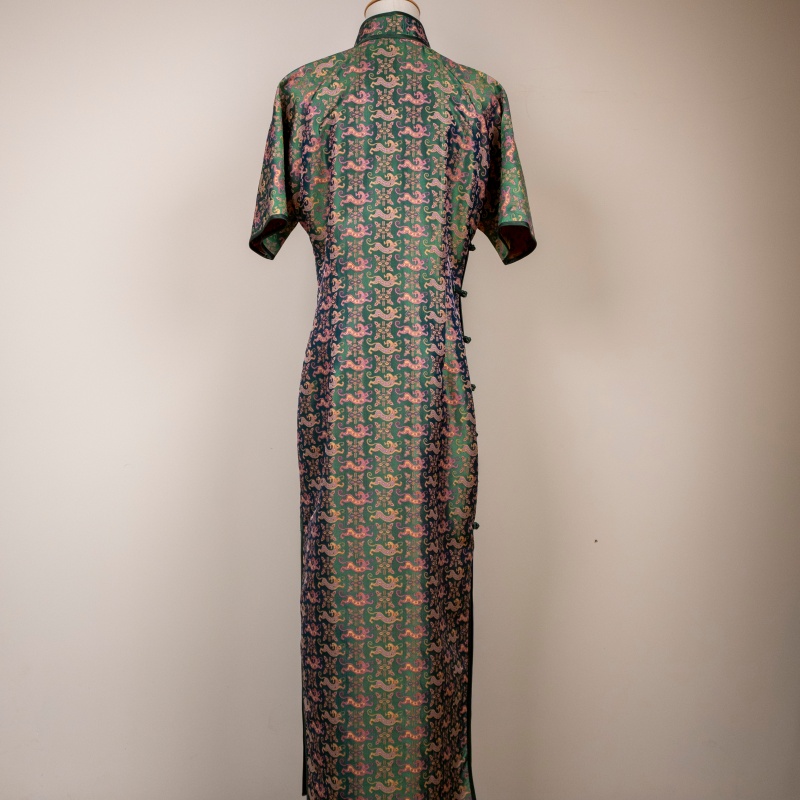
Attention when ironing the hipline of the silk cheongsam
Why the Side Slits Are a Hidden Danger Zone
The high side slits on a silk cheongsam are one of the most sensitive areas to iron because they are not just a simple cut in the fabric. Each slit is a layered structure with an inner lining, an outer silk panel, and often a folded hem or a hand-stitched border. This multi-layer construction traps heat easily, meaning if you press the iron down for too long, the inner silk will scorch long before the outer surface shows any signs of damage. The fabric at the slits is also under constant tension when the garment is worn, which makes any shiny burn marks or creases set by the iron even more noticeable and permanent. Getting the ironing right here is not just about smoothing wrinkles; it is about preserving the garment’s delicate structure and elegant drape.
Preparing the Slit Before the Iron Even Heats Up
Before you start ironing, turn the cheongsam completely inside out. This gives you direct access to the inside of the slit, where you can see the seams and the raw edges that need the most attention. Lay the garment flat on the ironing board and gently spread the slit open so it forms a single flat panel, not a folded V-shape. Use your fingers to smooth out any puckering along the seam where the lining meets the outer silk. If the slit has a decorative rolled hem or a hand-stitched border, check for loose threads and tuck them back in with a needle before applying any heat, as the iron will flatten them permanently.
The “One-Layer-at-a-Time” Ironing Rule
Never try to iron both layers of the slit at once. That is a sure way to create a hard, shiny crease that runs through the entire structure. Instead, work on each layer separately. Start with the inner lining. Lay a damp cotton cloth over the lining and press the iron gently along the seam, moving from the top of the slit down toward the hem in one smooth motion. Do not go back and forth; one slow pass is enough. Once the lining is smooth, flip the cheongsam back to the right side. Now, focus only on the outer silk panel. Use the hover-and-steam method: hold the iron two centimeters above the fabric and release steam, letting the vapor relax the fibers without the plate ever touching the surface. This keeps the outer silk’s luster intact.
Protecting the Delicate Hem and Corners
The bottom edge of the side slit is a high-stress point where the fabric often frays or puckers. To iron this area without damaging it, place a thick piece of cardboard or a folded towel under the hem so it lies completely flat and supported. Dampen a small piece of white cotton cloth and lay it over the hem corner. Press the iron down for just one second, then lift. Check the result; if the crease is still there, give it another one-second press. Never hold the iron down for longer, as the heat builds up fast in this tight corner and can scorch through all layers instantly. If the slit has a decorative curved edge, use the tip of the iron to follow the curve gently, but only through the cloth barrier.
Fixing Wrinkles Without Touching the Slit
Sometimes the wrinkles around the side slit are not on the slit itself but on the adjacent skirt panel. In this case, avoid ironing the slit area altogether. Lay the skirt panel flat and iron the smooth sections around the slit, stopping about an inch away from the opening. The heat from the surrounding fabric will often relax the tension near the slit enough to smooth out minor wrinkles. For stubborn creases that run right into the slit, use a handheld steamer from a distance. Aim the steam at the wrinkled area and use your other hand to gently pull the fabric taut away from the slit. This stretches the fibers without applying direct heat to the vulnerable opening.
Final Check for Puckering and Shine
After you finish ironing, hang the cheongsam on a padded hanger and let it cool for at least ten minutes. Then, examine the side slits under natural light. Run your fingers along the inside and outside of each slit to feel for any stiffness or roughness, which is a sign of scorching. Look for any shiny streaks or discoloration along the seam. If you find a slight pucker, lightly mist it with distilled water and smooth it with your fingers while it is damp. Do not re-iron unless absolutely necessary. The goal is to have the slits lie perfectly flat and smooth against the body, with no visible signs of heat damage or uneven tension.