
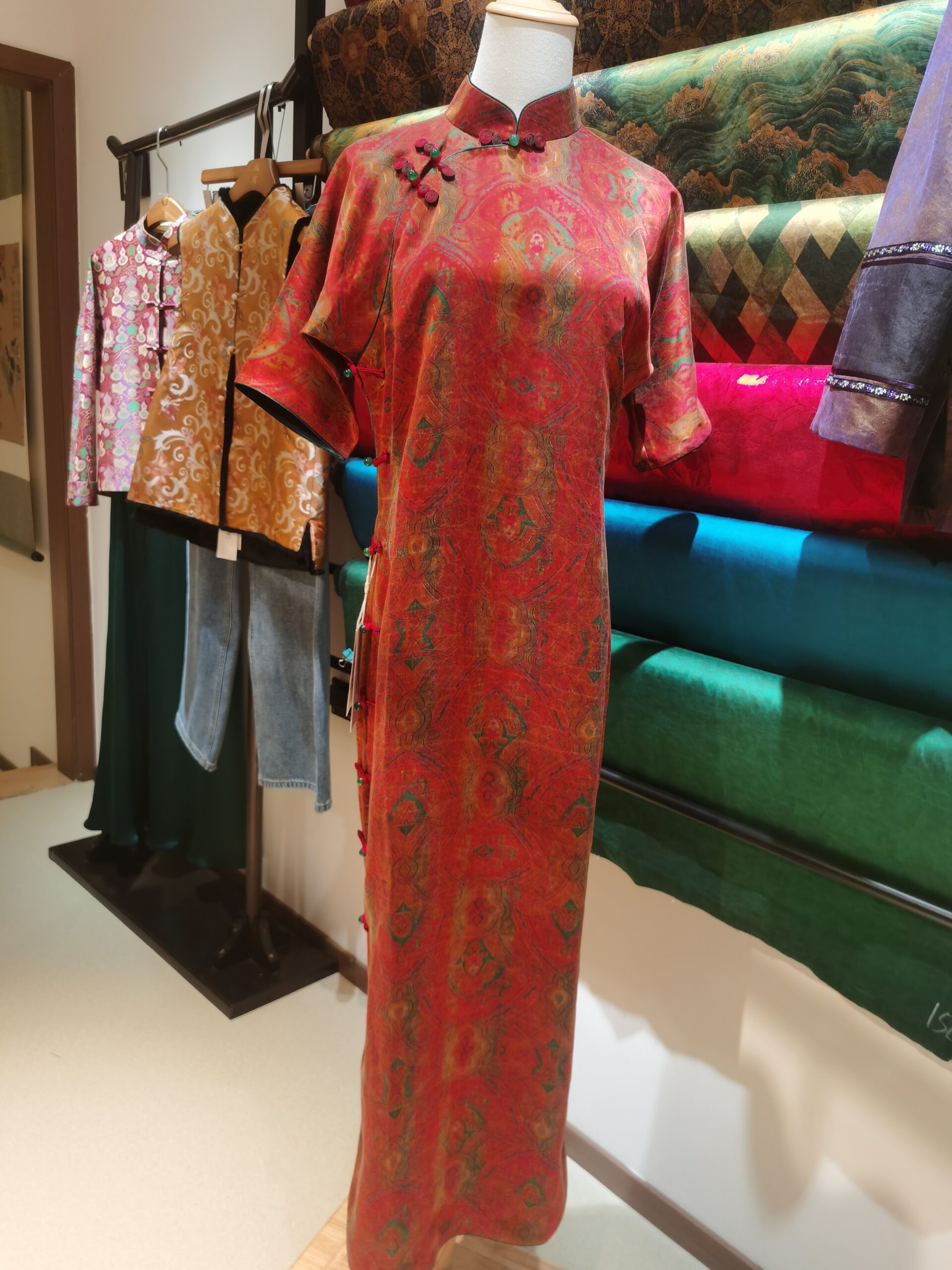
Distinguishing the Quality of Handmade Edging Embroidery for Cheongsam (Chinese Traditional Dress)
How to Identify the Pros and Cons of Hand – Rolled Edge Cheongsam Craftsmanship
Cheongsams with hand – rolled edges are a symbol of traditional elegance and exquisite craftsmanship. However, not all hand – rolled edge cheongsams are created equal. Understanding how to distinguish the good from the bad in terms of craftsmanship is essential for those who appreciate high – quality garments. Here are some key aspects to consider.
Examining the Edge Rolling Technique
The way the edges are rolled is a fundamental indicator of the quality of a hand – rolled edge cheongsam.
Evenness of the Roll
A well – crafted hand – rolled edge should be even throughout the entire length of the garment. When you closely inspect the edges, there should be no visible lumps, bumps, or irregularities. The roll should maintain a consistent width from the start to the end. This evenness is achieved through skilled manual work, where the artisan carefully folds and stitches the fabric edge. If the roll is uneven, it not only looks unsightly but also indicates a lack of precision in the crafting process, which may lead to the edge fraying or coming undone more easily over time.
Tightness of the Stitching
The stitching that secures the rolled edge is another crucial factor. High – quality hand – rolled edge cheongsams feature tight and neat stitching. The stitches should be small and evenly spaced, creating a strong bond between the rolled fabric and the main body of the cheongsam. Loose stitching is a sign of poor craftsmanship. It can cause the edge to loosen or unravel, compromising the overall integrity of the garment. Additionally, the thread used for stitching should match the color of the fabric as closely as possible to maintain a seamless and aesthetically pleasing appearance.
Assessing the Fabric Handling
The way the fabric is handled during the hand – rolling process greatly impacts the final look and feel of the cheongsam.
Fabric Distortion
Skilled artisans are able to roll the edges without causing significant distortion to the main fabric of the cheongsam. When you lay the cheongsam flat, the fabric should lie smoothly without any visible puckering or pulling around the rolled edges. If there is distortion, it means that the artisan may have applied too much force or used an improper technique while rolling the edges, which can affect the overall fit and drape of the garment. A well – made cheongsam should have a natural and flowing silhouette, and the hand – rolled edges should enhance rather than detract from this.
Fabric Compatibility
Different types of fabrics require different approaches when it comes to hand – rolling edges. For example, delicate silks need a more gentle touch compared to heavier fabrics. A high – quality hand – rolled edge cheongsam will show that the artisan has taken into account the characteristics of the fabric. The rolled edges on a silk cheongsam should be soft and supple, without any signs of damage or stiffness. If the fabric appears to be damaged or the edges feel rough, it indicates that the craftsman may not have been experienced in working with that particular type of fabric.
Analyzing the Overall Finish and Detail
The overall finish and attention to detail are the final pieces of the puzzle in determining the quality of a hand – rolled edge cheongsam.
Corner Treatment
The corners of a cheongsam, especially where the hand – rolled edges meet, are a challenging area to craft well. In a high – quality garment, the corners should be neatly finished with no visible raw edges or bulky folds. The artisan should have carefully mitered the corners to create a clean and sharp look. Poorly crafted corners can make the cheongsam look amateurish and can also be more prone to wear and tear.
Consistency with the Design
A well – made hand – rolled edge cheongsam should have the rolled edges that are consistent with the overall design of the garment. For example, if the cheongsam has a traditional or vintage – inspired design, the hand – rolled edges should complement this style, perhaps with a more subtle and elegant roll. On the other hand, if the cheongsam has a modern and bold design, the edges could be rolled in a way that adds to the contemporary aesthetic. The edges should not look like an afterthought but rather an integral part of the overall design concept.
Working with Reliable Sources for Quality Assurance
When looking for a high – quality hand – rolled edge cheongsam, it’s important to source from reliable suppliers. Companies like Xrrt Silk, which belong to Sichuan Xinrui Rongtong International Trade Co Ltd, specialize in comprehensive supply chain management from raw silk to silk fabrics. They not only provide direct supply of silk products but also focus on designing, customizing, and producing high – quality silk fabrics to meet diverse global needs. With advanced technology and management capabilities, they ensure every silk product meets international standards while offering personalized customization services. This kind of commitment to quality can give you confidence when purchasing a hand – rolled edge cheongsam, as you know that the fabric and craftsmanship are likely to be of a high standard.
By paying attention to these aspects—the edge rolling technique, fabric handling, overall finish and detail, and working with reliable sources—you can better identify the pros and cons of hand – rolled edge cheongsam craftsmanship and make an informed purchase decision.