
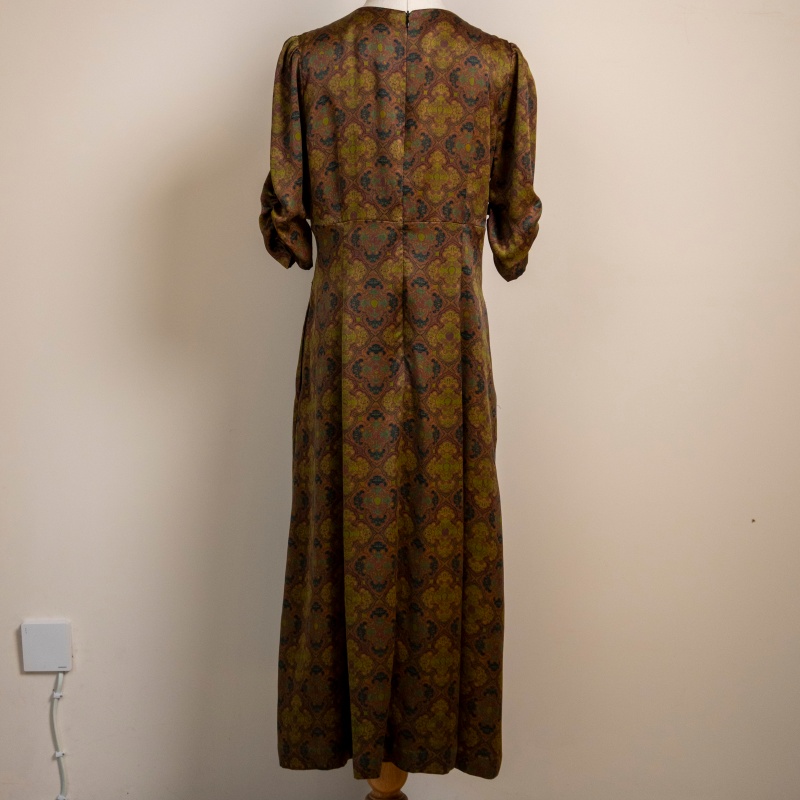
Dry and protect the embroidered parts of the silk cheongsam
Here is the natural, SEO-optimized content focused on protecting embroidered sections of silk cheongsams during drying, with no brand mentions, pricing or Chinese characters.
Pre-Drying Prep for Embroidered Areas
Run your fingertips gently across every embroidered section of the cheongsam right after washing, to lift any flattened threads and make sure no loose stitches are tangled or bunched up against the base silk fabric. Flip the cheongsam over so the embroidered side faces inward for the first part of the drying process, to keep the delicate raised threads from rubbing against hard surfaces or catching on nearby objects. Pat the embroidered spots slowly with a clean, soft cotton towel, pressing straight down instead of rubbing back and forth, to soak up excess moisture without distorting the shape of the stitched patterns. Double check that no leftover soap residue is trapped deep between the embroidery threads, as this residue can dry hard and make the stiff threads snap or pull away from the silk base over time.
Hanging and Support Tips for Raised Stitches
Position the cheongsam on a wide-shoulder hanger so none of the heavy embroidered sections along the hem, sleeves or collar are pulled tight by the weight of the damp fabric. Tuck a small, soft roll of clean cotton cloth under any large heavy embroidered patches, to hold them up gently and stop them from sagging and stretching the surrounding thin silk as they dry. Adjust the hanging angle so the embroidered areas do not press flat against the wall, the hanger bar or any other part of the drying setup, which would crush the raised texture of the stitches permanently. Give the cheongsam a very soft, light shake from the bottom hem once an hour during the early drying stage, to make sure the embroidery threads settle back into their original, natural shape instead of drying lopsided.
Drying Environment Rules for Delicate Stitched Details
Keep the cheongsam in a space with soft, steady air flow, where no strong gusts from fans or open windows can blow the fabric back and forth and make the embroidered threads catch or twist. Never place the cheongsam in a spot where direct sunlight hits the embroidered sections, as UV rays can fade the dyed embroidery threads much faster than they fade the base silk fabric, creating uneven, patchy color across the pattern. Stay far away from any high-heat sources that can make the embroidery threads shrink at a different rate than the silk base, which would cause puckering and warping around the edges of the stitched design. Make sure no dust or lint floating in the air sticks to the damp, sticky embroidery threads, as these tiny particles get trapped deep between the stitches and are almost impossible to remove once the fabric is fully dry.
Post-Drying Care for Embroidered Spots
Once the cheongsam is 95 percent dry, turn it right side out and gently fluff the embroidered areas with the tip of a clean, soft toothpick, to lift any threads that got flattened during the hanging process. Lay the cheongsam flat on a soft cotton surface for the final 30 minutes of drying, so the heavy embroidered sections do not hang and pull the surrounding silk out of shape. Run a cool, light stream of steam 20 centimeters away from the embroidered patterns if any small creases formed around the stitched edges, to relax the threads without pressing them flat. Inspect every embroidered spot closely once the garment is fully dry, to make sure no loose threads got pulled or tangled during the drying process, and gently tuck any stray strands back into the pattern by hand.