
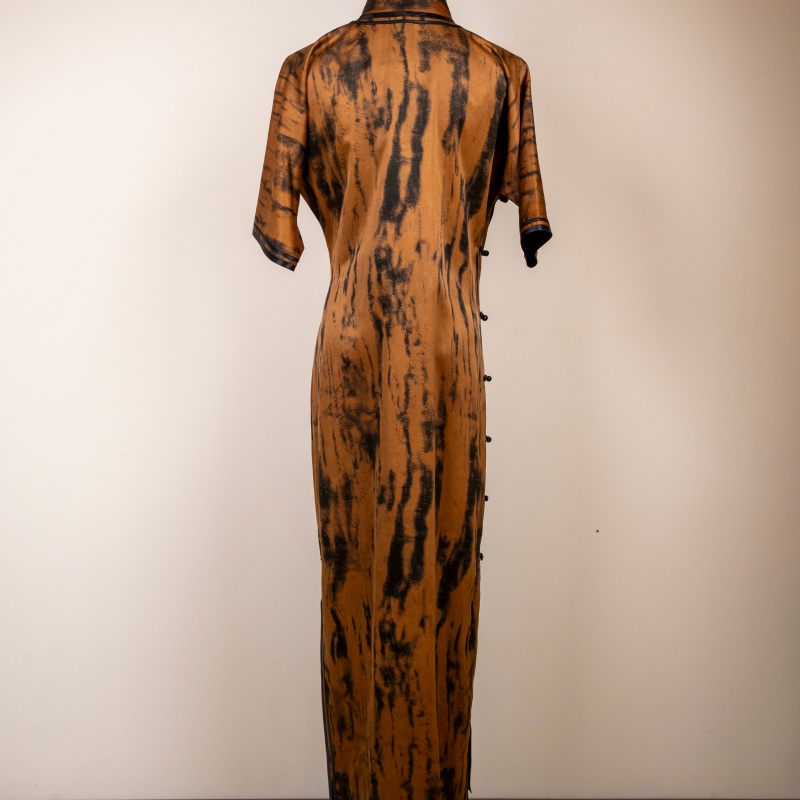
Method for Judging the Looseness of the Side Seams of Handmade Cheongsam
How to Determine the Proper Side Seam Elasticity for Handmade Cheongsams
When crafting a handmade cheongsam, achieving the right side seam elasticity is crucial for both comfort and aesthetic appeal. The side seams play a significant role in how the garment drapes and moves with your body. Here’s a comprehensive guide to help you assess and adjust the side seam elasticity of your handmade cheongsam.
Understanding the Role of Side Seam Elasticity
Side seam elasticity refers to the give or stretch in the seams that run vertically along the sides of the cheongsam. This elasticity allows the garment to contour to your body shape while providing enough room for movement. Proper side seam elasticity ensures the cheongsam fits snugly without feeling restrictive, enhancing both comfort and style.
Importance of Balanced Elasticity
- Comfort: Adequate elasticity prevents the side seams from digging into your body or causing discomfort, especially when sitting or moving.
- Fit: The right amount of stretch helps the cheongsam maintain its shape and drape elegantly, without sagging or pulling in unwanted areas.
- Durability: Balanced elasticity reduces stress on the fabric and seams, extending the lifespan of your handmade cheongsam.
Methods to Assess Side Seam Elasticity
Determining the proper side seam elasticity involves both visual inspection and practical testing. Here are some effective methods to help you evaluate and adjust the elasticity of your cheongsam’s side seams.
Visual Inspection of Fabric and Seams
Start by examining the fabric and seams of your cheongsam. Consider the following aspects:
Fabric Type and Stretch
Different fabrics have varying degrees of stretch and recovery. For instance, silk has a natural drape but limited stretch, while blends with spandex or elastane offer more flexibility. Assess the fabric’s stretch potential by gently pulling it horizontally and vertically. This gives you an idea of how much give the side seams should have.
Seam Construction
The way the side seams are constructed also affects elasticity. Seams sewn with a straight stitch may have less stretch compared to those sewn with a zigzag or stretch stitch. If your cheongsam has straight-stitched side seams, you may need to add elastic inserts or use a more flexible stitch type to achieve the desired elasticity.
Practical Testing for Comfort and Fit
Once you’ve assessed the fabric and seams visually, it’s time to put your cheongsam to the test. Practical testing helps you determine if the side seam elasticity meets your comfort and fit requirements.
Movement Test
Put on the cheongsam and perform a series of movements, such as walking, sitting, bending, and raising your arms. Pay attention to how the side seams feel during these movements. If they feel tight or restrictive, the elasticity may need adjustment. Conversely, if the seams sag or pull excessively, they may be too loose.
Static Fit Test
Stand in front of a mirror and observe the fit of the cheongsam from different angles. Check for any pulling or wrinkling along the side seams, which can indicate insufficient elasticity. Also, look for areas where the fabric may be bunching up, suggesting excess elasticity.
Adjusting Side Seam Elasticity
Based on your visual inspection and practical testing, you may need to make adjustments to the side seam elasticity. Here are some techniques to help you achieve the perfect fit:
Adding Elastic Inserts
If the side seams lack sufficient elasticity, consider adding elastic inserts. Cut strips of elastic that match the length of the side seams and sew them into the seam allowance. This provides additional stretch without altering the overall appearance of the cheongsam.
Choosing the Right Elastic
Select an elastic that complements the fabric and style of your cheongsam. For a more subtle effect, opt for a narrow, clear elastic. If you need more stretch, choose a wider, woven elastic. Ensure the elastic has good recovery to prevent sagging over time.
Sewing Technique
When sewing in the elastic inserts, use a stretch stitch or a narrow zigzag stitch to allow for movement. Sew the elastic to the seam allowance, stretching it slightly as you go to ensure a smooth, even fit.
Modifying Seam Stitching
If the side seams are too tight due to the stitching method, consider modifying the stitch type. Replace straight stitches with a zigzag or stretch stitch to add more flexibility to the seams. This simple change can make a significant difference in the overall elasticity of the cheongsam.
Testing Different Stitch Lengths
Experiment with different stitch lengths to find the one that provides the right balance of stretch and durability. A shorter stitch length may offer more security but less stretch, while a longer stitch length provides more flexibility but may be less durable.
Altering Seam Allowance
Another way to adjust side seam elasticity is by altering the seam allowance. If the seams are too tight, you can let them out slightly by trimming the seam allowance and re-sewing the seams with a wider allowance. Conversely, if the seams are too loose, you can take them in by sewing closer to the edge of the fabric.
Gradual Adjustments
When altering the seam allowance, make gradual adjustments and test the fit after each change. This helps you avoid making drastic alterations that may be difficult to reverse.
By following these methods and techniques, you can determine and adjust the proper side seam elasticity for your handmade cheongsam. Remember, achieving the perfect fit requires patience, attention to detail, and a willingness to make adjustments based on practical testing and visual inspection.