
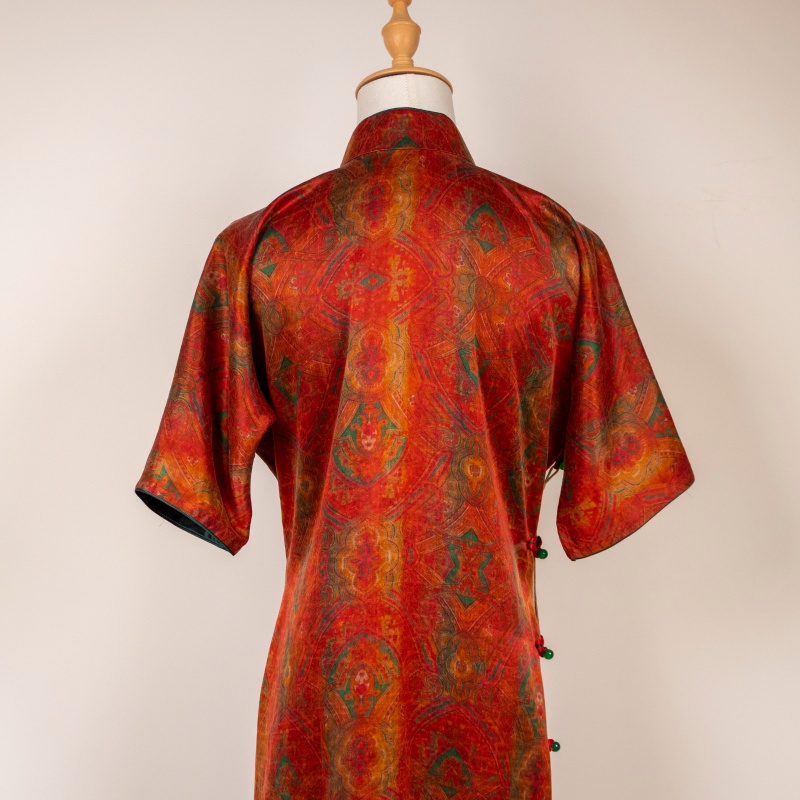
The correct measurement method for traditional silk cheongsam
The Precise Guide to Measuring for Handcrafted Silk Cheongsams
Creating a bespoke silk cheongsam requires more than just selecting a fabric—it begins with capturing your body’s unique proportions. Unlike off-the-rack garments, custom-made cheongsams rely on precise measurements to achieve a silhouette that flatters your posture and movement. Below is a step-by-step approach to measuring yourself accurately, ensuring your final piece fits like a second skin.
Understanding Key Measurement Points
Bust and Waist: The Foundation of Fit
The bust and waist are the most critical areas for a cheongsam, as they define the garment’s hourglass shape. Start by measuring the fullest part of your bust, ensuring the tape wraps snugly but doesn’t compress the tissue. For the waist, locate the natural indentation by bending sideways—this is where the cheongsam’s high-waisted design will cinch elegantly. Always wear the undergarments you plan to pair with the dress to avoid discrepancies.
Shoulder Width and Sleeve Length: Balancing Proportion
Shoulder width determines how the cheongsam’s mandarin collar sits and how the sleeves drape. Measure from the outer edge of one shoulder to the other, keeping the tape parallel to the floor. For sleeve length, decide whether you want a classic full sleeve or a modern three-quarter style. Measure from the shoulder bone down to your desired endpoint, such as the wrist or mid-forearm, ensuring your arm is relaxed during this step.
Advanced Measurements for Customization
Neck Girth and Collar Height: The Signature Detail
The mandarin collar is a hallmark of the cheongsam, and its height can be adjusted to suit your preference. Measure around the base of your neck where the collar will sit, adding a finger’s width for comfort. For collar height, choose between a subtle 3 cm for everyday wear or a dramatic 5 cm for formal occasions. This detail transforms the neckline’s look and feel.
Hip Circumference and Dress Length: Achieving Harmony
While the cheongsam traditionally emphasizes the bust and waist, the hips play a role in ensuring smooth movement. Measure around the fullest part of your hips and buttocks, keeping your feet together. For dress length, decide whether you want a knee-length, midi, or floor-sweeping design. If wearing heels, measure from the shoulder to the floor while standing in them to avoid a hem that’s too short or long.
Practical Tips for Accuracy
Use the Right Tools and Technique
A flexible measuring tape is essential for capturing curves without distorting them. Avoid pulling the tape too tight or letting it sag. For hard-to-reach areas like the back width, ask a friend for assistance or use a mirror to ensure alignment. When measuring sleeves or armholes, wrap the tape 360 degrees around the arm to account for full range of motion.
Account for Fabric Behavior
Silk, while luxurious, has a natural drape that can affect fit. If you’re providing measurements to a tailor, mention whether you prefer a loose or fitted silhouette. For example, adding 1–2 cm to side seams can create a relaxed look, while darts at the bust and waist enhance a tailored appearance. Discuss these adjustments with your tailor to align expectations.
Double-Check Measurements
Human error is common, so verify each measurement twice. Compare your numbers to standard size charts as a reference, but prioritize your unique proportions. If unsure, consult a professional tailor or use online tutorials that demonstrate proper techniques. Remember, even a 1 cm difference can alter how the cheongsam sits on your body.
By following these guidelines, you’ll empower your tailor to create a silk cheongsam that celebrates your individuality. From the mandarin collar’s height to the hem’s graceful sweep, every detail will reflect your style and the artistry of handcrafted design.