
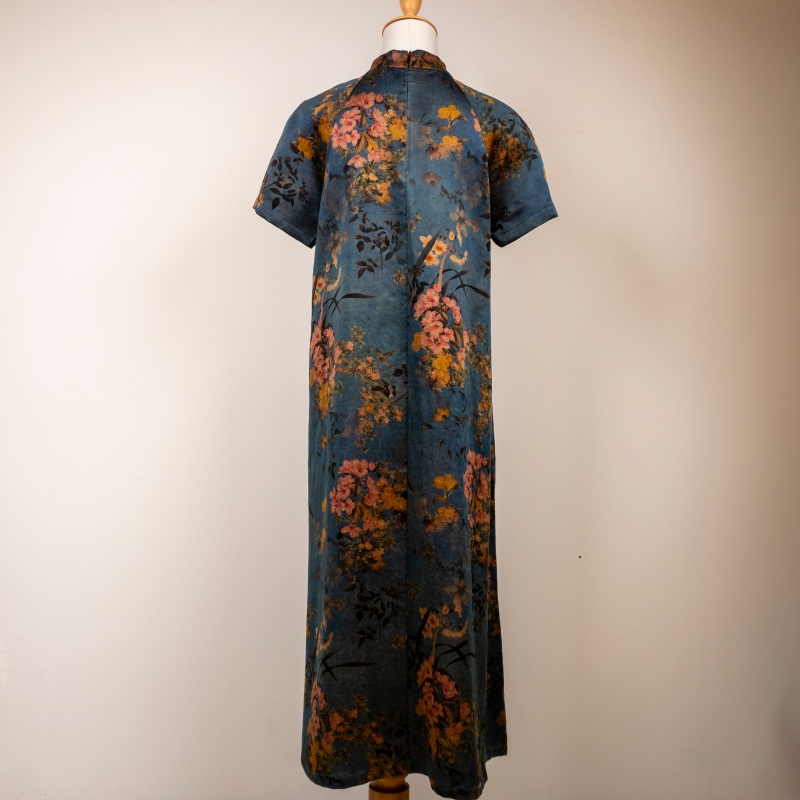
The criteria for judging the draping quality of silk cheongsam
How to Judge the Drape Quality of Silk Cheongsams
Silk cheongsams are renowned for their elegance and timeless beauty, and one of the key factors that contribute to their allure is the drape of the silk fabric. A good drape can make a cheongsam flow gracefully, enhancing the wearer’s figure and overall appearance. Here are some important criteria to help you assess the drape quality of silk cheongsams.
Fabric Composition and Weave
The composition and weave of the silk fabric play a fundamental role in determining its drape.
Natural Silk Content
High – quality silk cheongsams are typically made from pure natural silk. Natural silk has a unique molecular structure that gives it a soft and smooth texture, allowing it to drape naturally. When you hold a piece of pure silk fabric, you can feel its lightweight and supple nature. In contrast, blends that contain a significant amount of synthetic fibers may not have the same level of drape. Synthetic fibers are often stiffer and less flexible, which can result in a cheongsam that looks rigid and lacks the fluid movement of pure silk.
Weave Patterns
Different weave patterns can also affect the drape of silk. For example, satin weave is known for its smooth and lustrous surface, as well as its excellent drape. The long floats in satin weave allow the fabric to fall in soft folds, creating a luxurious and elegant look. Habutai, a plain – weave silk, is also a popular choice for cheongsams due to its lightweight and flowing nature. On the other hand, some heavier and more complex weaves, such as brocade, may have a stiffer drape and are more suitable for formal or structured cheongsams rather than those that require a soft and flowing silhouette.
Thread Count and Density
Thread count and density are important indicators of the quality and drape of silk fabric.
High Thread Count
A higher thread count generally means that more threads are woven into a square inch of fabric. This results in a finer and more tightly woven fabric, which often has a better drape. High – thread – count silk feels smoother to the touch and has a more refined appearance. When you run your fingers over the fabric, you can notice the difference in texture compared to lower – thread – count silk. The increased number of threads also provides more support and structure to the fabric, allowing it to fall in graceful folds.
Appropriate Density
While high thread count is beneficial, the density of the fabric also matters. An overly dense fabric may become too heavy and lose its ability to drape softly. On the contrary, a fabric that is too loose and lacks density may appear flimsy and not hold its shape well. The ideal silk fabric for a cheongsam should have a balanced density that allows it to drape elegantly while still maintaining its structure. You can test the density by gently pulling the fabric between your fingers; it should have a slight resistance but not feel too stiff or too loose.
Finishing Treatments
The finishing treatments applied to silk fabric can significantly impact its drape.
Softening Agents
Many silk fabrics undergo softening treatments during the manufacturing process. These treatments help to reduce the natural stiffness of silk and make it more supple and flexible. Softening agents can penetrate the fibers of the silk, breaking down any rigid structures and allowing the fabric to drape more freely. When you touch a silk fabric that has been properly softened, you will notice its smooth and velvety texture, which is a sign of good drape. However, it’s important to ensure that the softening agents used are of high quality and do not damage the silk fibers in the long run.
Steaming and Pressing
Steaming and pressing are also crucial steps in enhancing the drape of silk cheongsams. Steaming helps to relax the fibers of the silk, removing any wrinkles or creases and allowing the fabric to fall naturally. Pressing, on the other hand, can give the cheongsam a more defined shape while still maintaining its soft drape. A well – pressed silk cheongsam will have clean lines and smooth folds, enhancing its overall appearance. It’s recommended to have silk cheongsams professionally steamed and pressed to achieve the best results.
Working with Reliable Silk Suppliers
To ensure that you get a silk cheongsam with excellent drape, it’s essential to work with reliable silk suppliers. Companies like Xrrt Silk, which belongs to Sichuan Xinrui Rongtong International Trade Co Ltd, specialize in comprehensive supply chain management from raw silk to silk fabrics. They not only provide direct supply of silk products but also focus on designing, customizing, and producing high – quality silk fabrics to meet the diverse needs of global clients. With advanced technology and management capabilities, they ensure every silk product meets international standards while offering personalized customization services. This can give you confidence in the quality of the silk fabric you use for your cheongsam, ensuring that it has the right drape and other desirable characteristics.
By considering the fabric composition and weave, thread count and density, finishing treatments, and working with reliable suppliers, you can make an informed decision when judging the drape quality of silk cheongsams and choose a piece that will make you look and feel elegant.