
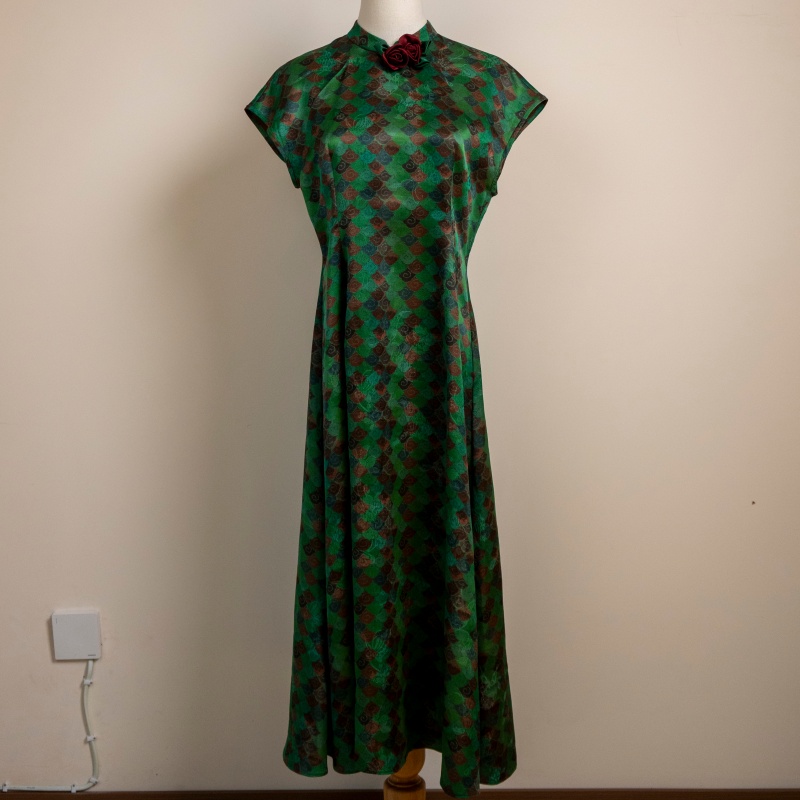
Washing-proof techniques for wearing silk cheongsam at banquets
Stain-Proof Your Silk Cheongsam at Banquets — Tricks That Actually Work
There’s nothing quite like walking into a banquet in a silk cheongsam. The silk catches every light in the room. People notice. You feel incredible. And then someone spills red wine on your lap, or a food stain lands on your sleeve, and the whole night goes from magical to mortifying in about two seconds.
Banquets are minefields for silk. Wine, sauce, grease, makeup transfer — it all happens when you’re least expecting it. The good news is you can dramatically reduce your risk with a few smart moves before and during the event. No one needs to know you were terrified the entire night.
Why Banquets Are the Worst Possible Environment for Silk
The Food and Drink Situation Is Uncontrollable
At a banquet, you’re surrounded by plates of food, glasses of wine, and trays of canapes. Someone is always reaching across the table. Someone is always passing a dish. And that’s exactly when your sleeve catches the edge of a sauce bowl or your skirt brushes against a wet glass.
Silk absorbs liquid fast. Unlike polyester or cotton that might let a drop roll off, silk pulls moisture into the fibers immediately. Red wine, soy sauce, curry, olive oil — these all bond with silk fibroin almost instantly. The longer the stain sits, the harder it is to remove. After an hour, most of these stains are permanent without professional cleaning.
Low Light Makes Spills Harder to See
Banquets are dimly lit by design. Candles, soft overhead lighting, mood lighting — all of it looks beautiful but makes it nearly impossible to spot a fresh stain until it’s already set. A drop of white wine on white silk? Invisible for the first ten minutes. By the time you notice, it’s already yellowed.
This means you need to be proactive, not reactive. Waiting until you see a stain means you’ve already lost the battle.
What to Do Before You Even Leave the House
Apply a Fabric Protector Spray — But Do It Right
There are fabric protector sprays designed specifically for silk and delicate fabrics. They create an invisible barrier on the fiber surface that repels water and oil-based liquids. The key is applying it correctly.
Spray the cheongsam outdoors or in a well-ventilated area. Hold the can about eight inches away and mist evenly — don’t soak the fabric. One light coat is enough. Two coats create a stiff, unnatural feel that defeats the purpose. Let it dry completely before you put the dress on. This usually takes about fifteen to twenty minutes.
Test the spray on an inconspicuous area first, like the inside hem. Some protectors can slightly alter the silk’s natural sheen, and you want to know that before you walk into a room full of people.
Reapply every few months if you wear the cheongsam regularly. The protector breaks down over time with washing and wear.
Eat a Light Meal Before the Event
This sounds unrelated but it’s one of the most effective stain prevention tricks. If you show up to a banquet already full, you eat less. Less eating means fewer chances of dripping sauce on your lap, smearing oil on your fingers, or accidentally brushing food against your cheongsam.
People who are hungry at banquets eat aggressively. They reach for food without thinking, they lean forward over plates, they wipe their hands on whatever is closest — which is often their own dress. A full stomach keeps your hands steadier and your attention sharper.
During the Banquet — Movement and Posture That Save Your Dress
How You Hold Your Glass Changes Everything
This is the single biggest cause of cheongsam stains at banquets. People hold their wine glass by the stem, which is correct. But they also rest the base of the glass on the table right next to their cheongsam skirt. One bump, one elbow nudge, and the glass tips. Red wine floods across white silk. Done.
Keep your glass at least six inches away from your cheongsam fabric at all times. Hold it in the hand farthest from your body. When you set it down, place it on a coaster or napkin — never directly on the tablecloth near your dress.
If you’re holding a champagne flute, keep your elbow tucked close to your body. Wide arm movements near a full glass are an accident waiting to happen.
The Way You Sit at a Round Table
Round banquet tables are tricky because there’s no corner to hide behind. Your cheongsam skirt drapes over the edge of your chair and hangs close to the table surface. Every time someone passes a dish, your fabric is in the splash zone.
Pull your chair in slightly so your cheongsam doesn’t hang over the table edge. If the skirt is long enough to touch the floor, tuck one side behind your ankle so it stays away from the table legs and any spills on the ground.
Avoid leaning forward over the table. Instead, bring food to your mouth with small forkfuls rather than bending your whole body toward the plate. Less leaning means less chance of your chest or sleeve brushing against a sauce-covered dish.
Watch Your Hands Constantly
Your hands are the delivery system for every stain on your cheongsam. Greasy fingers touching silk leave oil marks that are almost impossible to remove. Saucy fingers wiping on your lap create permanent color stains.
Keep a clean cloth napkin in your lap at all times. Wipe your hands on the napkin before you touch your cheongsam. If you need to adjust your hair, touch your face, or fix your earrings, wipe your hands first.
Carry a small stain remover pen or wipes in your clutch. The moment something lands on your cheongsam, blot it immediately. Do not wait. Do not rub. Blot from the outside of the stain inward to prevent it from spreading.
High-Risk Moments and How to Handle Them
The Toast — Your Most Dangerous Moment
When everyone stands up to toast, glasses clink, wine splashes, and people get emotional. This is when most cheongsam stains happen. Someone’s glass tips during the toast, and the liquid lands on the person standing next to them.
Hold your glass high during the toast, away from your body. Angle the glass slightly inward so any splash lands on your own hand, not your dress. If someone near you spills, step back immediately — don’t try to catch them, just protect your cheongsam.
The Buffet Line Is a Stain Trap
Buffet tables are covered in food. Gravy, dressing, oil, crumbs — all of it is within arm’s reach of your cheongsam sleeves. People serve themselves without looking, and their spoons drip right next to your dress.
Keep your arms close to your body in the buffet line. Don’t reach across other people’s plates. If you need to move past someone, turn sideways so your cheongsam faces away from the food, not toward it.
Use the serving utensils provided. Don’t use your bare hands to grab anything — greasy fingers plus silk equals disaster.
Emergency Stain Response at the Event
Blot With Cold Water, Never Hot
If a stain lands on your cheongsam at the banquet, get to a restroom immediately. Run cold water over the stain from the back of the fabric. This pushes the stain out the way it came in rather than driving it deeper into the fibers.
Hot water sets protein and oil stains permanently. Even warm water is risky. Cold water only.
Press a clean white cloth against the wet area to absorb as much of the liquid as possible. Do not scrub. Do not use soap unless it’s a very mild pH-neutral soap and you have no other option. Soap can leave its own mark on silk that’s harder to remove than the original stain.
The Soda Water Trick for Wine Stains
If red wine lands on your cheongsam and you don’t have time to get to a restroom, ask the bartender for soda water. Pour it directly onto the stain from a height of about six inches. The carbonation helps lift the wine out of the silk fibers.
Blot with a clean napkin immediately after. This won’t remove the stain completely, but it can prevent it from setting long enough for you to get home and treat it properly.
Do not use this trick on oil-based stains like curry or butter. Soda water only works on water-based liquids like wine, juice, and coffee.
After the Banquet — Immediate Action That Saves the Fabric
Change Out of the Cheongsam Within Thirty Minutes
The longer a stain sits on silk, the worse it gets. After thirty minutes, most stains begin to bond with the fibroin. After an hour, they’re essentially permanent.
Get home, get the cheongsam off your body, and inspect it under bright light. Look for stains you might have missed in the dim banquet lighting. Check the collar, the cuffs, the hem, the slit edges, and the back. Stains hide in folds and creases.
If you find any mark, rinse the area with cold water immediately. Do not put the cheongsam in a washing machine or dryer until you’ve treated any stains. Heat from the dryer will set them forever.
Hang It Up — Do Not Fold or Crumple
A stained cheongsam that gets crumpled or folded will have the stain pressed deep into the fibers. Hang it on a padded hanger in a well-ventilated area right away. The fabric needs air, not compression.
If the stain is fresh, you can try dabbing it with a diluted white vinegar solution. Mix one part white vinegar with three parts cold water. Dab gently with a clean cloth. The vinegar helps break down wine and food stains without damaging silk. Rinse with cold water after and hang to dry.
Never use bleach, hydrogen peroxide, or any harsh chemical on a silk cheongsam. These will destroy the fiber and leave worse marks than the original stain.