
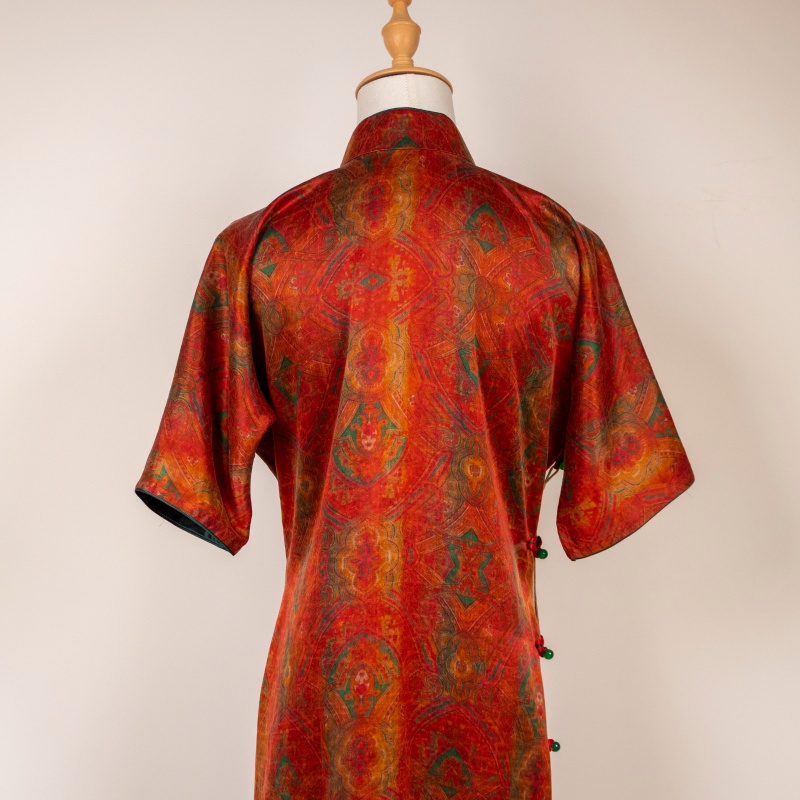
Special cleaning of the collar and cuffs of the silk cheongsam
Silk Qipao Collar and Cuff Cleaning: The Areas That Get Dirty First and Need the Most Care
Every silk qipao owner knows the truth. The body of the dress might still look fine, but the collar and cuffs tell a different story. Yellowed rings around the neckline. Dark smudges on the sleeve edges. Makeup residue baked into the fabric. Sweat stains that no amount of hanging in fresh air will fix.
These two areas take the most abuse. The collar sits against your skin, neck, and hair every single time you wear it. The cuffs brush against tables, door handles, and your own hands all day. They collect oil, sweat, dust, and makeup faster than anywhere else on the garment. And because they are often the most decorated parts — with piping, frog buttons, and embroidery — they are also the hardest to clean without causing damage.
Why Collars and Cuffs Get So Dirty So Fast
It is not just about contact. There is a real reason these two spots always look worse than the rest of the qipao.
The Neck Area Is a Sweat Trap
Your neck produces more oil and sweat than almost anywhere else on your body. The collar of a qipao sits directly against that zone, hour after hour. The fabric absorbs sebum, salt, urea, and whatever skincare or perfume you wore that day. Over time, this builds up into a yellowish, stiff ring that no casual rinse can touch.
The problem gets worse if you wear makeup. Foundation, powder, and setting spray all transfer to the collar every time you put the qipao on or take it off. This creates a layered stain — makeup on top of sweat on top of body oil — that bonds to silk fibers in a way that water alone cannot break.
Cuffs Take the Most Physical Abuse
Your hands are not clean. They touch phones, keyboards, food, railings, and countless other surfaces. Every time you move, your cuffs make contact with something. The result is a buildup of grime that looks gray or brown against light silk and darkens the fabric permanently if left untreated.
Cuffs are also where frog buttons live. The tiny fabric knots and loops trap dirt in ways that are almost impossible to reach with a cloth. Dust settles into the crevices. Oil seeps under the knots. And because most people are afraid to touch the buttons directly, the dirt just sits there, getting worse with every wear.
How to Clean the Collar Without Damaging the Piping
The collar is the most visible part of a qipao. A dirty collar ruins the entire look, even if the rest of the dress is pristine. But it is also the most delicate area, often edged with thin piping and sometimes reinforced with interfacing that does not react well to water.
Work From the Outside In
Always start cleaning the collar from the outermost edge and work your way toward the center. This prevents the stain from spreading into clean fabric. If you start in the middle and scrub outward, you push the dirt to the edges and make the stain larger.
Use a clean white cloth dampened with cool water — barely moist, not wet. Press it against the outer edge of the collar stain. Hold for five seconds, lift, move to a fresh section of the cloth, and press again. Repeat until no more dirt transfers to the cloth.
For stubborn yellow rings, add one drop of neutral pH liquid detergent to the damp cloth. Press gently into the stain with your fingertip. Do not rub. Let it sit for three to five minutes. Then blot with a clean damp cloth to remove all detergent residue.
Handling Makeup Stains on the Collar
Makeup is oil-based, and oil on silk requires a different approach than sweat. Do not use water alone — it will not break down the oil and may actually spread it.
Dampen a cloth with cool water and add a tiny amount of glycerin. Glycerin dissolves oil-based makeup without attacking silk fibers. Press the glycerin-dampened cloth against the makeup stain gently. Let it sit for ten minutes. The makeup should start to lift onto the cloth. Blot with a fresh damp cloth to remove it.
If glycerin alone does not work, try the talcum powder trick. Sprinkle a thin layer of talcum powder directly on the stain. Let it sit for twenty minutes to absorb the oil. Brush it off gently with a soft brush. Then follow up with the glycerin method to remove any remaining residue.
The Piping Requires Extra Care
Piping along the collar edge is often made of a different fabric or a rolled silk tube. It is more rigid than the main fabric and does not flex the same way. If you scrub it, the piping can crack, peel, or lose its shape.
Clean piping with a cotton swab dampened with cool water and one drop of neutral detergent. Run the swab along the piping gently — do not press hard. Work in short strokes, one section at a time. Rinse the swab frequently so you are not dragging dirt back onto the piping.
Never soak the collar. Never submerge it in a basin. Even a quick dip can loosen the piping from the fabric and cause it to separate. Spot cleaning only. Always.
Cleaning the Cuffs and Frog Buttons the Right Way
Cuffs are messy. Frog buttons are worse. But both can be cleaned safely if you use the right technique.
Start With a Dry Brush
Before you touch any water, take a soft-bristled brush — a clean makeup brush works perfectly — and gently brush the cuffs and frog buttons to remove loose dust and debris. This sounds obvious, but most people skip it and go straight to water, which just turns the dust into mud and pushes it deeper into the fabric.
Brush in one direction only. Do not scrub back and forth. Lift the dust off the surface and you are already halfway to a clean cuff.
The Two-Cloth Method for Cuffs
Fill a small spray bottle with cool water and add one drop of neutral detergent. Spray the cuff lightly — do not drench it. Let it sit for two minutes.
Take the first cloth, dampen it with plain cool water, and press the cuff gently. Lift the dirt. Switch to a clean section of the cloth every few seconds. Then take the second cloth, dampen it with clean cool water and no detergent, and press the same area again to rinse out any soap residue.
Pat dry immediately with a dry towel. Do not wring. Do not twist. Just pat and move on.
Cleaning Around Frog Buttons Without Pulling Them Off
Frog buttons are hand-tied knots. Pulling them to clean underneath will loosen or break the thread. Instead, use a toothpick or a fine-tipped brush to reach into the crevices around each button.
Dampen the toothpick with cool water and neutral detergent. Gently probe around the base of each button, lifting dirt and grime from the gaps. Work slowly. One button at a time. Rinse the toothpick frequently.
For oil buildup around the buttons, use glycerin on a cotton swab. Dab the area around each button gently. Let it sit for five minutes, then blot with a clean damp cloth. This removes the oil without pulling or stressing the knots.
What Not to Do When Cleaning Collars and Cuffs
The mistakes people make in these two areas are often worse than the stains themselves.
Never Use Hot Water
Hot water sets protein-based stains permanently. It also shrinks silk and can melt synthetic interfacing in the collar. Cool water only. Every single time.
Do Not Rub With a Rough Cloth
A rough towel or sponge will abrade the silk surface and create tiny pills. Use only soft white cloths or cotton swabs. If the cloth feels rough against your hand, it is too rough for silk.
Skip Bleach, Vinegar, and Ammonia on Decorated Areas
Bleach destroys color instantly. Vinegar is too acidic for silk protein. Ammonia can fade hand-dyed threads and weaken embroidery near the collar. Stick to neutral detergent, glycerin, and diluted ammonia only on plain silk areas — never near embroidery or beading.
How Often Should You Clean These Areas
The collar and cuffs do not need a full wash every time you wear the qipao. But they do need attention.
After every wear, take a dry cloth and wipe the collar and cuffs gently. This removes surface sweat and oil before it sets. It takes thirty seconds and can double the time between deep cleans.
For a proper deep clean of just the collar and cuffs, do the spot cleaning method described above once every five to ten wears, depending on how often you wear the qipao and how much it is exposed to sweat, makeup, and dust.
The collar and cuffs are the first things people see when you walk into a room. They are also the first things that show wear. A qipao with a clean, crisp collar and cuffs looks like it just came off the rack — even if the rest of the dress has been worn a hundred times. Take care of those two areas and the entire garment looks better for years.