
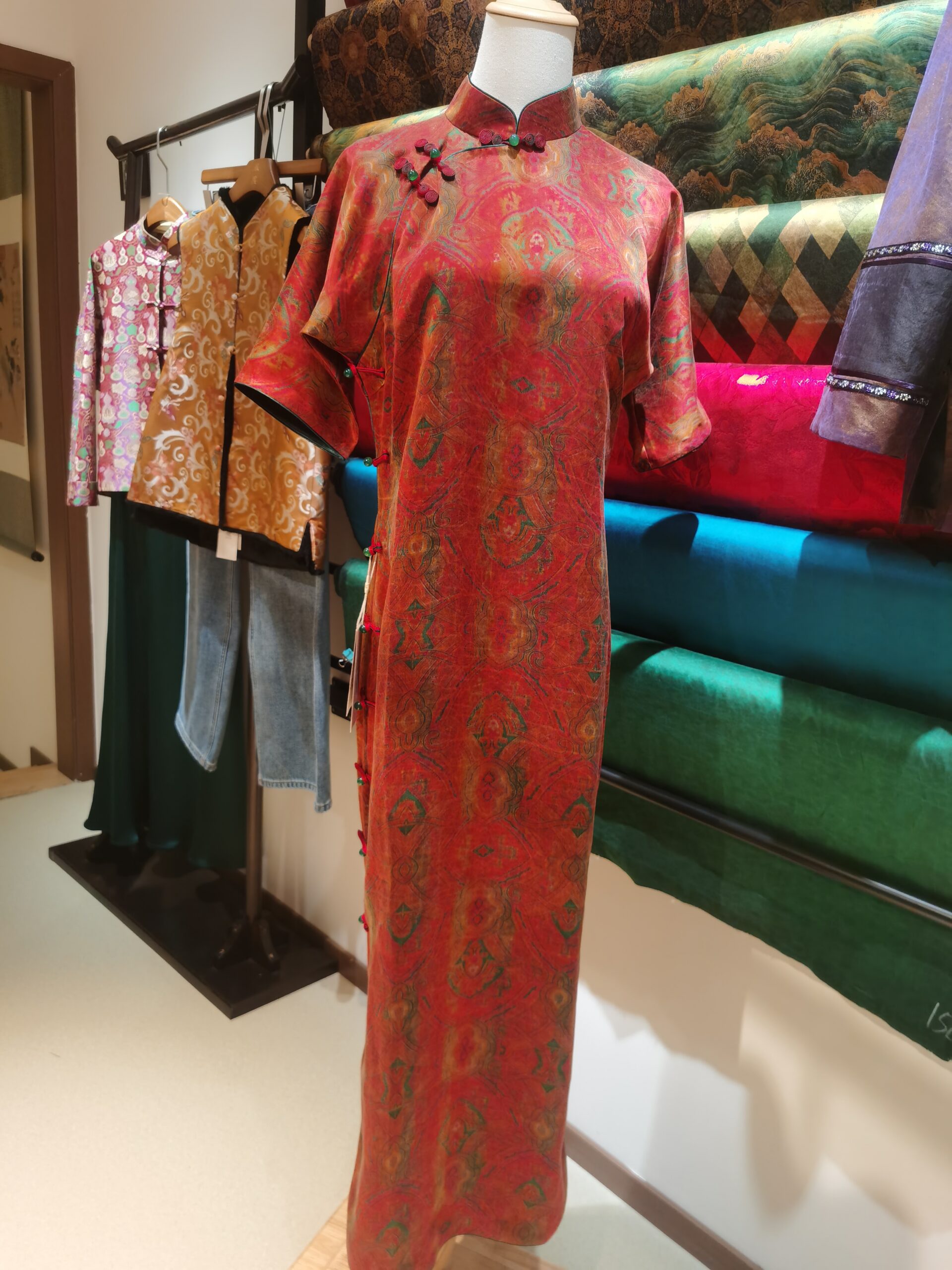
Hand-stitched embroidered cheongsam cleaning method without using water
Hand-Embroidered Qipao: Why You Should Never Soak It in Water and What to Do Instead
A hand-embroidered qipao is not a garment you submerge in a basin of water and hope for the best. The embroidery alone took days — sometimes weeks — to complete. Each stitch was placed by hand, often using silk thread that matches the fabric exactly. The beadwork, the sequins, the raised floral patterns — all of it is glued, sewn, or anchored into delicate silk.
Water is the enemy of all of it. Not because silk is fragile (though it is), but because embroidery changes everything. Once water gets under the stitches, it lifts threads, loosens beads, dissolves adhesive, and warps the fabric underneath. By the time you pull the qipao out of the water, the embroidery is already damaged — even if it does not look like it yet.
The answer is simple: do not soak it. Ever. But if you cannot soak it, how do you clean it? That is where most people get stuck.
What Actually Happens When You Soak a Hand-Embroidered Qipao
Most cleaning guides say “hand wash in cool water.” That works for a plain silk qipao with no decoration. For an embroidered one, it is a disaster waiting to happen.
Water Gets Under the Stitches Faster Than You Think
Embroidery sits on top of the fabric, but it is not floating. The needle pushes thread through the silk, creating tiny puncture holes. When you soak the qipao, water seeps through those holes and pools underneath the embroidery. From there, it spreads laterally, lifting the backing fabric and causing the embroidery to pucker, bubble, or detach entirely.
This does not happen instantly. It happens over hours and days. The first time you soak an embroidered qipao, it might look fine after drying. But the adhesive holding the beads has weakened. The silk thread has absorbed water and swelled. The next time you wear it, a bead falls off. A thread snaps. The embroidery starts to curl at the edges.
The Thread Swelling Problem
Silk embroidery thread is not the same as the fabric it sits on. It is often thicker, tighter, and treated differently. When both get wet, they swell at different rates. The thread expands more than the fabric, which creates tension. That tension pulls the stitches loose. On dense embroidery like peony or phoenix motifs, this can cause entire sections to distort.
Cotton embroidery thread is even worse. It absorbs far more water than silk and takes much longer to dry. While it is wet, it sags, stretches, and can leave permanent water marks on the surrounding silk.
The No-Soak Cleaning Method That Actually Works
If you cannot submerge the qipao, what is left? A lot, actually. The no-soak method takes longer than a regular wash, but it protects every stitch, every bead, every inch of handwork.
Spot Cleaning With a Damp Cloth
This is your default method. For light soiling — dust, faint sweat marks, small food splatters — you do not need to wash the entire qipao. You just need to treat the affected area.
Dampen a clean white cloth with cool water. Wring it out completely — it should be barely moist, not dripping. Press it gently against the stained area. Do not rub. Do not swipe. Just press and lift. Repeat with a fresh section of the cloth until the stain transfers to the cloth instead of spreading on the qipao.
For oily spots, add one or two drops of neutral pH liquid detergent to the damp cloth before pressing. Work from the outside edge of the stain inward to prevent spreading. Rinse the area with a second clean damp cloth to remove all detergent residue.
The Spray Bottle Technique
A spray bottle gives you control that a basin never will. Fill it with cool water and a tiny amount of neutral detergent — just a few drops, not a squirt. Spray the soiled area lightly. Let it sit for two to three minutes. Then press with a clean damp cloth to lift the dirt.
This method never saturates the fabric. The water sits on the surface long enough for the detergent to work, then gets blotted away before it can seep under the embroidery. It is slow, yes. But it is safe.
For the collar, cuffs, and frog button areas — the parts that get the dirtiest — spray, wait, blot, and repeat. You can clean the entire qipao this way in about twenty minutes without ever submerging a single inch of fabric.
Deep Cleaning Without Submerging: The Two-Cloth Method
Sometimes spot cleaning is not enough. The qipao has been worn multiple times, there is a faint overall dullness, or there is a stain that will not lift with a damp cloth alone. You need a deeper clean — but still no soaking.
Prepare Your Workspace
Lay the qipao flat on a clean, dry surface. A table covered with a white towel works best. You need good light so you can see every stain and every stitch. Have two clean white cloths, a spray bottle with cool water, neutral pH liquid detergent, and a dry towel ready.
Work in Small Sections
Divide the qipao into sections — left side, right side, front panel, back panel, collar, sleeves. Clean one section at a time. Never spray the whole garment at once.
Spray the section lightly with the detergent solution. Wait two minutes. Then take the first damp cloth and press the area gently, lifting dirt as you go. Switch to a clean section of the cloth frequently so you are not rubbing dirt back into the fabric.
After the first cloth has done its work, take the second cloth — damp with plain cool water, no detergent — and press the same area again. This rinses out any detergent residue. Then immediately pat the area dry with the dry towel.
Move to the next section. Repeat. The entire process takes about thirty to forty minutes, but the qipao never once touches a basin of water.
Handling Stubborn Stains on Embroidered Areas
Some stains do not respond to a simple spray and blot. Makeup, cooking oil, ink — these can settle deep into embroidery threads and the fabric beneath. Here is how to handle them without soaking.
Oil-Based Stains on Embroidered Sections
Do not pour anything directly on the embroidery. Take a clean white cloth, dampen it with cool water, and blot the oil stain gently. Then apply a tiny amount of glycerin directly to the stain — just a drop or two. Glycerin breaks down oil without attacking silk fibers or embroidery thread.
Let it sit for fifteen minutes. Then blot with a clean damp cloth. The oil should lift to the cloth. Repeat if needed. Always rinse the area afterward with plain cool water to remove all glycerin residue.
Yellow Sweat Stains Near the Collar
The collar area is the most vulnerable part of any qipao. It sits against your skin, absorbs sweat, and is often heavily embroidered. Yellow sweat stains here are almost always a mix of sweat, body oil, and deodorant residue.
Dampen a cloth with the diluted ammonia solution — one part ammonia to ten parts cool water. Dab the yellow area gently from the outside in. Do not rub. Blot with a clean damp cloth between dabs. Work slowly. The ammonia neutralizes the acidic compounds in dried sweat without damaging silk or embroidery thread.
Rinse thoroughly with cool water after treatment. Air dry in the shade.
Why Dry Cleaning Is Still the Safest Option for Heavy Soiling
The no-soak methods above work well for light to moderate soiling. But if your hand-embroidered qipao is heavily soiled — multiple stains, overall dinginess, or a spill that covered a large area — do not try to handle it all at home.
Take it to a professional cleaner who has experience with embroidered silk. Tell them upfront that the qipao is hand-embroidered and should not be soaked. A good cleaner will use solvent-based spot treatment or controlled steam cleaning instead of full immersion.
This is not about being lazy. It is about knowing your limits. The embroidery on your qipao took someone hours to create. A professional cleaning costs a fraction of what it would cost to replace the embroidery — if that is even possible.
Daily Habits That Keep Your Embroidered Qipao Clean Longer
The best cleaning method is the one you never have to do. A few small habits between wears can drastically reduce how often you need to touch the qipao with water at all.
Wear a Cotton Slip Underneath
A thin cotton slip or undershirt acts as a barrier between your skin and the silk. Sweat, body oil, and deodorant hit the slip first, not the embroidery. Wash the slip after every wear. It is cheap, easy, and it protects the most valuable part of your wardrobe.
Hang It Properly After Every Wear
Do not fold an embroidered qipao. Do not drape it over a chair. Hang it on a wide padded hanger immediately after wearing. This prevents creases from setting into the fabric and keeps the embroidery flat. A crease that sits for days can permanently distort the stitching around it.
Store It in a Breathable Cover
A cotton garment bag is fine. Plastic is not. Plastic traps moisture, which leads to mildew — and mildew eats silk and embroidery thread from the inside out. If you store the qipao for more than a few weeks, add a silica gel packet to the bag to absorb any ambient moisture.
Blot Spills the Second They Happen
This cannot be stressed enough. The moment something spills on your qipao — at a dinner, in a car, anywhere — blot it. Use a clean cloth, press gently, and remove as much of the spill as possible in the first thirty seconds. That single action can mean the difference between a two-minute spot treatment and a permanent stain.
The embroidery on your qipao is what makes it special. It is also what makes it vulnerable. Water does not care how beautiful the stitches are. It does not care how long they took. It seeps in, lifts threads, and loosens beads without asking permission. The only way to protect that work is to keep water away from it — and clean smart when you cannot.