
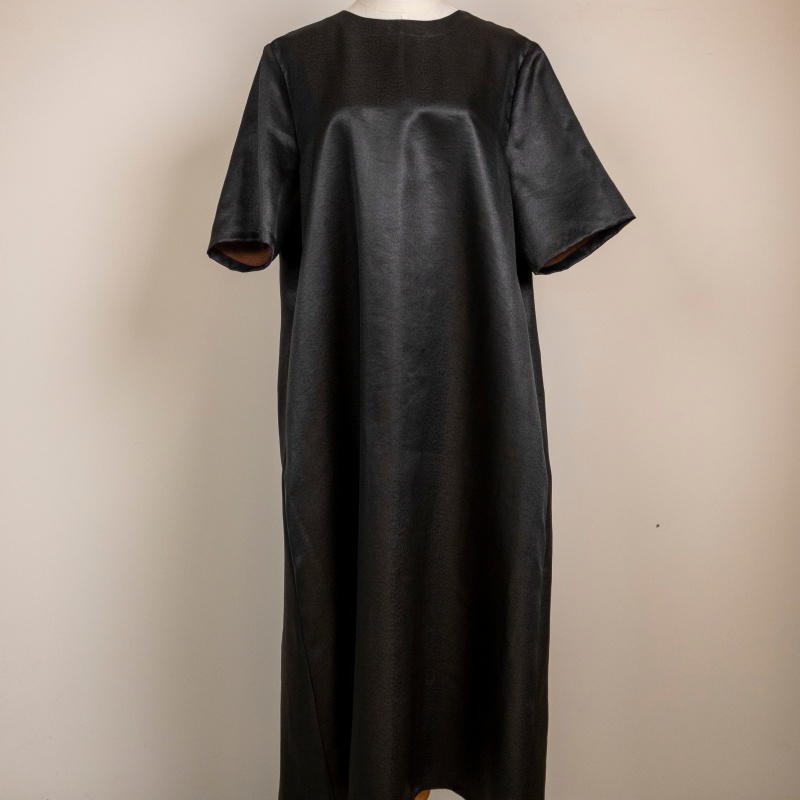
Key points for preventing stretching and deformation when drying a silk cheongsam
How to Air Dry Your Silk Cheongsam Without Stretching or Warping the Shape
Wet silk cheongsam stretches. That is not a risk. That is a guarantee. The moment water touches the fabric, the fibers swell and lose their structure. Gravity takes over. The shoulders droop. The hem sags. The side slits pull apart. By the time the cheongsam dries, the silhouette you loved is gone — replaced by something longer, wider, and shapeless.
Most people blame the wash. They blame the detergent or the water temperature. But the real damage happens during drying. Specifically, it happens because of how the cheongsam hangs, where it hangs, and how long it stays there while wet.
Stretching is not reversible. You cannot un-stretch silk. Once the fibers elongate under their own weight, they lock into that new length permanently. The only option is prevention. And prevention means understanding exactly what causes stretch and eliminating every cause before the cheongsam ever gets wet.
What Actually Stretches a Wet Silk Cheongsam
Gravity Is the Main Enemy
Water adds enormous weight to silk. A dry silk cheongsam weighs maybe 150 to 200 grams. A wet one can weigh three to four times more. That extra weight pulls every section of the garment downward, and the areas that bear the most load stretch the most.
The shoulders take the brunt when you hang the cheongsam on a hanger. All that wet weight concentrates on two narrow points where the hanger meets the fabric. Within a few hours, those points have elongated permanently. The shoulder seams drop. The collar pulls away from the neckline. The whole upper body sags like the cheongsam has been worn a hundred times.
The hem stretches too. Water adds weight to the bottom edge, and that weight pulls the hem downward unevenly. If the hanger is not perfectly centered, one side stretches more than the other. The result is a lopsided, distorted garment that does not fit the way it used to.
Wet Silk Has Zero Structural Resistance
Dry silk holds its shape because the fibers are tight and the weave is stable. Wet silk is the opposite. The fibers swell, the weave loosens, and the fabric behaves more like a heavy curtain than a structured garment. It does not resist gravity. It does not resist its own weight. It just hangs there, sagging, stretching, deforming.
This is why a cheongsam that looks fine when you take it out of the wash can look completely different after drying. The damage is invisible while the fabric is wet. You cannot see the stretch happening in real time. But by the time the cheongsam is dry, the fibers have already locked into the elongated state.
Embroidery and Beads Add Uneven Weight
If your cheongsam has beadwork or heavy embroidery, the stretching problem gets worse. Beads are dense. When the fabric is wet and soft, those beads sink into the silk and pull the surrounding fabric downward. Over several hours, this creates permanent sagging around every beaded area — the collar, the front opening, the side slits.
Embroidery threads are thicker than the base silk. They absorb water at a different rate and dry at a different rate. This mismatch creates tension between the embroidered sections and the plain fabric. The embroidery pulls tight, the surrounding silk puckers, and the whole surface becomes uneven.
The Hanger Setup That Prevents Shoulder Stretch
Ditch the Wire Hanger Completely
A thin wire hanger is the worst possible choice for drying any silk cheongsam. The wire is narrow, so it concentrates all the weight on a tiny line. That line cuts into the shoulder fabric and leaves permanent creases. Even after the cheongsam dries, you will see two parallel indentation marks running from the collar to the shoulder edge. Those marks never fully come out.
Wire hangers also have no padding. The metal transfers any temperature change directly to the fabric. A cold wire hanger in a cool room causes the silk to stiffen unevenly. A warm wire hanger near a vent warps the fibers. Neither scenario is good for shape retention.
Use a Wide Padded Hanger Instead
A wide, padded hanger covered in cotton or velvet is the minimum requirement. The padding should be at least two centimeters thick and should extend past the shoulder width of the cheongsam by a few centimeters on each side. This distributes the weight of the wet garment across a broad area instead of two narrow points.
If you do not own a padded hanger, wrap a regular hanger completely in a clean cotton cloth. Secure the cloth with tape so it does not slip. It is not as good as a proper padded hanger, but it is infinitely better than bare wire.
The hanger width must match the cheongsam shoulder width exactly. A hanger that is too narrow will still create shoulder stretch. A hanger that is too wide will push the fabric outward at the shoulders and create bumps that distort the silhouette.
Clip to the Side Seams, Never the Shoulders
This is the detail that most people get wrong. They slide the hanger under the shoulder seams because it looks natural. But that is exactly where the damage happens.
Clip the hanger to the side seams instead. Use clothespins or padded clips attached to the hanger arms at the side seam points, about five centimeters below the armpit. This takes the weight off the shoulders entirely and lets the cheongsam hang from its strongest structural points — the seams.
When you clip at the side seams, the shoulders stay flat. The collar stays aligned. The silhouette holds its shape while the water drains. It is a small change that makes an enormous difference.
Flat Drying — The Only Method That Stops Stretch
Why Hanging Is Always Risky
Hanging a wet cheongsam means gravity is pulling on every single point of the garment simultaneously. The shoulders stretch. The hem stretches. The side slits pull apart. There is no way to counteract that force when the garment hangs vertically.
Even with the perfect hanger and side-seam clipping, hanging still allows some stretch. The weight of the water is too great. The fibers are too soft. The only way to eliminate stretch entirely is to remove gravity from the equation.
Flat drying does that. When the cheongsam lies flat, the weight of the water distributes evenly across the entire surface. No single point bears extra load. The shape stays locked while the moisture evaporates slowly.
How to Set Up Flat Drying Correctly
Lay the cheongsam face down on a clean, flat, dry towel. The outer surface — the side with the embroidery — presses into the towel. This protects the raised details from being crushed by their own weight.
Before you lay it down, roll thin towels into tubes and place them underneath the heavy areas. The collar, the front opening, the side slits — anywhere beads or dense stitching add weight. The rolled towels provide gentle upward support so the embroidery does not sink into the wet silk.
Smooth the cheongsam out completely. Make sure no part of the embroidery is folded over itself. Every fold under a bead or thread cluster will dry as a crease.
Align the seams. Straighten the hem. Make sure the side slits are even. If the cheongsam dries with crooked seams or uneven slits, the shape is already compromised.
The Towel Absorption Cycle
In humid weather or with heavy embroidery, one towel is not enough. The air cannot pull moisture away fast enough, so you need to help mechanically.
After laying the cheongsam face down for four hours, flip it over and replace the bottom towel with a fresh dry one. The used towel has absorbed as much as it can. A fresh towel continues pulling moisture from the fabric. Repeat this towel swap every four to six hours.
Each towel swap removes a significant amount of water that the humid air cannot remove on its own. This reduces the total drying time, which means less time for the fibers to stretch under their own weight.
Protecting the Shape During the Drying Hours
Supporting Heavy Areas From Below
If your cheongsam has beaded sections along the collar or front opening, place a rolled towel underneath those areas before laying it flat. The rolled towel provides gentle upward support so the beads do not pull the fabric downward. It is not a hard surface — just enough lift to counteract the bead weight.
Remove the rolled towel once the cheongsam reaches 80 percent dryness. Leaving it on too long traps heat and slows drying in those areas, which invites mildew on the threads.
Elevating the Cheongsam Off the Surface
Place the cheongsam on a drying rack covered with a clean towel, not directly on a flat surface. The rack allows air to circulate underneath the fabric. In humid weather, airflow under the cheongsam matters as much as airflow over it. Trapped moisture between the fabric and the surface creates a microclimate where mildew thrives and where the bottom edge of the cheongsam stays wet longer than the rest.
If you do not have a drying rack, place rolled towels under the cheongsam at the corners to lift it slightly off the table or bed. Even two centimeters of clearance makes a difference. It lets air move under the fabric and speeds evaporation from the lining side.
Do Not Move the Cheongsam While It Is Damp
Every time you touch a wet cheongsam, you risk creating a new fold or shifting the fabric. Even a small fold that sits under a bead or thread cluster will dry as a permanent crease.
Leave the cheongsam alone for the entire drying period. Do not flip it early. Do not adjust the support towels. Do not check on the embroidery. The less you disturb it, the better the shape holds.
The Critical Timing for Hanging vs. Flat Drying
Do Not Hang a Soaking Wet Cheongsam
A fully soaking wet cheongsam should never go on a hanger. The water weight is too great. The fibers are too soft. The stretch will be immediate and permanent.
Wait until the cheongsam has drained most of its water. After the towel-roll step, when the fabric feels heavy but not dripping, that is the earliest you should consider hanging. Even then, use the side-seam clip method and do not expect it to dry quickly.
The Best Window for Hanging
The ideal time to move from flat drying to hanging is when the cheongsam is about 70 to 80 percent dry. At this point, the fabric has enough structure to resist stretching, but it still needs airflow to finish drying. The hem will not sag as badly. The shoulders will hold their shape. The embroidery and beading will not pull the fabric out of alignment.
If you are unsure whether it is dry enough, lift the cheongsam by one side seam. If the fabric drapes straight down without bunching or sagging at the bottom, it is ready to hang. If the bottom curls or folds under its own weight, it needs more flat drying time.
How to Tell If Stretching Has Already Happened
The Shoulder Test
After the cheongsam dries, lay it flat on a hard surface. Check the shoulder width. Measure from seam to seam at the top. Then measure the hem width. If the hem is wider than the shoulders by more than two centimeters, the cheongsam has stretched.
A properly dried cheongsam should have consistent width from shoulder to hem. Any widening means gravity pulled the fabric downward while it was wet.
The Seam Alignment Check
Lay the cheongsam flat and check every seam. The side seams should run straight from armpit to hem. The shoulder seams should be level. The collar seam should sit flat against the neckline.
If any seam has shifted, curled, or pulled away from its original position, the cheongsam has deformed during drying. This is most common at the shoulder seams and the side slits.
The Length Check
Hang the cheongsam on the padded hanger with side-seam clips. Let it hang for ten minutes. Take it off and lay it flat. Compare the length to what it was before the wash. If it is longer — even by a centimeter — the wet weight stretched it.
Silk does not bounce back. That extra length is permanent.
The Drying Routine That Keeps the Shape Locked
Wash in cool water with a silk-safe detergent. Rinse three times in clean cool water. Add vinegar to the final rinse. Roll in a dry towel to remove bulk water. Flip inside out. Lay flat on a clean towel with rolled support under heavy areas. Elevate on a drying rack. Swap towels every four to six hours. Leave untouched for 24 to 48 hours. Confirm full dryness by touching the lining. Only hang for the final few hours if needed, using side-seam clips on a wide padded hanger.
That routine takes patience. It takes a large flat surface. It takes the discipline not to hang the cheongsam up while it is still wet. But every time you follow it, the shape stays true, the seams stay aligned, and the cheongsam fits the way it did before the wash.
Stretching is not a sign of old fabric. It is a sign of wet fabric hung incorrectly. Change the method, and the shape stays.