
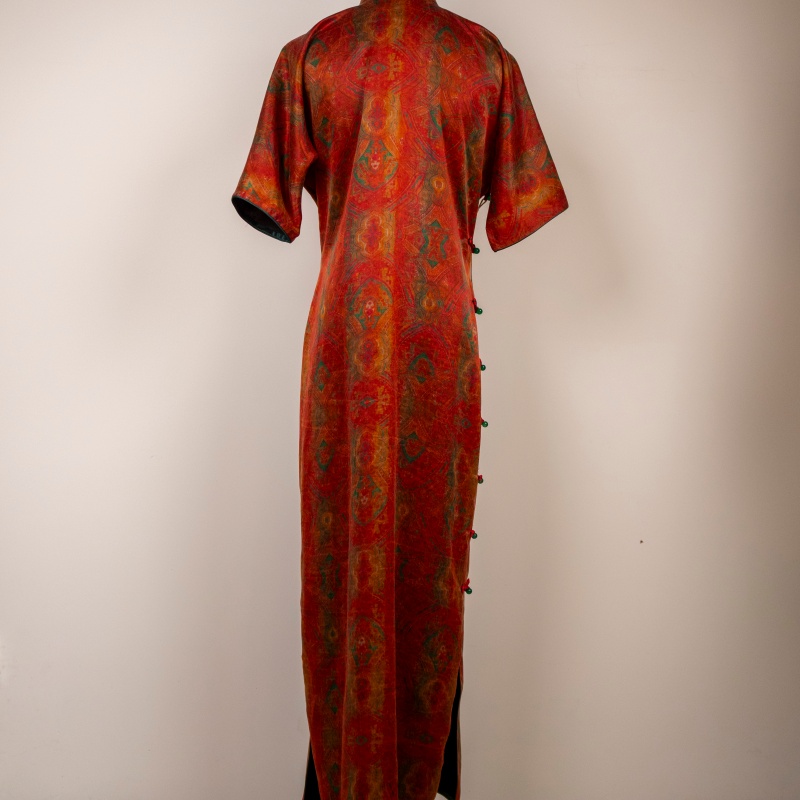
Comfort adjustment of silk cheongsam over a long period of time
How to Stay Comfortable in a Silk Cheongsam for Hours Without Losing Your Mind
Wearing a silk cheongsam for two or three hours is a dream. Wearing one for six or eight hours is a different story. The fabric clings in places it shouldn’t, the slits ride up when you shift your weight, the collar digs into your neck, and by hour four you’re ready to rip the whole thing off. Long-wear comfort isn’t about the cheongsam being better or worse — it’s about how you adjust your body and your habits while you’re wearing it. Small changes, applied early, make the difference between a graceful evening and a miserable one.
Why Silk Gets Uncomfortable After a Few Hours
Silk doesn’t breathe the way cotton does. It wraps around your body and holds heat against your skin. The first hour feels luxurious. The second hour feels warm. By the third hour, sweat starts building up along the spine, under the arms, and wherever the fabric presses tightest. That trapped moisture makes the silk stick to your skin instead of gliding over it. Every movement becomes a tug.
The seams are the other problem. A cheongsam has far fewer seams than a Western dress, which sounds like a good thing until you realize that means each seam carries more tension. The side seam near the slit, the shoulder seam, the waist dart — these are all stress points that dig into your body the longer you wear the garment. After four hours, those pressure marks turn red. After six, they turn painful.
Fixing the Neck and Shoulder Area First
The Collar Is the First Thing to Go Wrong
The mandarin collar on a cheongsam sits high on the neck and wraps around the throat. It looks stunning. It also cuts off airflow to one of the most heat-sensitive areas of your body. After an hour, your neck starts sweating. After two hours, the collar edge starts chafing the skin underneath.
The fix starts before you put it on. Dust a tiny amount of talc-free body powder on your neck and along the collar line. This creates a dry barrier between your skin and the silk so the fabric slides instead of gripping. Reapply once mid-event if your skin gets damp.
If the collar feels too tight, don’t unbutton it — that ruins the line of the garment. Instead, tilt your chin slightly downward and let the collar rest against the soft tissue under your jaw instead of pressing against your windpipe. This small angle change releases pressure on the front of the neck without changing how the cheongsam looks from the front.
Shoulder Tension Builds Silently
Most people don’t realize how much tension they carry in their shoulders until they’re wearing a cheongsam. The garment sits on the shoulders without any straps, which means all the weight of the fabric pulls downward from the shoulder point. After a few hours, your shoulders rise toward your ears without you noticing. That tension radiates down your back and makes the entire cheongsam feel heavier.
Every thirty minutes, drop your shoulders consciously. Not a big dramatic drop — just release them by an inch. Roll them back once, then let them settle. This takes two seconds and resets the tension before it builds into a headache.
Managing the Waist and Hip Zone Over Time
The Waist Dart Digs In After Hour Three
Cheongsams are cut to hug the waist, which means the waist dart or seam sits directly against your narrowest point. When you sit, that dart presses into your side. When you stand, it presses into your front. After a few hours, the area around the dart goes numb, then red, then sore.
If you’re wearing the cheongsam for a long event, shift your weight from hip to hip every twenty minutes or so. This redistributes the pressure so one spot doesn’t take all the load. It also keeps the fabric from settling into a single crease line, which makes the cheongsam look fresher for longer.
Hip Pressure From the Slit Edges
The slit on a cheongsam isn’t just decorative — it’s functional. But the raw edge of that slit presses against your inner thigh every time you walk. After an hour or two, that edge leaves a red line. After four hours, it can actually chafe the skin raw.
Apply a thin layer of body balm or unscented lip balm along the inner thigh where the slit edge sits. This creates a slip layer so the silk glides instead of dragging. It sounds strange but it works. The balm fills in the microscopic gaps between the skin and the fabric and stops the friction that causes chafing.
Keeping the Fabric From Sticking to Your Body
Sweat Is the Enemy of Long-Wear Comfort
You can’t stop sweating. But you can stop sweat from turning your cheongsam into a second skin. The moment fabric sticks to your body, every movement becomes a pull. The silk drags across your skin instead of sliding over it.
Carry a small handheld fan or a folding paper fan. Not to cool your face — to create airflow between your body and the cheongsam. A gentle breeze across your back, waist, and thighs keeps the fabric from bonding to your skin. It also helps the silk release trapped heat so you stay cooler overall.
If you don’t have a fan, find a spot near an air vent or an open window every thirty minutes. Stand there for two minutes and let the airflow separate the fabric from your skin. This resets the comfort level dramatically.
Don’t Let the Cheongsam Dry Against Your Skin
If you sweat and the sweat dries while the cheongsam is still on, the fabric fuses to your skin. Peeling it off later is painful and it stretches the silk. Wipe sweat away as it appears. Use a soft tissue or cloth to pat — never rub — the damp areas. Focus on the spine, the underarms, the waist, and the inner thighs near the slit. Patting removes moisture without disturbing the fabric.
Sitting for Hours Without the Cheongsam Wrinkling or Pulling
The Two-Hour Sitting Rule
If you’re wearing a cheongsam to a long dinner or event, stand up and move around every two hours. Not because the cheongsam will be damaged — because your body will be. Sitting compresses the same areas of the garment against the same areas of your body, and the pressure builds up over time. Standing resets everything. The fabric falls back into its natural drape, the seams release their grip, and you get a fresh start on comfort.
When you do sit, follow the rules from earlier — knees together, back straight, both feet on the floor. But add one more thing: shift your position every thirty minutes. Move from sitting upright to leaning slightly to one side. This changes which seams press against your body and prevents any single area from going numb.
If You Must Cross Your Legs, Do It Right
At some point during a long event, you’re going to want to cross your legs. That’s fine. But cross at the ankle, not the knee. Ankle crossing keeps the slit closed and the fabric aligned. Knee crossing opens the slit, stretches the side seam, and pulls the hip area out of shape.
If you cross at the ankle, also press your knees together gently. Even ankle crossing creates a slight gap between the thighs if your knees drift apart. Keeping them pressed together maintains the silhouette and keeps the fabric from shifting.
Footwear Makes or Breaks Long-Wear Comfort
Ditch the Heels After Hour Two
High heels shift your entire posture forward, which pulls the cheongsam taut across the hips and thighs. The fabric stretches in places it wasn’t designed to stretch. After two hours in heels, the hip area of the cheongsam looks baggy and the waist seam pulls away from your body.
If you’re at a long event, bring a pair of flat shoes and switch to them after the first two hours. Your feet will thank you and the cheongsam will hold its shape. The flats should be simple and low-profile so they don’t clash with the garment.
Shoe Choice Affects How the Hem Moves
Pointed-toe shoes make you walk differently — shorter steps, more weight on the ball of the foot. This changes how the hem swings and reduces the chance of the fabric catching under your shoe. Round-toe shoes require a slightly longer step, which means more hem movement and more chance of tripping or snagging.
For long events, pointed-toe flats or low kitten heels are the safest choice. They keep your stride controlled and the hem predictable.
What to Do When Comfort Falls Apart Mid-Event
The Restroom Reset
Every long event deserves a restroom break specifically for the cheongsam. Step into a stall, take the cheongsam off if possible, and let your skin breathe for five minutes. If you can’t take it off, at least unfasten the pankou knot at the neck to release the collar pressure. Loosen the waist area by gently pulling the fabric away from your body at the sides. This releases the tension that’s been building for hours.
Check the mirror. Look for red marks, sweat stains, or fabric pulls. Fix what you can — smooth a wrinkle, reposition a pankou knot, adjust the hem. These small fixes take thirty seconds and make the next two hours bearable.
Don’t Push Through Pain
If a seam is digging into your skin hard enough to hurt, don’t ignore it. That seam is going to leave a mark, and if you keep wearing it, the mark will last for days. Adjust the garment, shift the pressure, or take a break. A cheongsam that hurts you isn’t elegant — it’s just uncomfortable. And nobody looks graceful when they’re wincing.