
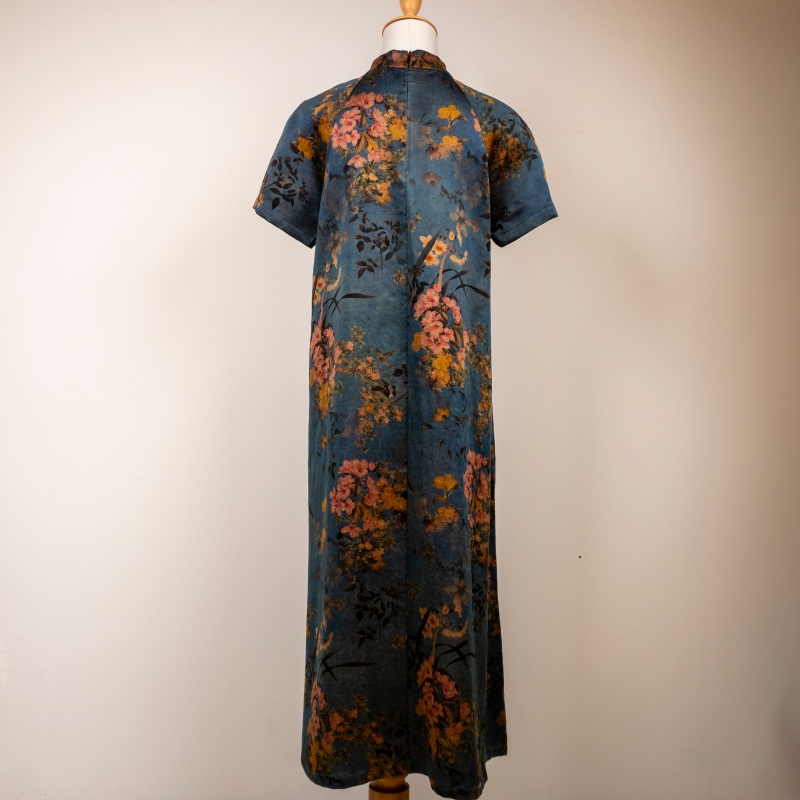
The cleaning and treatment method for faded silk cheongsam fabrics
Silk Qipao Color Bleeding: How to Remove Excess Dye Without Destroying the Fabric
You bought a beautiful silk qipao. The color is stunning — deep, rich, exactly what you wanted. Then you wash it for the first time, and the water turns the same color as the dress. Panic sets in. You think you have ruined it. You think the color is gone forever.
It is not. What you are seeing is called “floating color” — excess dye that was not fully fixed during the manufacturing process. It happens with almost every dyed silk garment, especially hand-dyed or deeply saturated pieces. The good news is that floating color can be removed safely without damaging the fabric. The bad news is that most people make it worse by using the wrong method.
What Floating Color Actually Is
Before you do anything, you need to understand what is happening. Floating color is not the garment losing its dye. It is the opposite. The dye is still there — too much of it, actually.
Why Silk Holds Excess Dye
Silk fiber absorbs dye differently than cotton or polyester. The protein structure of silk pulls in dye molecules aggressively. During the dyeing process, the silk soaks up more color than it can permanently hold. The excess sits on the surface and in the outer layers of the fiber, not chemically bonded to the core.
When water touches the fabric for the first time, that loose dye dissolves out. It has not bonded permanently. It is just sitting there, waiting for water to carry it away. That is why the first wash always produces colored water — sometimes dramatically so.
This is normal. It does not mean the qipao is cheap or poorly made. It means the silk is doing exactly what silk does. The question is not whether it will bleed. The question is how you handle it.
Floating Color vs. Actual Color Loss
These are two different things and they look similar but they are not the same.
Floating color comes out in the wash water. The fabric itself does not look significantly lighter after the first rinse. The color on the qipao stays vibrant. This is what you want. This is normal.
Actual color loss means the dye is coming out of the fiber permanently. The fabric looks faded, dull, or patchy after washing. This is damage. This is what you want to avoid.
The entire goal of floating color removal is to wash away the excess dye without pulling out the bonded dye. Get that right and the qipao comes out of the first wash looking even better than before. Get it wrong and you end up with a faded, uneven mess.
The First Wash: The Most Critical Step
The first wash is where floating color is removed — or where permanent damage is done. There is no second chance at this. Everything depends on what you do in the first thirty minutes.
Use Cool Water and Nothing Else
Fill a basin with cool water — 15 to 20 degrees Celsius. Do not add any detergent for the first wash. Detergent opens up the fiber structure and pulls out both loose dye and bonded dye. For the first wash, you want water only.
Submerge the qipao gently. Do not agitate. Do not squeeze. Just let it sit in the cool water for ten to fifteen minutes. You will see the water change color. That is the floating color leaving the fabric. It is supposed to happen.
Drain the water. Refill with fresh cool water. Submerge again for another ten minutes. Repeat this process three to five times, or until the water runs mostly clear. Each cycle pulls out more loose dye without touching the bonded color underneath.
This is tedious. It takes longer than a normal wash. But it is the single most effective way to remove floating color without fading the garment.
Add Salt After the Water-Only Rinses
Once the water runs mostly clear, you can add salt to lock in the remaining dye. Dissolve two tablespoons of plain table salt in a basin of cool water. Submerge the qipao for five minutes. The salt helps fix the bonded dye to the fiber, making it less likely to bleed in future washes.
This is an old technique that works surprisingly well on silk. The sodium ions in the salt interact with the dye molecules and help them bond more firmly to the protein fiber. It is not a miracle fix, but it does reduce bleeding in subsequent washes significantly.
After the salt soak, rinse the qipao one final time with plain cool water. Do not wring. Roll it in a dry towel to remove moisture and hang it in the shade to dry.
Handling Heavy Floating Color on Dark Qipaos
Dark colors — deep reds, navy blues, blacks, burgundies — tend to bleed more than light colors. The dye concentration is higher, which means more excess dye is sitting on the surface. A dark qipao can turn the wash water almost black on the first rinse.
The Vinegar Rinse Method for Dark Colors
This sounds counterintuitive because everyone says never use vinegar on silk. But for floating color removal on dark silk, a very dilute vinegar rinse can actually help — if done correctly.
Mix one part white vinegar with twenty parts cool water. This is extremely dilute — barely any vinegar at all. Submerge the qipao for three to five minutes only. Then rinse immediately with plain cool water.
The mild acidity helps set the dye without attacking the fiber. It works best on dark colors where the floating dye is heaviest. Do not use this on light or pastel qipaos — the acid can shift the hue of delicate colors.
Double-Basin Technique for Stubborn Bleeding
If the qipao is still bleeding heavily after three or four water-only rinses, use the double-basin method.
Fill one basin with cool water and add two tablespoons of salt. Fill the second basin with plain cool water. Submerge the qipao in the salt water for five minutes, then immediately transfer it to the plain water for five minutes. Repeat this cycle three times.
The salt water pulls out loose dye. The plain water rinses it away. Alternating between the two prevents the salt from sitting on the fabric too long, which could stiffen the silk. This method handles even the most aggressive floating color without any detergent at all.
What to Do When Floating Color Stains Other Garments
Floating color does not just disappear into the water. It transfers to anything else in the wash. If you accidentally washed your qipao with a white shirt, that shirt is now dyed. Here is how to handle it.
Act Within the First Hour
The sooner you catch a color transfer stain, the easier it is to remove. If you notice a white garment has picked up color from the qipao, take it out of the wash immediately.
Rinse the stained area with cool water — not warm, not hot. Then apply a few drops of neutral pH liquid detergent directly to the stain. Let it sit for five minutes. Rinse with cool water. If the stain is still visible, repeat the process.
For stubborn transfers, soak the affected garment in a basin of cool water with two tablespoons of salt for thirty minutes. The salt can help pull the transferred dye back out of the cotton or polyester fiber. Rinse thoroughly and wash the garment separately on its next cycle.
Prevent Cross-Staining in the First Place
Never wash a new silk qipao with any other garment. Not even similar colors. The first three washes should be done alone, in a clean basin, with cool water only.
Use a dedicated basin for silk. Do not use the same basin you use for cotton towels or dark jeans. Even a trace of detergent residue from a previous wash can cause color to bleed unevenly.
Common Mistakes That Make Floating Color Worse
The methods above work. But only if you avoid the mistakes that most people make.
Do Not Use Hot Water for the First Wash
Hot water opens the silk fiber wide. It pulls out bonded dye along with floating color. The first wash in hot water can permanently fade a qipao by ten to twenty percent. Cool water only. Every time.
Do Not Add Detergent to the First Wash
Detergent is designed to break down oils and lift dirt. It does not care about the difference between loose dye and bonded dye. It pulls both out. Save the detergent for the second or third wash, after the floating color is gone.
Do Not Soak Overnight
A long soak gives the water more time to pull out bonded dye. Ten to fifteen minutes per rinse is enough. Overnight soaking is overkill and risks permanent fading. Keep it short, keep it cool, keep it gentle.
Do Not Rub the Fabric During Rinsing
Rubbing creates friction, and friction damages silk fiber. It also pushes loose dye deeper into the weave instead of letting it rinse out. Press and lift. Never rub.
After the First Wash: Maintaining the Color
Once the floating color is gone, the qipao should hold its color well for years. But a few habits keep it that way.
Wash in Cool Water Every Time
Never switch to warm or hot water after the first wash. Cool water protects the bonded dye and keeps the silk fiber intact. Make it a rule: cool water for every wash, forever.
Turn the Qipao Inside Out Before Washing
This exposes the inner surface to the water instead of the outer dyed surface. It reduces friction on the visible side of the fabric and helps preserve the color longer. It is a small step that makes a real difference over time.
Store Away From Direct Sunlight
UV light breaks down dye molecules over time. Even if the color is bonded, prolonged sun exposure will fade it. Hang the qipao in a closet or cover it with a breathable garment bag. The less light it sees, the longer the color lasts.
The floating color on your silk qipao is not a defect. It is a sign that the silk absorbed dye the way silk is supposed to. Removing it takes patience and the right technique — no heat, no detergent, no rubbing. Get through the first wash correctly and the color underneath will stay vibrant for decades. The first wash is the hardest part. After that, it gets easy.