
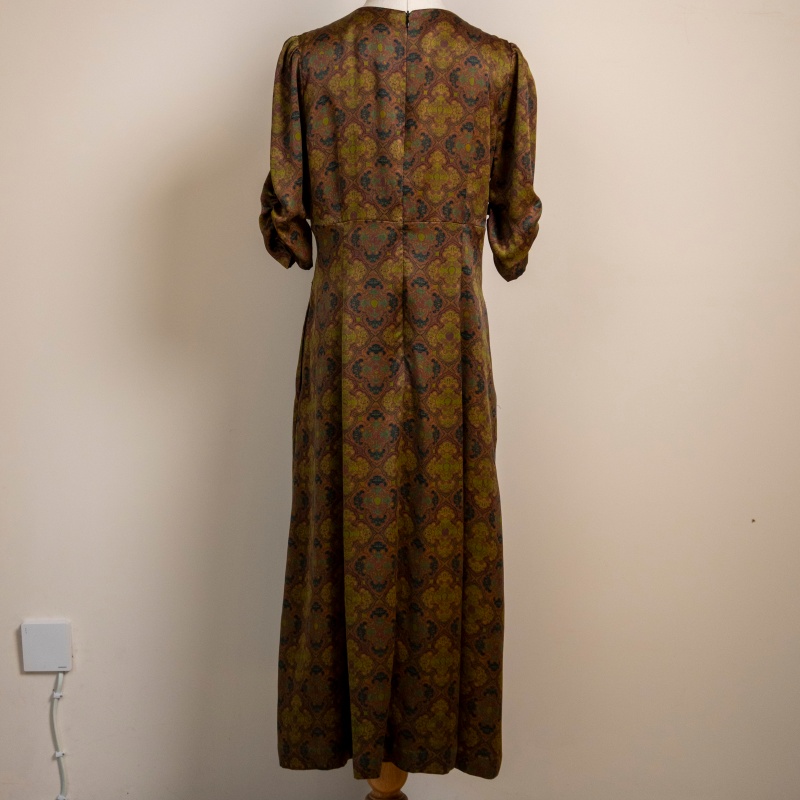
Lightly cleaning of silk cheongsam with oil stains
Silk Cheongsam Oil Stain Removal: What Actually Works Before It Sets
A drop of soup. A smudge of cooking oil. A fingerprint from a dim sum plate. Oil stains on a silk cheongsam feel like a death sentence the moment you see them. But they are not. If you act fast and use the right method, you can lift most light oil marks without ever sending the garment to a cleaner.
The trick is understanding what oil does to silk and why most home remedies make it worse.
Why Oil Stains on Silk Are Trickier Than They Look
Oil and silk do not mix. That is obvious. But the reason goes deeper than just “oil is greasy.”
Silk Absorbs Oil Faster Than You Think
Silk is a protein fiber with a naturally smooth surface. When oil hits it, the fiber pulls the oil in almost instantly. Within seconds, the oil sinks below the surface and starts bonding with the fibroin protein. That is why an oil stain on silk looks faint at first — the oil is already inside the fiber, not just sitting on top.
This also means you have a very short window. Fresh oil stains can be removed in minutes. Stains that have sat overnight are a completely different problem. The oil has oxidized, turned slightly acidic, and begun to yellow the surrounding fabric. That yellow ring is what most people panic about. It is removable — but only if you do not grab the nearest bottle of dish soap.
What Goes Wrong When People Use Dish Soap
Dish soap is designed to break down grease on plates. It is too aggressive for protein fibers. The surfactants in dish soap strip the sericin coating off silk, which is the natural protective layer that gives silk its softness and shine. One use of dish soap on a cheongsam and the fabric feels rough. Two uses and it starts to pill. Three uses and you have permanently damaged the fiber.
The same goes for regular laundry detergent. Most of it is alkaline, and alkaline solutions attack silk protein the same way they attack grease — by dissolving it. Your cheongsam is not a frying pan. Treat it like silk.
How to Remove Fresh Oil Stains in Under Ten Minutes
If the stain just happened — at dinner, at a party, in the car — you are in luck. Fresh oil is the easiest to remove.
Blot the Excess Oil First
Do not rub. Ever. Rubbing pushes oil deeper into the weave and spreads it to clean areas. Take a clean white cloth or paper towel and press it flat against the stain. Hold it there for a few seconds, lift, replace with a fresh section, and press again. Keep doing this until the cloth stops picking up oil. You are not trying to remove the stain yet. You are just removing the bulk of the oil so the cleaner can reach what is left.
Use Talcum Powder or Cornstarch as a First Step
This sounds old-school, but it works. After blotting, sprinkle a thin layer of talcum powder or cornstarch directly onto the oil stain. Let it sit for fifteen to twenty minutes. The powder absorbs the remaining oil that is still sitting in the fiber. Then brush it off gently with a soft brush or your fingertips.
This step alone can remove a surprising amount of oil. For light stains, it might be all you need. For heavier marks, move to the next step.
Apply Neutral Detergent and Work It In Gently
Use a few drops of neutral pH liquid detergent on the stained area. Press it into the fabric with your fingertip — not your fingernail. Work in small circles from the outside of the stain toward the center. This prevents the stain from spreading outward.
Let it sit for five minutes. Then rinse the area with cool water using a spray bottle or by running a gentle stream over the spot. Rinse until no soap residue remains. Pat dry with a clean towel and hang the cheongsam in the shade to air dry.
Removing Set-In Oil Stains Without Ruining the Fabric
If the stain has been sitting for a day or more, the powder trick alone will not work. The oil has bonded with the fiber and started to oxidize. You need a stronger approach — but still one that respects silk.
The Glycerin Method Works Surprisingly Well
Glycerin is gentle, it is non-toxic, and it breaks down oil without attacking protein fibers. Apply a small amount of pure glycerin directly to the stain. Let it sit for twenty to thirty minutes. The glycerin pulls the oil out of the fiber and to the surface, where you can blot it away with a clean cloth.
After the glycerin treatment, rinse the area with cool water and wash the cheongsam using the neutral detergent method described above. This two-step process handles most set-in oil stains on silk without any harsh chemicals.
Diluted Ammonia for Stubborn Yellow Rings
When oil oxidizes on silk, it leaves a yellow halo around the original stain. This is the part that scares people. But it is just oxidized oil, and diluted ammonia handles it well.
Mix one part clear household ammonia with eight parts cool water. Dampen a white cloth with the solution — never pour it directly on the cheongsam. Dab the yellow ring gently, working from the outside in. Blot with a clean damp cloth between dabs. Repeat until the yellow fades. Then rinse thoroughly with cool water to remove all traces of ammonia.
Do this in a well-ventilated area. Ammonia fumes are strong, and silk absorbs odors easily. Air the cheongsam out afterward.
Mistakes That Turn a Small Oil Spot Into a Permanent Stain
The cleaning method matters. But so does what you do before and after.
Never Use Hot Water on an Oil Stain
Hot water sets oil into protein fibers permanently. It cooks the oil into the silk at a molecular level. Once that happens, no household method will remove it. Cool water only. Always.
Do Not Iron Over the Stain
If the cheongsam is wrinkled near the stained area, do not press it with a hot iron. The heat will set the oil and possibly scorch the silk. If you must press the garment, use the lowest heat setting, place a thin cloth between the iron and the fabric, and avoid the stained area entirely.
Skip the Dryer Completely
Air dry only. A dryer applies heat and mechanical force, both of which can set any remaining oil and shrink the silk. Hang the cheongsam on a padded hanger in a shaded, well-ventilated spot. It will take longer than a dryer, but it will not destroy the fabric.
How to Protect Your Cheongsam From Oil Stains in the First Place
Prevention is cheaper than repair. A few habits go a long way.
Wear a Silk-Safe Undershirt
A thin cotton or modal undershirt under your cheongsam acts as a barrier. Oil and sweat hit the undershirt first, not the silk. Wash the undershirt after every wear. It costs almost nothing compared to treating a stain on a handmade cheongsam.
Keep a Blotting Cloth in Your Bag
A small white microfiber cloth takes up no space and can save your cheongsam if you spill something. The faster you blot, the easier the stain is to remove. Carry one. Use it. It is the single most useful tool you can own for silk care.
Treat Stains the Same Night
Do not “deal with it tomorrow.” Oil does not wait. The longer it sits, the deeper it goes, and the harder it becomes to remove. A five-minute spot treatment tonight beats a thirty-minute rescue operation next week.