
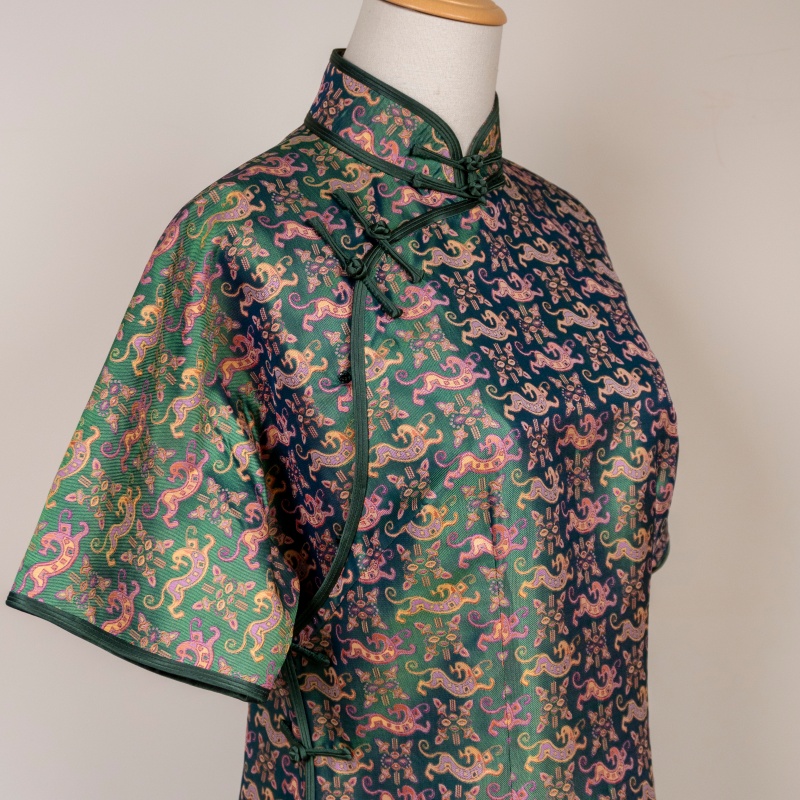
Methods for dry ironing and wet ironing of silk cheongsam
Choosing Between Dry and Steam Ironing for Silk Cheongsams
Ironing a silk cheongsam is not a one-size-fits-all process. The right method depends entirely on what the fabric needs at that moment. Dry ironing means pressing the hot plate directly onto the silk with zero steam, while wet ironing involves releasing steam through the plate or hovering it above the fabric. Both have their place, but using the wrong one on the wrong section can leave shiny scorch marks, water spots or permanent creases that never fully come out. Knowing when to reach for dry heat and when to switch on the steam is the difference between a crisp, professional finish and a ruined garment.
When Dry Ironing Actually Works Best
Dry ironing sounds risky for silk, but it is the right choice for setting sharp, permanent creases on heavy silk cheongsams with thick satin weaves. If you need a crisp center line down the front placket or a sharp fold along the hem, dry heat gives you the most control because there is no moisture to interfere with the crease setting. The key is to keep the iron on the lowest silk setting, never above 110 degrees Celsius, and always use a pressing cloth between the plate and the fabric. Dry ironing also works well for the inner lining, which is usually cotton or rayon and can handle more direct heat than the outer silk. Never use dry ironing on hand-embroidered areas or thin single-layer silk, because the lack of steam means the fibers can snap and burn before the crease even forms.
Why Wet Ironing Is Safer for Most Silk
Wet ironing, or using the steam function, is the go-to method for most silk cheongsams because the water vapor relaxes the twisted protein fibers without requiring the hot plate to touch the fabric directly. This is ideal for removing everyday wrinkles from the bodice, the skirt panels or the sleeves where the silk is thin and delicate. The moisture penetrates the fiber structure and lets it unfold naturally, so you are not forcing the crease out with brute heat. Wet ironing is also the only safe option for cheongsams with hand-dyed colors, because the steam keeps the surface temperature lower and reduces the risk of fading or shifting the dye tone. For these reasons, most professional tailors default to steam for at least eighty percent of the ironing process.
Reading the Fabric to Decide Which Method to Use
Before you press the iron down, run your fingers over the wrinkled area and decide based on what you feel. If the wrinkle is deep and structural, like a fold that has been sitting for days, start with dry ironing through a pressing cloth to set the crease, then finish with a quick steam pass to relax the surrounding fabric. If the wrinkle is shallow and surface-level, like a crease from sitting in a car, go straight to steam because the fiber has not set deeply and does not need the aggressive heat of dry pressing. For embroidered sections, always choose wet ironing from a distance, never dry, because the raised threads trap heat and will scorch instantly under a dry plate. When in doubt, steam is always the safer bet, because you can always follow up with a cool dry pass, but you cannot undo a burn mark left by dry heat.
Combining Both Methods for a Professional Finish
The best results come from alternating between dry and wet ironing in the same session. Start with steam to remove all the loose wrinkles and relax the entire garment. Once the fabric is smooth but still soft, switch to dry ironing with a pressing cloth to lock in the sharp lines along the collar edge, the placket and the hem. This two-step approach gives you the relaxation benefits of moisture and the crisp definition of dry heat. Finish the entire cheongsam with one final steam pass from a distance to take away any stiffness the dry ironing may have introduced. Let the garment hang and cool for at least ten minutes before wearing, so the fibers settle into their new shape without springing back into a wrinkle the moment you move.