
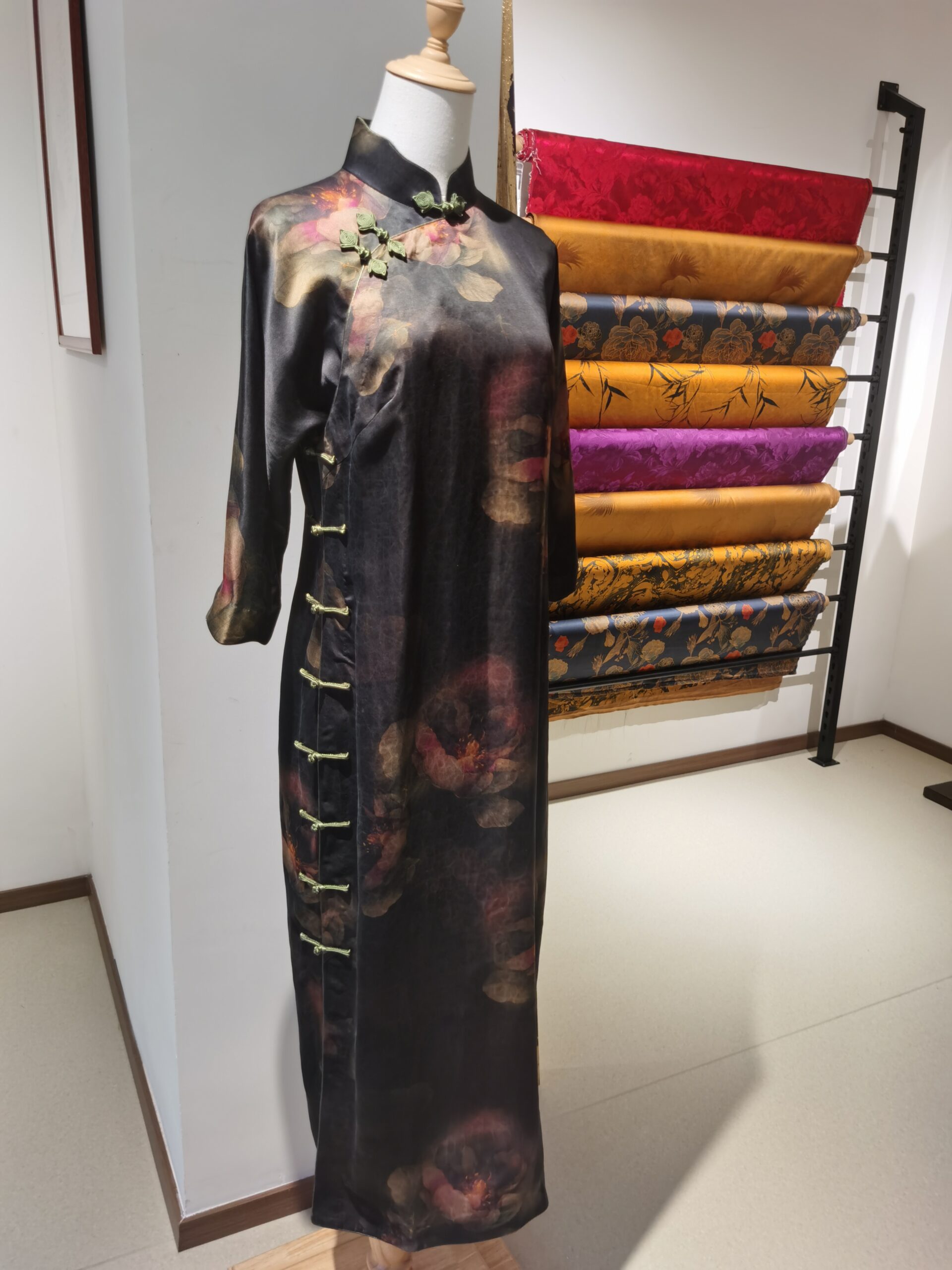
Silk cheongsam odor removal cleaning treatment
How to Remove Stubborn Odors From Silk Cheongsam Without Ruining the Fabric
A silk cheongsam can start smelling off even if you only wore it once. Body heat, perfume, food, storage conditions — they all leave invisible traces that build up over time. And unlike cotton, silk holds onto odors stubbornly because protein fibers absorb them deep into the weave. Throw it in a regular wash and the smell might even get worse. You need a different approach entirely.
What Actually Causes That Smell in Your Silk Cheongsam
Body Oil and Sweat Trapped in the Fibers
This is the number one culprit. Every time you wear a silk cheongsam, your body leaves behind sebum and sweat. Silk absorbs these oils fast because it is a natural protein fiber. At first, the smell is faint — maybe just a hint of mustiness near the collar or underarms. But over time, those oils oxidize and turn rancid. That is the sour, stale odor you notice when you pull the cheongsam out of storage.
The problem is worse in warm, humid climates. Sweat does not evaporate cleanly off silk the way it does off synthetic fabric. It soaks in, sits there, and ferments. If you wore perfume or cologne over the cheongsam, the alcohol evaporates but the fragrance oils bond with the silk fibers and create a weird mixed smell that gets stronger with age.
Mildew From Improper Storage
If your cheongsam was stored in a damp closet, a plastic bag, or anywhere without airflow, mildew has likely set in. Mildew on silk does not always look visible. Sometimes the fabric looks perfectly fine but smells earthy and musty. That is because the mold spores have embedded in the fiber without leaving obvious stains.
This is especially common after rainy seasons or in homes without dehumidifiers. The silk absorbs ambient moisture, and if it was not completely dry before storage, that trapped water becomes a breeding ground. The longer it sits, the deeper the smell goes — and the harder it becomes to remove.
Home Methods That Actually Work on Silk Cheongsam Odors
The White Vinegar Soak Method
White vinegar is the single most effective odor neutralizer for silk. It kills odor-causing bacteria, breaks down sweat salts, and does not damage the fiber when used correctly.
Fill a basin with cool water — around 20 to 25 degrees Celsius. Add one cup of white vinegar per liter of water. Submerge the cheongsam and let it soak for 20 to 30 minutes. Do not go longer than that. Extended vinegar exposure can dull the sheen on very old silk.
After soaking, rinse the garment twice in clean cool water. Squeeze out excess water gently — never wring. Hang it to dry in a shaded, well-ventilated area. The vinegar smell disappears completely once the fabric dries. What remains is a clean, neutral-smelling cheongsam with no chemical residue.
Baking Soda Contact Treatment for Stubborn Smells
For odors that vinegar alone cannot touch — think heavy perfume residue or deep mildew — baking soda works as a second-stage treatment.
Sprinkle a generous layer of baking soda over the entire cheongsam while it is still slightly damp from the vinegar rinse. Do not use too much water. The goal is to let the baking soda sit on the fabric, not dissolve into a paste. Leave it for 4 to 6 hours, or overnight if the smell is really bad.
Baking soda absorbs odor molecules through a chemical reaction, not just physical absorption. That is why it works on smells that vinegar cannot reach. After the waiting period, shake off the powder gently or brush it away with a soft cloth. Air dry the cheongsam completely before storing or wearing. You should notice a dramatic difference after this step.
Sunlight Exposure — Yes, But Only the Right Way
Direct sunlight kills bacteria and neutralizes mildew smells. But full sun destroys silk dye and weakens fibers. The trick is indirect sunlight — bright but filtered.
Hang the cheongsam near a window with a sheer curtain between the fabric and the glass. Leave it there for 2 to 3 hours in the morning when the UV index is lower. The gentle UV exposure kills surface bacteria and helps evaporate any remaining moisture that carries odor. Do this only on dry days. If there is any dampness in the air, skip this step entirely — it will trap moisture instead of releasing it.
When Home Treatment Is Not Enough and Professional Cleaning Becomes Necessary
Sometimes the smell has gone too deep. If you have tried vinegar, baking soda, and air drying and the cheongsam still smells off after a full day, the odor has likely bonded to the dye itself. This happens most often with dark-colored cheongsam — black, deep red, navy — where dye molecules trap odor compounds at a molecular level.
At that point, take it to a dry cleaner who specializes in silk. Tell them specifically about the odor problem and what you have already tried. A good cleaner will use a solvent-based deodorizing process that home methods simply cannot replicate. They may also use ozone treatment, which penetrates fibers and destroys odor at the source without any water contact.
Do not try to mask the smell with fabric sprays or sachets. Those products coat the silk with synthetic fragrance that mixes with the existing odor and creates something worse. They also leave a residue that attracts dust and speeds up yellowing.
How to Prevent Odors From Coming Back
Always Let It Breathe After Wearing
After every single wear, hang the cheongsam in a well-ventilated area for at least 24 hours before storing it. Even if it looks clean, your body left behind invisible oils that need time to evaporate. Skipping this step is the fastest way to build up smell over time.
Rotate Your Cheongsam and Do Not Wear the Same One Twice in a Row
Silk needs at least 48 hours between wears to fully release moisture and odors. If you wear the same cheongsam two days in a row, the fibers never get a chance to reset. The smell compounds. Rotate between at least two or three pieces if you can.
Use Cedar, Not Mothballs, in the Closet
Mothballs contain chemicals that react with silk dye and create their own unpleasant odor. Cedar blocks absorb moisture and repel insects without any chemical interaction. Place two or three cedar blocks in your closet near the cheongsam. Replace them every six months. This simple step prevents both mildew and insect damage, which are the two biggest sources of long-term storage odor.