
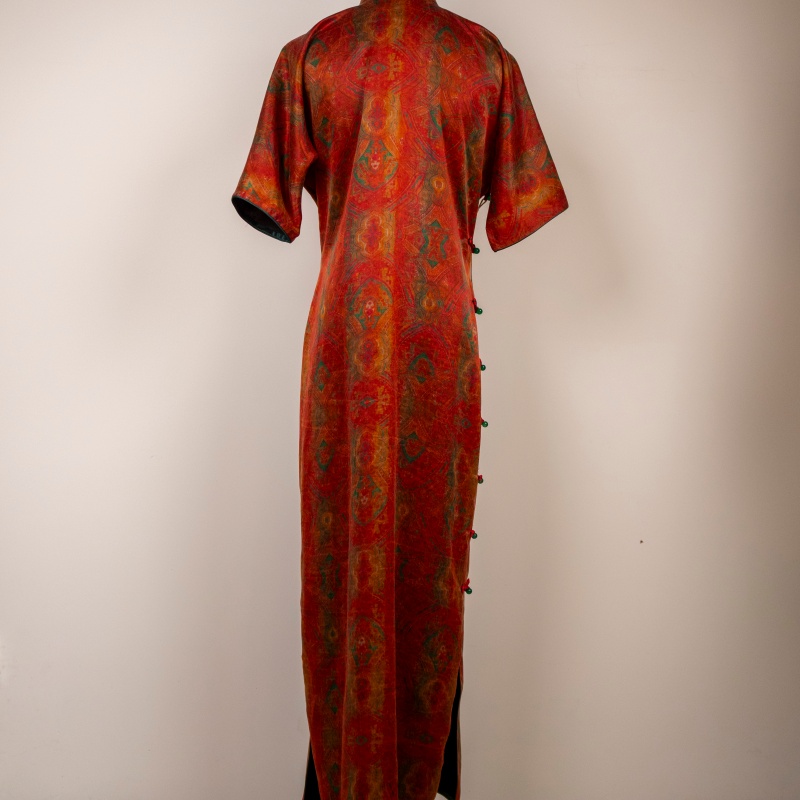
Tips for Using the Handmade Zhongniang (Flag Coat) Neutral Detergent
Handmade Qipao and Neutral Detergent: What You Need to Know Before You Wash
A handmade qipao is not something you toss in the machine and forget about. The stitching alone took hours. The fabric was chosen by hand. Every fold, every frog button, every inch of piping was placed with intention. So when it comes time to clean it, the last thing you want is to destroy all that work with the wrong soap.
That is where neutral detergent comes in. It is not a marketing gimmick. It is genuinely the safest option for delicate fabrics like silk, satin, and brocade. But using it the right way matters just as much as picking the right bottle.
Why Neutral Detergent Is Non-Negotiable for Handmade Qipaos
Most laundry detergents are alkaline. They are built to break down grease, sweat, and grime on cotton and polyester. That is great for jeans and towels. It is terrible for protein fibers like silk.
What “Neutral” Actually Means
A neutral detergent has a pH close to 7 — the same as pure water. It does not attack the fiber structure. It lifts dirt without stripping the natural oils that keep silk soft and lustrous. For a handmade qipao, this is everything. The fabric stays smooth, the color stays true, and the hand-stitched seams do not weaken.
Alkaline detergents do the opposite. They cause fiber swelling, which leads to shrinkage. They strip sericin (the natural coating on silk), which makes the fabric feel rough and dull. Over time, repeated use of the wrong detergent will turn a beautiful qipao into a stiff, faded rag.
The Damage Shows Up Slowly
You will not ruin a qipao in one wash. That is what makes this so dangerous. The first time you use regular detergent, nothing obvious happens. Maybe a tiny bit of stiffness. Maybe the color looks slightly off. But each wash adds up. By the fifth or sixth cycle, the fabric has lost its drape, the embroidery thread has started to fray, and the frog buttons are pulling away from the fabric.
Neutral detergent prevents that slow decay. It is not about being extra careful for no reason. It is about making the qipao last.
How to Pick the Right Neutral Detergent Without Getting Confused
Not every bottle labeled “gentle” or “delicate” is actually neutral. Read the label. Look for pH 6 to 8. Avoid anything that lists bleach, enzymes, or optical brighteners. Those additives are fine for white cotton but they will dull silk and weaken hand-dyed colors.
Liquid form is always better than powder for silk. Powder does not dissolve completely in cold water, and the leftover granules can get trapped in the fabric weave. That creates tiny abrasion points that show up as pilling over time.
You do not need a lot. A few drops — literally two or three — per basin of water is enough. More soap does not mean cleaner. It means more residue, more rinsing, and more risk.
The Washing Process: Where Most People Get It Wrong
Having the right detergent means nothing if you use it wrong. The technique is just as important as the product.
Soaking Is Not Your Friend
A common mistake is soaking the qipao for 30 minutes or longer “to get it really clean.” That is exactly how you destroy handmade silk. Soaking allows water to penetrate deep into the fiber, causing swelling and color bleeding. For a lightly soiled qipao, 5 minutes is enough. For something with visible stains, spot-treat the area with a damp cloth and a tiny amount of neutral detergent before the full wash.
Fill a basin with cool water — never warm, never hot. Add the detergent and stir gently until dissolved. Submerge the qipao, press it down so it is fully wet, and let it sit. Do not agitate. Do not swirl it around. Just let the detergent do its work.
Rinsing Twice, Touching Zero Times
After the short soak, drain the dirty water and refill with clean cool water. Rinse once. Then refill again and rinse a second time. Two rinses remove all detergent residue. Any leftover soap will attract dirt later and make the fabric feel stiff.
Here is the part people always mess up: do not wring the qipao. Do not twist it. Do not squeeze it like a towel. Lay it flat on a dry towel, roll the towel up gently to absorb water, then unroll and hang it on a padded hanger in the shade.
Wringing distorts the shape of a handmade qipao permanently. The bias cut that gives it that beautiful body will never recover. The collar will warp. The side slits will pull unevenly. One good rinse and a careful roll is all you need.
Common Mistakes That Ruin Qipaos Even With Neutral Detergent
Using the right product is step one. Avoiding these habits is step two.
Hot water. Even “lukewarm” water is too hot for silk. Stick to cool or room temperature. Heat sets stains and shrinks fibers instantly.
Hanging to dry in direct sun. UV light breaks down silk protein. It causes yellowing, especially on white or light-colored qipaos. Always dry in shade.
Using fabric softener. It coats the fibers and kills the natural sheen of silk. Your qipao will look dull and feel weird. Skip it entirely.
Ironing while wet. If you need to press wrinkles out, wait until the qipao is almost dry, then use a low-heat iron on the reverse side with a cloth barrier. Never press directly on wet silk — it stretches and distorts.
What About Those Stubborn Stains?
Oil-based stains like cooking splatter or makeup are the hardest to deal with on a handmade qipao. Do not rub. Blot gently with a clean cloth. Apply a tiny amount of neutral detergent directly to the spot, let it sit for two minutes, then rinse with cool water.
For ink or dye transfer, time is your enemy. Act fast. Blot with a damp cloth — do not rub — and take it to a professional if the stain does not lift. Home treatment can spread the problem if you are not careful.
The bottom line is this: your handmade qipao was built to last, but only if you respect what it is made of. Neutral detergent, cool water, zero wringing, and shade drying. That is the entire formula. There is no shortcut, and there is no need for one.