
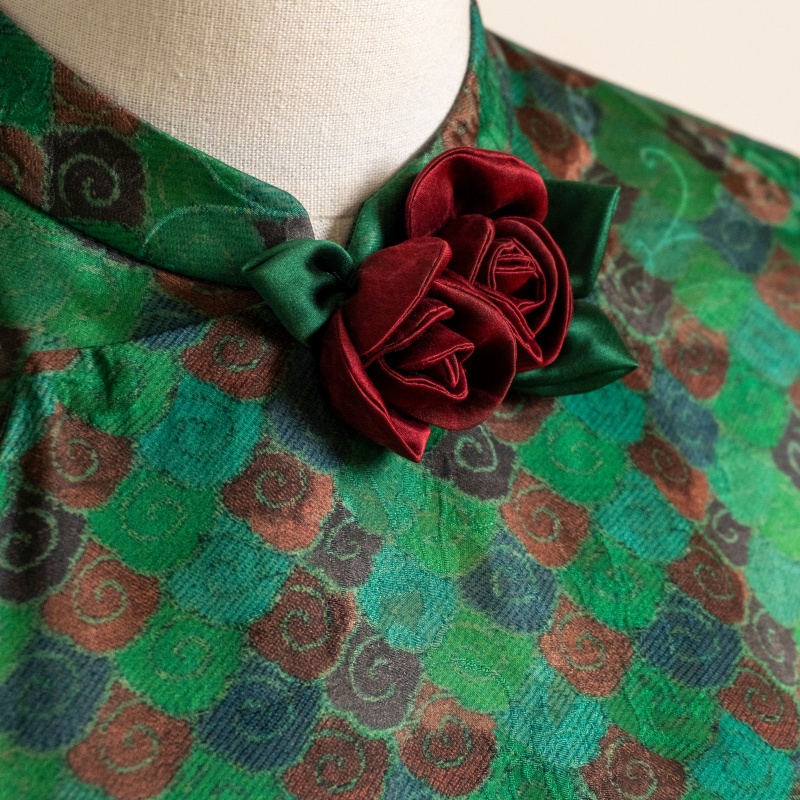
Method for Removing Stains from Silk Cheongsam (Chinese Traditional Dress)
How to Remove Sweat Stains from Silk Qipao Without Destroying the Fabric
Sweat is silent. It does not announce itself. You wear your silk qipao to a dinner, a wedding, a long summer evening — and by the time you get home, there it is. A yellow shadow under the arms. A faint ring around the collar. Maybe a streak down the back where the fabric clung to your skin.
Sweat stains on silk are not just ugly. They are corrosive. Sweat contains salt, urea, and fatty acids. Left on protein fibers like silk, these compounds break down the fiber over time. The stain gets worse with every wear if you do not treat it right. And the wrong cleaning method can make it permanent.
Why Silk Reacts So Badly to Sweat
Most people assume sweat is just water with a little salt. On cotton, that is mostly true. On silk, it is a completely different story.
The Protein Fiber Problem
Silk is made of fibroin, a protein. Sweat is slightly acidic, with a pH around 4 to 6. When acid meets protein fiber, it starts to denature the surface. That is why old sweat stains on silk turn yellow — the protein has literally cooked at a molecular level. The longer it sits, the deeper it goes. After 48 hours, a sweat stain on silk can become nearly impossible to remove without damaging the fabric.
Why Deodorant Makes It Worse
Most antiperspirants contain aluminum salts. These react with sweat to form a waxy residue that bonds to silk fibers. That yellowish buildup under the arms is not just sweat. It is sweat plus deodorant plus heat, all fused into the fabric. Regular washing barely touches it. You need a targeted approach.
Removing Fresh Sweat Stains: The First 24 Hours Matter
If you catch the stain early, you have a real shot at removing it completely. The key is speed and the right tools.
Blot First, Never Rub
The moment you notice a sweat mark, take the qipao off and lay it flat. Use a clean, dry white cloth to blot the area. Press down gently to absorb as much moisture as possible. Rubbing pushes the stain deeper into the weave and spreads it to surrounding fibers. Blotting pulls it out.
Then dampen a fresh cloth with cool water — not cold, not warm, just cool. Blot again. This lifts the surface-level salt and urea before they set. Do this before you even think about detergent.
Apply Neutral Detergent Directly to the Stain
Once the surface moisture is gone, take your neutral pH detergent — liquid, not powder — and put two or three drops directly on the stained area. Gently press the detergent into the fabric with your fingertip. Do not scrub. Let it sit for five to ten minutes.
After that, rinse the area with cool water. Use a spray bottle if you have one — it gives you control without soaking the whole garment. Rinse until no soap residue remains. Then lay the qipao on a dry towel and roll it to remove excess water.
Dealing With Old or Set-In Sweat Stains
If the stain has been sitting for days or has already yellowed, fresh water and detergent will not cut it. You need something stronger — but still safe for silk.
The Diluted Ammonia Trick
This is the method that actually works on old yellow sweat stains, and it is not as scary as it sounds.
Mix one part household ammonia with ten parts cool water. Soak a clean white cloth in the solution — do not pour it directly on the qipao. Dab the stained area gently. The ammonia neutralizes the acidic compounds in dried sweat and lifts the yellow without attacking the silk fiber.
Work from the outside edge of the stain inward. This prevents the stain from spreading. Dab, blot with a clean damp cloth, dab again. Repeat until the yellow fades. Then rinse thoroughly with cool water to remove all traces of ammonia.
Why You Should Never Use Bleach or Vinegar
Bleach is a hard no. It will strip the color from silk instantly and weaken the fiber. Vinegar sounds like a natural remedy, but its acidity is too strong for protein fibers. It can cause water spots, stiffness, and even holes in thin silk over time. Stick to ammonia for old stains and neutral detergent for fresh ones. That is all you need.
Preventing Sweat Stains Before They Happen
The best stain removal is no stain at all. A few habits between wears can save your qipao from yellowing.
Wear a Shield Layer
A thin cotton or moisture-wicking undershirt under your qipao absorbs sweat before it reaches the silk. This is the single most effective prevention method. Change the undershirt after each wear. It is cheaper and easier than treating a stain later.
Rinse Immediately After Wearing
You do not need to wash the qipao every time you wear it. But a quick rinse under cool running water — just the stained areas — removes salt and urea before they set. Hang it to dry in the shade. This takes two minutes and can extend the life of your qipao by years.
Store It Properly Between Wears
Hang your qipao on a wide padded hanger. Never fold it, never stuff it in a plastic bag. Air circulation prevents moisture buildup, which attracts bacteria that break down silk fibers from the inside out. A breathable cotton garment bag is fine. Plastic is not.
One More Thing About Silk and Body Chemistry
Not all silk reacts the same way. Mulberry silk is more resilient than tussah silk. Charmeuse holds stains more than dupioni. If you sweat heavily and your qipao is pure mulberry silk, you have more room to experiment with cleaning methods. If it is a delicate hand-woven piece with embroidery, treat every stain like it is the last chance to save the garment. Because it basically is.
The yellow underarm stain is not a sign that your qipao is ruined. It is a sign that it needs attention right now. The longer you wait, the less your options become. Act within the first 24 hours and you will barely know it was ever there.