
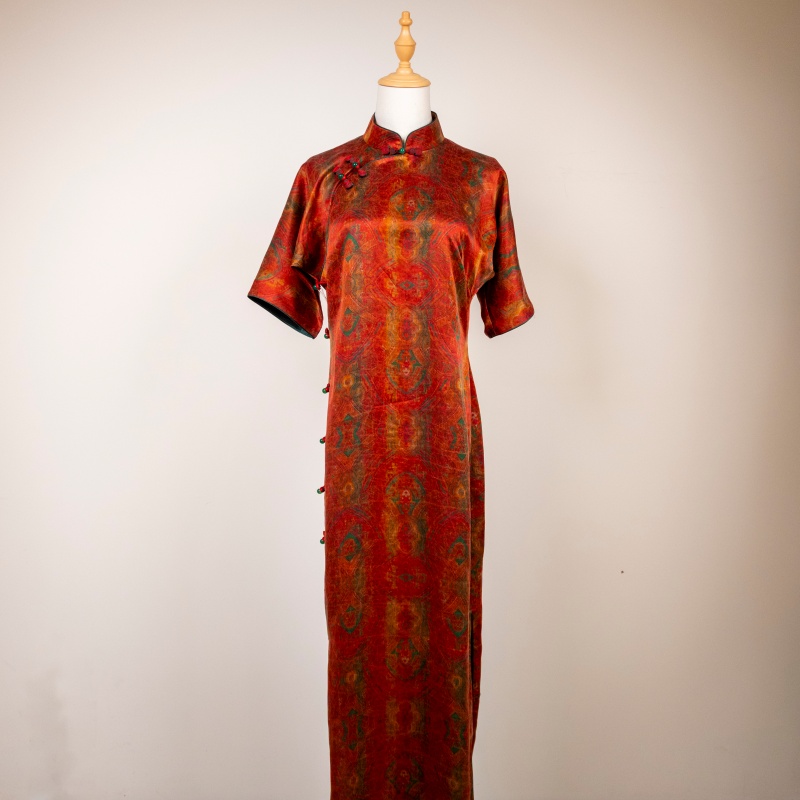
Method for Reserving Space for Different Sizes in Silk Cheongsam (Feminine Suit) Design
How to Reserve Ease Measurements for Silk Cheongsams
Getting the right amount of ease in a silk cheongsam is what separates a garment that looks stunning from one that feels like it’s fighting against your body every time you move. Silk is a fabric that drapes beautifully, but it doesn’t forgive poor planning. Too little ease and you’re tugging at seams all night. Too much and the whole silhouette collapses. Here’s how to figure out exactly how much room to leave in your measurements.
Why Ease Matters So Much in Silk Cheongsams
Silk behaves very differently from cotton or polyester. It has a natural fluidity that can work for you or against you depending on how you cut it. Unlike stretchy fabrics, silk doesn’t bounce back — it just wrinkles or pulls. That means every centimeter of ease you reserve has to be intentional.
The Difference Between Silk and Other Fabrics
Most everyday fabrics have some give built in. Denim stretches a little. Jersey fabrics hug and recover. Silk does none of that. When you drape silk over a body, it follows every contour without adding or subtracting anything. This is why silk cheongsams look so elegant when the fit is right — the fabric moves with you like a second skin. But it also means there’s zero room for error in your ease calculations. A cheongsam cut with two centimeters too little ease across the bust will feel like a straightjacket by the end of the evening.
How Silk Drapes Versus How It Stretches
People often confuse drape with stretch. Silk drapes, meaning it falls and flows over the body in smooth lines. It does not stretch in any meaningful way. Some silk fabrics have a tiny bit of give on the bias, but that’s minimal and shouldn’t be relied upon for fit. When you’re reserving ease for a silk cheongsam, think of it as creating space for the fabric to exist on your body, not as compensation for a lack of stretch.
Key Areas Where Ease Needs to Be Reserved
Not every part of a cheongsam needs the same amount of ease. Some areas require more room for movement, while others need just enough to keep the fabric from pulling. Knowing where to add ease and where to keep it tight is the real skill.
Bust Area Ease
The bust is usually the trickiest spot. Silk cheongsams often have a structured bodice with princess seams or darts that shape the fabric around the chest. For this area, reserve about two to three centimeters of ease. That sounds small, but remember — silk doesn’t stretch, so even a centimeter matters. If you’re between sizes, err on the side of slightly more ease rather than less. A cheongsam that’s a touch loose at the bust will still look tailored, but one that’s too tight will pull at the seams and create visible stress lines across the fabric.
Waist and Hip Ease
The waist on a cheongsam is meant to be fitted, so you want minimal ease here — roughly one to two centimeters. This keeps the silhouette defined without restricting your breathing. The hips are a different story. When you sit down, your hips spread outward, and silk has no stretch to accommodate that movement. Reserve at least three to four centimeters of ease at the fullest part of the hips. This might feel generous when you’re standing, but try sitting in the cheongsam and you’ll understand why it’s necessary. The fabric needs room to move with your body, not against it.
Shoulder and Arm Ease
Shoulders in a cheongsam should have almost zero ease — maybe half a centimeter to allow the fabric to sit flat without puckering. The arm area, though, needs more attention. When you raise your arm, the sleeve has to travel upward, and if there’s not enough ease, the whole cheongsam will ride up. For sleeveless cheongsams, this isn’t an issue, but for those with cap sleeves or short sleeves, reserve about two to three centimeters of ease around the armhole. This lets you move freely without the garment shifting or pulling.
Practical Methods for Calculating Ease
There’s no single formula that works for every body and every cheongsam style, but there are some practical approaches that get you close to the right number every time.
The Two – Finger Rule
This is a quick and dirty method that works surprisingly well for silk. After taking your body measurement, hold two fingers between the measuring tape and your skin. That gap roughly equals one to two centimeters of ease. For areas that need more movement, like the hips, use three fingers. It’s not scientific, but it gives you a solid starting point that you can adjust based on how the fabric behaves when you try it on.
Movement Testing Before Finalizing
Before you cut your silk or finalize your measurements, do a movement test. Wrap the fabric around the key areas — bust, waist, hips — and then sit down, raise your arms, and bend forward. Watch where the fabric pulls or bunches. Those are the spots where you need more ease. Write down those areas and add an extra centimeter or two to your reserved ease in those specific zones. This step alone can save you from a cheongsam that looks perfect standing up but feels terrible the moment you sit down.
Accounting for Silk’s Bias Behavior
If your cheongsam is cut on the bias — meaning the fabric is cut at a forty – five – degree angle to the grain — the silk will have slightly more give. This is because bias – cut silk stretches a little more than grain – cut silk. When working with bias – cut fabric, you can reduce your ease reservation by about half a centimeter to one centimeter in most areas. But be careful — bias – cut silk also distorts more easily, so don’t cut the ease too close. It’s better to have a tiny bit extra than to end up with a cheongsam that warps after one wear.
Common Mistakes When Reserving Ease in Silk Cheongsams
Even experienced sewers make mistakes with silk ease. Here are the ones to watch out for.
Over – Reserving Ease in the Waist
It’s tempting to add extra ease at the waist because it’s the narrowest part of the body. But the waist is what gives a cheongsam its shape. Too much ease here and the whole garment loses its definition. Stick to one to two centimeters and trust that the silk will drape beautifully with that amount of room.
Forgetting About Seat Ease
Most people think about bust, waist, and hips and forget about the seat. When you sit, your seat widens, and if there’s no ease reserved for that area, the cheongsam will pull tightly across the back and thighs. Always add at least two to three centimeters of ease at the seat, even if your hip measurement already accounts for it.
Not Testing with the Actual Silk
Paper patterns and muslin tests behave differently from real silk. If possible, make a test version in the actual silk fabric before cutting your final piece. Drape it on your body, move around, and see where the ease is working and where it isn’t. This extra step can make the difference between a cheongsam that fits like a dream and one that ends up hanging in the closet.