
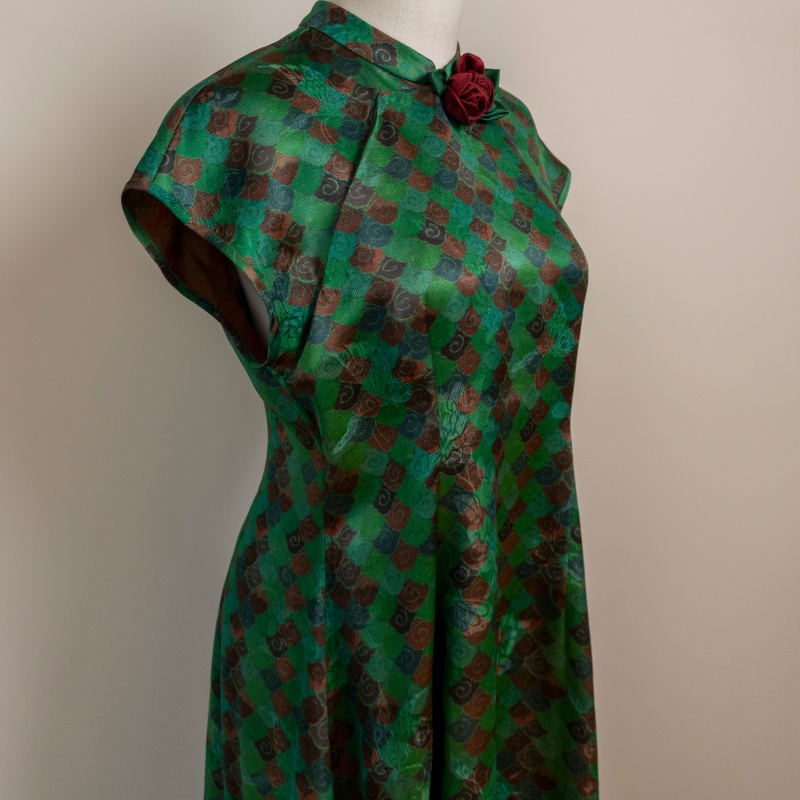
The method for preventing silk cheongsam from becoming stiff when drying
How to Keep Your Silk Cheongsam From Getting Stiff When Air Drying
There is a specific kind of disappointment that comes from pulling a silk cheongsam out after a wash and finding it stiff. Not damp. Not wet. Dry, but stiff. The fabric does not drape the way it used to. It does not flow when you move. It feels like paper wrapped around your body. You did everything right during the wash — cool water, silk detergent, gentle hands — and still the cheongsam came out feeling wrong.
The problem was never the wash. It was the drying. Specifically, how the cheongsam dried and what happened to the silk fibers during those hours.
Stiffness in dried silk is not a sign of bad fabric. It is a sign of bad drying. The fibers have lost their natural flexibility because they dried too fast, too hot, or unevenly. And once silk goes stiff, getting it soft again takes real effort. Some of that stiffness never fully goes away.
The good news is that stiffness is almost entirely preventable. You just need to understand what causes it and change a few habits during the drying process.
What Actually Makes Silk Cheongsam Stiff After Drying
The Fibers Lock Up When They Dry Too Fast
Silk is a protein fiber. When it is wet, the fibers are swollen and flexible. They move freely. They drape naturally. But when water evaporates too quickly, the fibers contract before they have time to settle into a relaxed state. They lock up in a rigid configuration.
Think of it like this. A wet silk fiber is like a relaxed rubber band — soft, stretchy, pliable. A fiber that dries too fast is like a rubber band that snapped back too hard — tight, stiff, inflexible. The faster the water leaves, the tighter the fibers lock.
This is why a cheongsam dried in direct sun feels stiff. The heat evaporates water rapidly and the fibers seize up. This is also why a cheongsam dried near a radiator feels stiff. The warm air pulls moisture out too fast for the fibers to relax.
Mineral Deposits From Hard Water Create Stiffness
If you wash your cheongsam with tap water that is high in minerals, those minerals stay in the fabric after rinsing. Calcium, magnesium, iron — these are common in hard water. They do not rinse out completely with a single pass. They accumulate in the silk fibers over time.
When the cheongsam dries, those mineral deposits crystallize between the fibers. They act like tiny glue points that hold the fibers in a rigid position. The more you wash with hard water, the stiffer the cheongsam gets. This is why some old silk garments feel almost like cardboard — years of mineral buildup have turned the flexible fibers into a rigid shell.
Detergent Residue Is a Silent Stiffness Maker
Most people rinse their cheongsam once or twice and call it done. But silk detergent — even the gentle ones — leaves a thin film on the fibers if you do not rinse thoroughly. That film dries into a coating that reduces flexibility.
The coating is invisible. You cannot see it. You cannot feel it when the cheongsam is wet. But once it dries, you feel it immediately. The fabric does not move the way it should. It has a slight crispness that was not there before the wash.
Two rinses is the minimum. Three rinses is better. If your tap water is hard, rinse four times. Every rinse removes more residue and more minerals. The extra five minutes saves you hours of stiffness later.
The Drying Methods That Cause Stiffness
Why Direct Sunlight Makes Silk Rigid
Sunlight dries silk fast. That is the whole point when you want speed. But speed is the enemy of softness. The UV radiation heats the fibers from the surface inward, causing the outer layers to dry and lock up before the inner layers have released their moisture.
The result is a cheongsam that is dry on the outside but still slightly damp inside. The outer fibers are stiff. The inner fibers are trapped. When the inside finally dries hours later, it dries against an already rigid outer shell. The whole garment ends up stiff from edge to edge.
Sunlight also removes the natural sericin coating from silk fibers. Sericin is the protein that gives silk its softness and slip. UV radiation breaks down sericin over time. A cheongsam dried in the sun repeatedly will lose more and more of that natural softness with every cycle.
Why Heat Sources Create Permanent Stiffness
Any heat source — radiator, heater vent, hair dryer, tumble dryer — dries silk faster than room temperature air. That speed causes the fibers to contract unevenly. The areas closest to the heat dry first and lock up. The areas farther away dry later and lock up against the already stiff sections.
This uneven locking creates internal tension in the fabric. You cannot see it. But you feel it. The cheongsam does not hang right. It does not drape right. It has a subtle rigidity that makes it uncomfortable to wear.
Heat also accelerates mineral crystallization. If there are any mineral deposits in the fibers, heat speeds up the process of those deposits hardening. What would have taken weeks to build up can happen in a single hot drying session.
Why Hanging Wet Cheongsam Causes Stiffness in the Shoulders
When you hang a wet cheongsam on a hanger, the weight of the water pulls the fabric downward. The shoulder areas bear the most weight. Those areas stretch and the fibers elongate under tension.
As the cheongsam dries in that stretched position, the fibers lock into the elongated state. They do not snap back when you take the cheongsam off the hanger. They stay stretched. And stretched silk fibers are stiffer than relaxed ones.
This is why the shoulders of a hung-dried cheongsam always feel tighter than the rest of the garment. The stiffness is concentrated exactly where the weight was heaviest. The rest of the cheongsam may be soft, but the shoulders are rigid. That imbalance makes the whole garment feel off.
The Drying Setup That Keeps Silk Soft
Flat Drying on a Clean Towel Is the Softest Method
The single best way to dry a silk cheongsam without stiffness is flat drying on a clean towel. When the cheongsam lies flat, the weight of the water distributes evenly across the entire surface. No single point bears extra load. The fibers dry in a relaxed state because gravity is not pulling them in any direction.
Lay the cheongsam face down on a large, clean, dry, flat-weave cotton towel. Smooth it out completely. Align the seams. Straighten the hem. Make sure no part of the fabric folds over itself. Every fold creates a pressure point where the fibers dry under tension and lock up stiff.
Leave it alone for at least four hours. Do not flip it. Do not adjust it. Do not check on it. Let the fibers dry slowly and naturally.
The Towel Roll Before Drying Removes Excess Water Without Stress
Most of the drying time is spent evaporating water you could have removed mechanically. After the final rinse, lay the cheongsam on a large dry towel. Roll the towel up with the cheongsam inside. Press gently as you roll. The towel absorbs 60 to 70 percent of the water without any twisting or stretching force on the fibers.
Unroll and lay the cheongsam on a fresh dry towel. Now the cheongsam is damp, not soaking wet. The drying time drops from 36 hours to 18 to 20. Less water means less time for the fibers to lock up. Less time means more softness.
Do not wring the cheongsam. Wringing twists the fibers and stretches them unevenly. The towel roll method removes the same amount of water without any mechanical stress. It takes thirty seconds longer than wringing. It saves the cheongsam from permanent stiffness.
Using a Dehumidifier Instead of Heat
A dehumidifier removes moisture from the air, which speeds up evaporation without raising the temperature. This is the closest thing to a safe shortcut for drying silk without stiffness.
Set the dehumidifier to 45 to 50 percent relative humidity. Place it in the same room as the cheongsam, at least one meter away. Run it continuously until the cheongsam is fully dry.
With a dehumidifier, a silk cheongsam can dry in 12 to 18 hours instead of 36 to 48. The fibers dry slowly enough to stay flexible but fast enough to avoid mildew. That balance is what keeps the silk soft.
Protecting Softness During the Drying Process
The Vinegar Rinse Keeps Fibers Flexible
Add one cup of white vinegar per liter of cool water during the final rinse. The acetic acid in vinegar neutralizes any alkaline detergent residue left on the fibers. That residue is what causes stiffness when it dries. By removing it, the vinegar keeps the fibers clean and flexible.
Vinegar also dissolves mineral deposits that have accumulated in the fibers from previous washes. It does not remove all of them — you need multiple vinegar rinses over time for that — but it removes enough to make a noticeable difference in softness after a single wash.
The vinegar smell disappears completely once the fabric dries. What remains is a subtle pH balance that keeps the silk supple. This step takes ten seconds and makes a real difference in how the cheongsam feels after drying.
Turning Inside Out Protects the Outer Fibers
Always dry the cheongsam inside out. The outer surface carries the dye and the sericin coating. Exposing it to light and air during drying accelerates sericin breakdown and dye fading. The inner lining is more forgiving — it does not carry the same coatings and it dries at a similar rate, which helps balance the drying process.
Flip the cheongsam inside out before you lay it on the towel or hang it on the hanger. Keep it that way for the entire drying period. Flip it back only when the cheongsam is completely dry.
Avoiding Any Airflow Directly on the Fabric
A fan blowing directly on a wet cheongsam dries the surface fast while the inside stays wet. That mismatch causes the outer fibers to lock up before the inner fibers have released their moisture. The result is a stiff outer shell with a damp interior.
If you use a fan, point it at the wall or the ceiling. Let the air bounce off the surface and circulate gently through the room. The cheongsam gets indirect airflow from all directions, which dries it evenly. Even drying means even softness.
How to Soften a Cheongsam That Already Dried Stiff
The Vinegar Soak Method
If your cheongsam is already stiff, do not panic. Fill a basin with cool water and add one cup of white vinegar. Submerge the cheongsam and let it soak for twenty to thirty minutes. The vinegar dissolves mineral deposits and neutralizes detergent residue that is causing the rigidity.
After soaking, rinse twice in clean cool water. Do not wring. Roll it in a dry towel to remove excess water. Lay it flat on a clean towel and let it air dry again. This time, use the dehumidifier method. The second drying cycle should produce a much softer result.
The Steaming Method for Surface Stiffness
If the stiffness is only on the surface — the cheongsam feels stiff when you touch it but moves okay when you wear it — a light steam can restore the softness. Hold a handheld steamer at least fifteen centimeters away from the fabric. Move it slowly across the surface. Do not press down.
The steam relaxes the outer fibers without wetting them. It reopens the sericin coating slightly and lets the fibers move freely again. This works best on cheongsam that have dried stiff from heat exposure, not from mineral buildup.
When Stiffness Is Permanent
Some stiffness cannot be reversed. If the cheongsam has been dried in direct sun or high heat many times, the sericin coating may be permanently degraded. The fibers have locked into a rigid state that no amount of vinegar or steaming can fully undo.
In that case, the cheongsam will never feel as soft as it did when it was new. But you can slow further damage by switching to the flat drying method with vinegar rinses. The stiffness will not get worse if you stop exposing the fabric to heat and light during drying.
The Drying Routine That Keeps Silk Soft Wash After Wash
Wash in cool water with a silk-safe detergent. Rinse three to four times in clean cool water. Add vinegar to the final rinse. Roll in a dry towel to remove bulk water. Flip inside out. Lay flat on a clean flat-weave towel in the darkest, coolest room available. Use a dehumidifier if the air is humid. Use indirect airflow if the air is dry. Do not touch the cheongsam for 24 to 48 hours. Confirm full dryness by touching the lining. Flip back only when completely dry. Store inside out in a breathable cotton wrap.
That routine takes patience. It takes resisting the urge to hang the cheongsam up, speed it up with heat, or dry it near a window because you need it tomorrow. But every time you follow it, the silk stays soft, the drape stays fluid, and the cheongsam feels the way it did the day you first put it on.
Stiffness is not a sign of old fabric. It is a sign of bad drying. Change the drying, and the softness comes back.